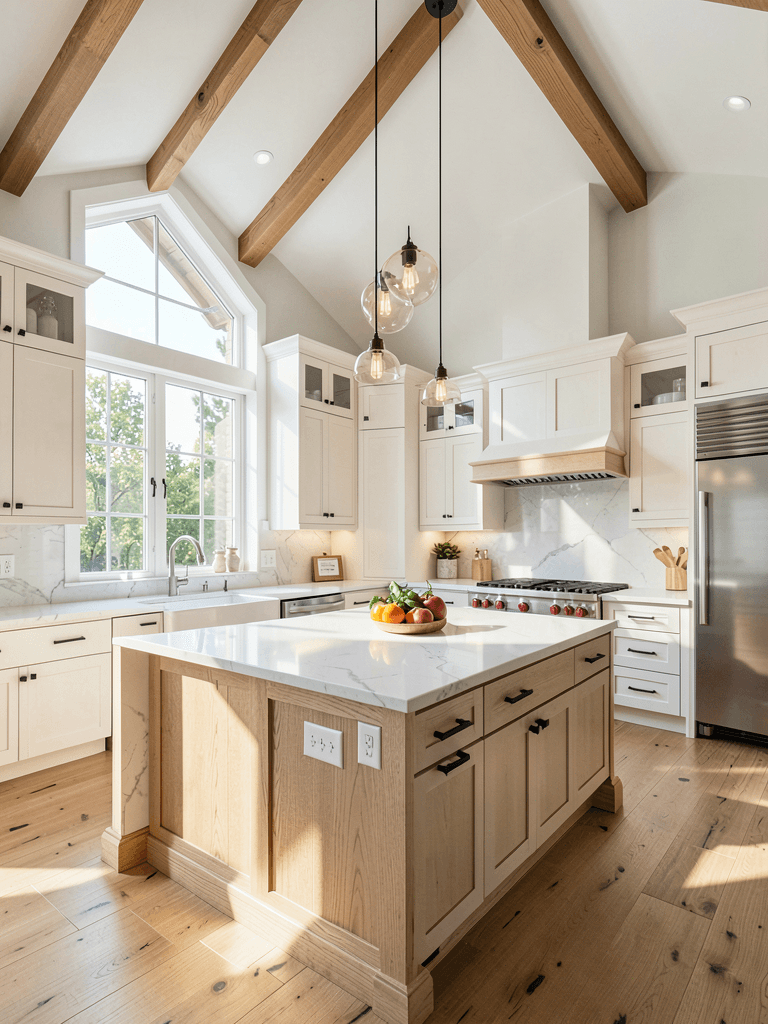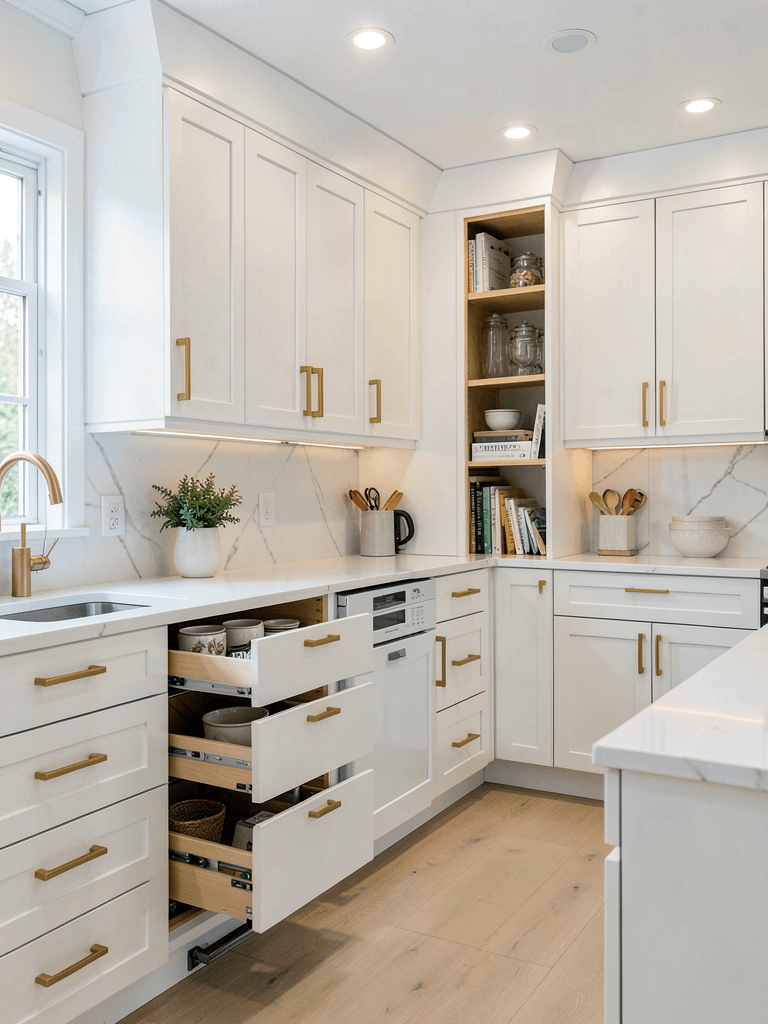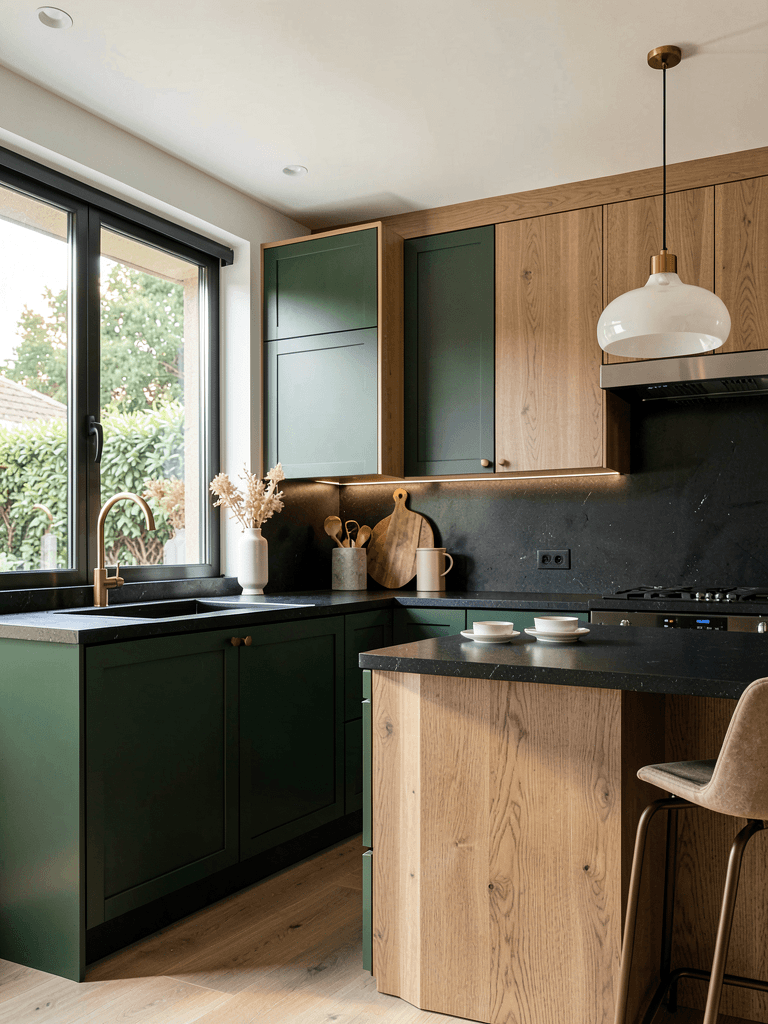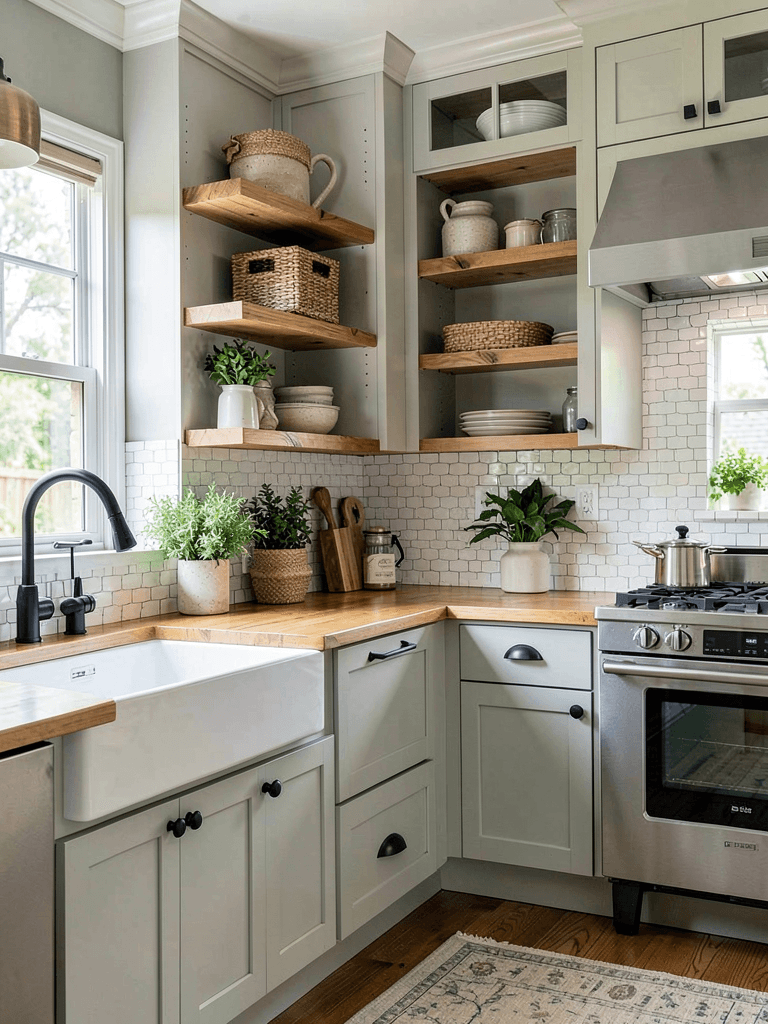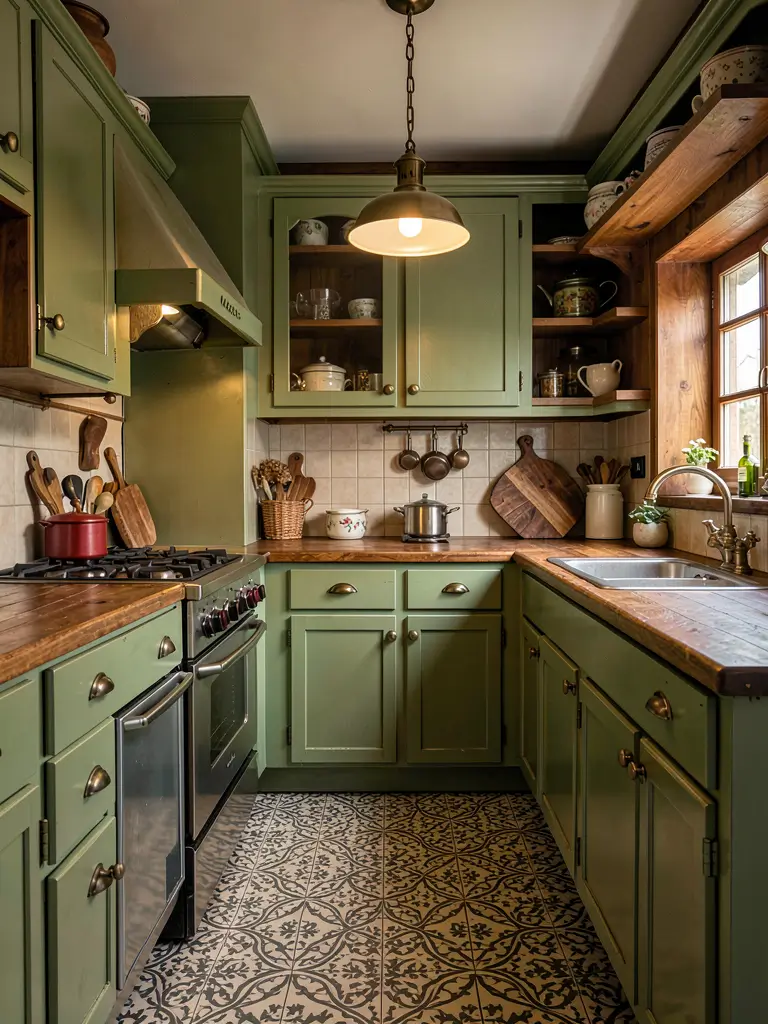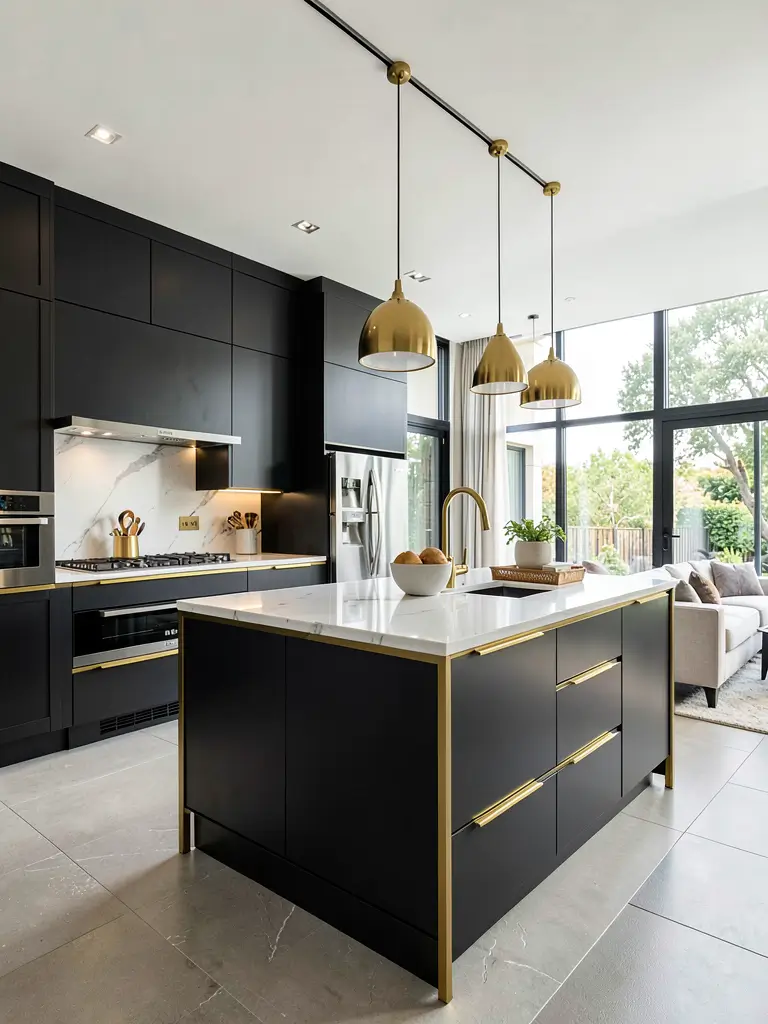
15 Fresh Green Countertops Kitchen Ideas for Dream Kitchens
Look, I’ll be honest with you—when I first heard someone mention green countertops, I thought they’d lost their mind. Green? In a kitchen? But then I saw one in person, and wow, did I eat my words. Green countertops aren’t just a trend; they’re a straight-up game-changer that can transform your kitchen from “meh” to “magazine-worthy” faster than you can say avocado toast.
Whether you’re thinking sage, emerald, or something downright mossy, green countertops bring this fresh, organic vibe that’s honestly hard to beat. They work with practically everything—white cabinets, dark wood, brass hardware, you name it. So buckle up, because I’m about to walk you through 15 absolutely gorgeous ways to rock green countertops in your kitchen. Trust me, by the end of this, you’ll be googling contractors faster than I can say “quartz.”
Sage Green Quartz Countertops with White Shaker Cabinets
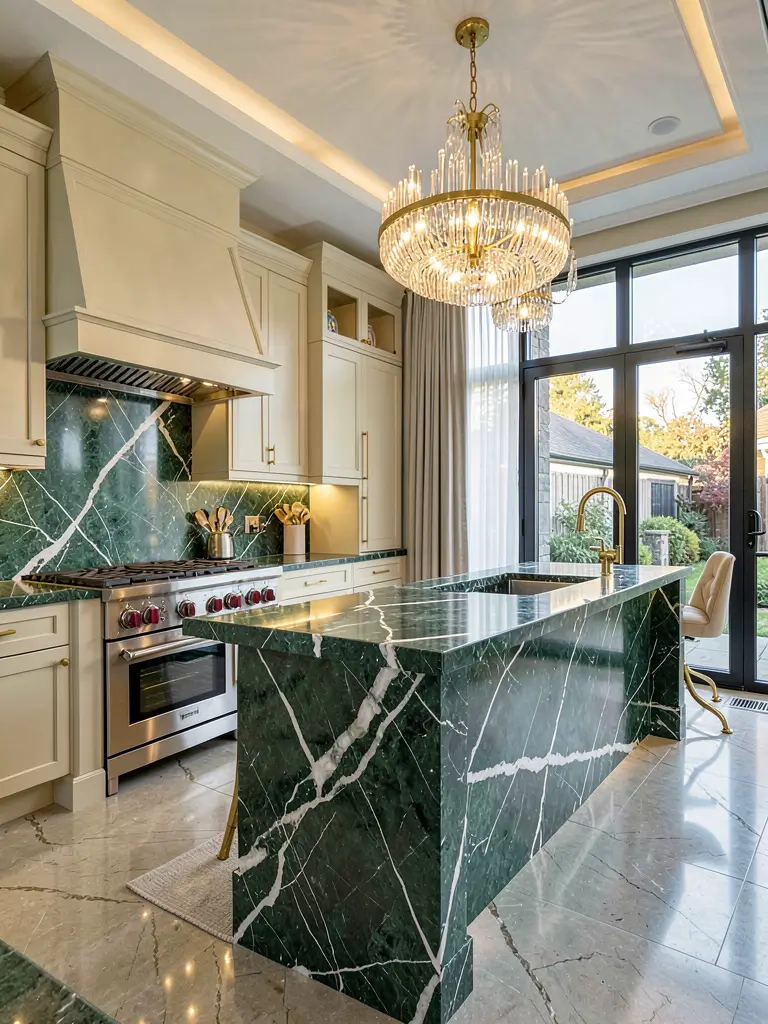
Let’s start with the gateway drug of green countertops—sage green quartz paired with white shaker cabinets. This combo is like the peanut butter and jelly of kitchen design: classic, approachable, and ridiculously hard to mess up.
Sage green quartz brings this subtle, earthy tone that doesn’t scream for attention but definitely gets it. The white shaker cabinets provide that clean, timeless backdrop that lets the countertops shine without competing for the spotlight. What I love about this pairing is how it bridges traditional and contemporary styles. Your grandmother would approve, but so would that interior designer friend who only wears black and talks about “spatial dynamics.”
The beauty of quartz is that it’s basically indestructible. You can chop directly on it (though please don’t), spill wine, plop down hot pans, and it’ll just sit there looking gorgeous. Plus, the sage green shade works beautifully with gold or brass hardware—think cabinet pulls and faucets—which adds just enough warmth without going overboard.
This combination works especially well in kitchens with lots of natural light. The sage picks up those sunny rays and creates this soft, welcoming glow that makes you actually want to cook instead of ordering takeout for the fifth night in a row. 🙂
Emerald Green Marble Countertops for a Luxury Kitchen
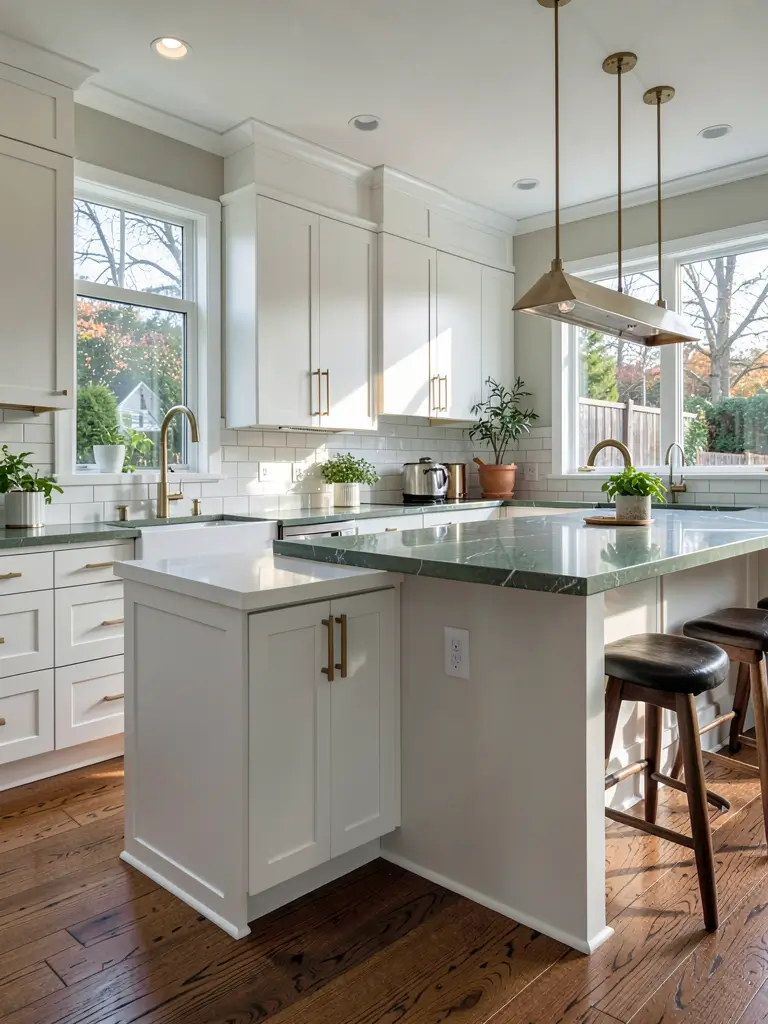
Now, if you’re feeling fancy and your budget has a bit more wiggle room, let’s talk emerald green marble. This isn’t your everyday kitchen situation—this is the “I’ve arrived” kitchen flex.
Emerald green marble is dramatic, luxurious, and absolutely stunning. The natural veining in marble adds depth and character that you just can’t replicate with manufactured materials. Each slab is unique, which means your kitchen becomes a genuine one-of-a-kind space. Ever walked into someone’s kitchen and immediately felt underdressed? Yeah, emerald marble does that.
I won’t sugarcoat it—marble requires maintenance. It stains, it etches, it needs sealing. But IMO, if you’re going for that high-end, sophisticated look, the extra care is worth it. Pair these countertops with cream or light gray cabinets to let the green really pop, and add some statement lighting fixtures that reflect off the polished surface.
The emerald shade brings this jewel-tone richness that elevates the entire space. Think old-world elegance meets modern luxury. Add some white subway tiles, maybe some dark wood accents, and suddenly you’re cooking in what feels like a European villa.
Pro tip: Use cutting boards religiously and clean up acidic spills immediately. Your future self will thank you.
Dark Green Waterfall Island Countertop Design
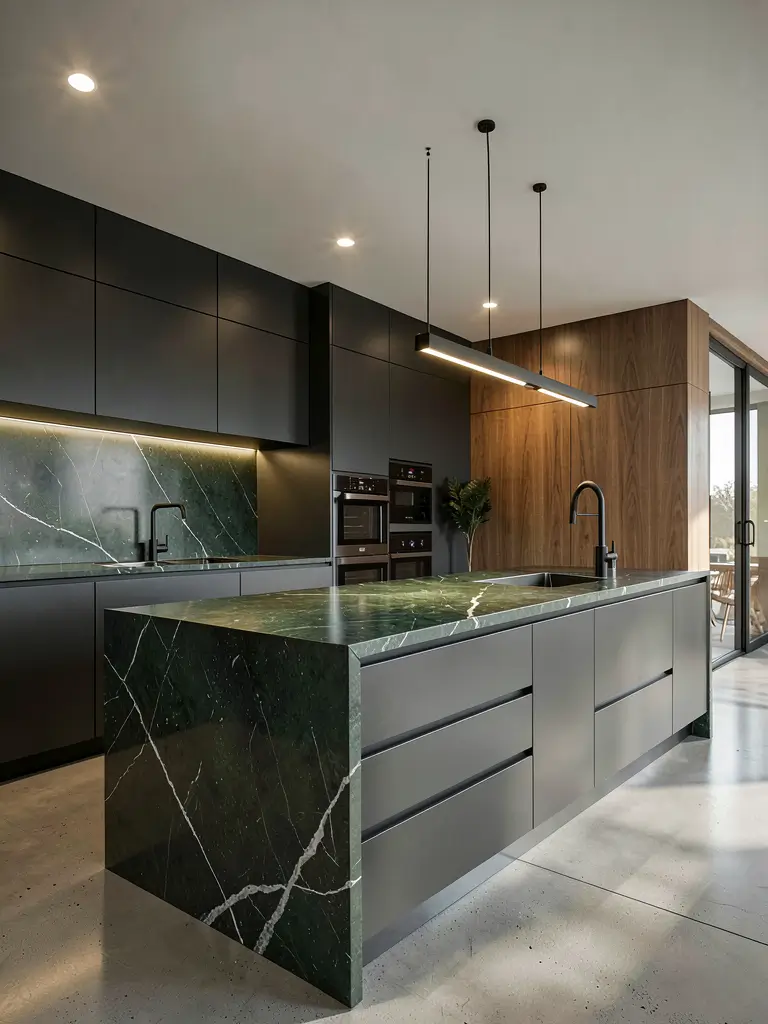
Want to make a statement without saying a word? Dark green waterfall island countertops are calling your name.
For those who don’t know, a waterfall countertop extends vertically down the sides of your island, creating this continuous flow that’s absolutely mesmerizing. When you do this in a deep, dark green—think hunter or forest green—you create a focal point that stops people in their tracks.
I saw one of these at a design show last year, and honestly, I just stood there staring like some kind of kitchen creep. The effect is bold, modern, and incredibly sophisticated. The vertical grain running down the sides adds visual interest and makes the island feel like a piece of art rather than just a functional workspace.
This design works best as your island centerpiece while keeping your perimeter countertops more neutral. You don’t want to overwhelm the space with too much drama. Pair it with light-colored flooring and simple cabinet fronts to let that waterfall edge truly shine.
Material choice matters here—quartz or granite works beautifully for this application because they’re durable enough to handle the edge work. The dark green shade pairs exceptionally well with brass bar stools, pendant lights, and even some leather accents if you’re going for that moody, masculine vibe.
Also Read: 15 Cozy Green and Brown Kitchen Ideas for Dream Homes
Olive Green Countertops with Natural Wood Cabinets
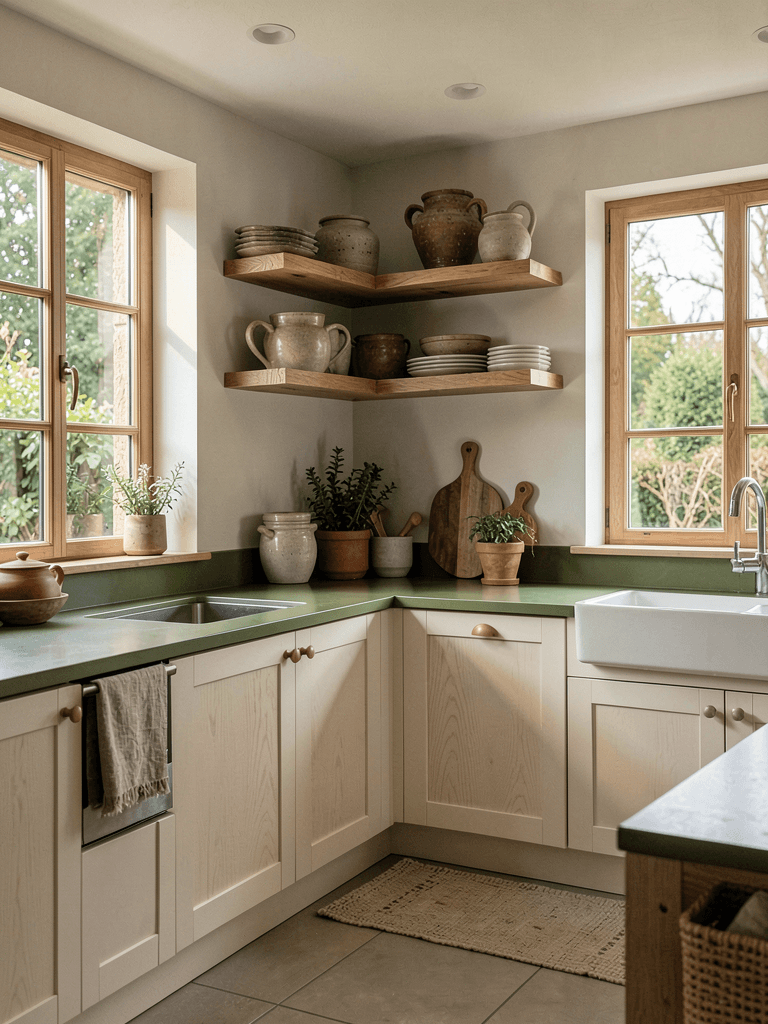
Can we talk about how underrated olive green is? This earthy, muted green paired with natural wood cabinets creates this organic, warm aesthetic that feels like a cabin retreat—but make it chic.
Olive green countertops have this chameleon-like quality where they can read more brown in certain lights and more green in others. This versatility makes them incredibly easy to work with. Pair them with honey oak, walnut, or even lighter maple cabinets, and you’ve got a kitchen that feels grounded and connected to nature.
This combination works particularly well if you’re into that Scandinavian-meets-rustic vibe. Think open shelving with ceramic dishes, plants everywhere (because why not?), and maybe some woven baskets for texture. The olive tone is subtle enough that it doesn’t compete with the wood grain but distinct enough to add personality.
What makes this pairing special is how it brings the outdoors in. It’s calming, it’s warm, and it doesn’t feel trendy in that “this’ll be dated in three years” kind of way. FYI, if you add some terracotta accents and cream-colored walls, you’ll have a kitchen that looks straight out of a Tuscan countryside home.
Mint Green Countertops in a Bright Coastal Kitchen
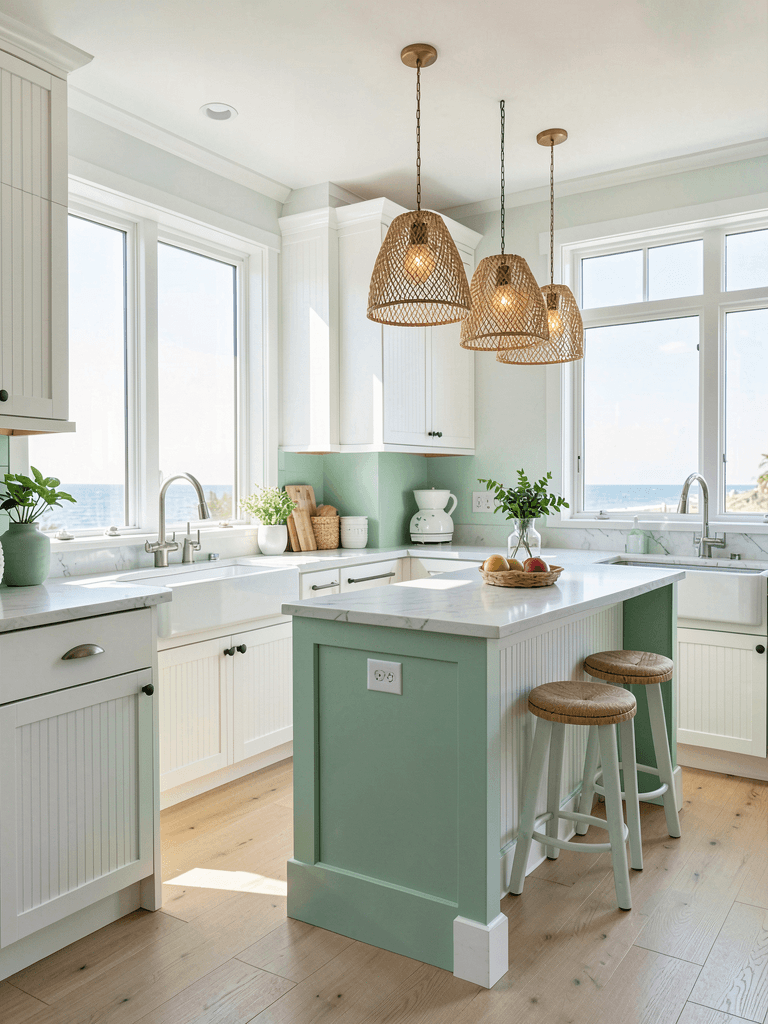
Okay, if sage is the gateway green, mint green is the fun, flirty cousin who shows up to family gatherings in a sundress and actually pulls it off.
Mint green countertops in a coastal kitchen setting create this breezy, fresh atmosphere that makes you feel like you’re on vacation every single day. This shade works beautifully with white or light blue cabinets, natural fiber accents, and plenty of windows letting in that glorious natural light.
The key to pulling off mint green is confidence. This isn’t a subtle choice—it’s playful and cheerful, and it needs the right supporting cast. Think white subway tiles, light wood or white-washed floors, and maybe some sea glass accessories. Keep your hardware simple—brushed nickel or chrome works great—and let the countertops be your pop of personality.
I love this look for smaller kitchens because the lightness of mint doesn’t visually weigh down the space. It actually makes things feel bigger and airier. Add some floating shelves, display your prettiest dishes, and boom—you’ve got an Instagram-worthy kitchen that doesn’t feel forced or overly styled.
The coastal vibe works year-round, too. It’s not just summer vibes—it’s that fresh, clean aesthetic that makes cooking breakfast feel like a mini retreat. Pair it with some linen curtains and fresh flowers, and you’re living the dream, my friend.
Forest Green Granite Countertops with Brass Accents
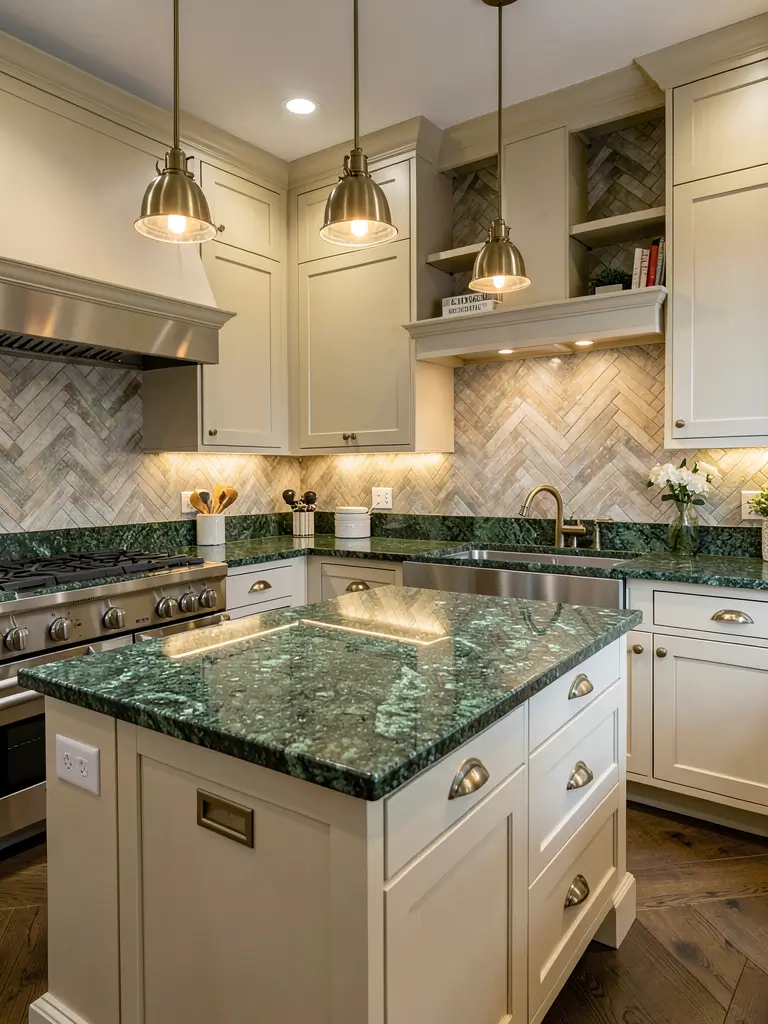
Now we’re getting into moody territory, and I’m here for it. Forest green granite countertops with brass accents create this rich, layered look that screams sophistication.
Granite in forest green tones often has these incredible natural variations—flecks of black, gray, sometimes even gold. Each slab tells its own story, and when you pair that with warm brass hardware, you create this cohesive, luxurious aesthetic that feels both classic and current.
The brass accents are crucial here. We’re talking cabinet pulls, faucets, pendant lights—anything you can brass-ify, do it. The warm metallic plays beautifully against the cool green tones, creating visual interest and depth. Ever wondered why some kitchens just feel “finished” while others seem like they’re missing something? It’s usually the hardware and fixtures.
This combination works wonderfully with darker wood cabinets—think espresso or dark walnut—or even navy blue painted cabinets if you’re feeling adventurous. The key is balancing the darkness with enough light elements so your kitchen doesn’t turn into a cave. White or cream walls, good lighting, and maybe some glass-front cabinets to break things up.
Durability-wise, granite is a beast. It handles heat, it’s scratch-resistant, and with proper sealing, it laughs in the face of stains. For a busy kitchen that sees actual cooking (not just reheating takeout), this material choice makes total sense.
Also Read: 15 Elegant Green and Gold Kitchen Ideas with Chic Details
Green Soapstone Countertops for a Timeless Kitchen Look
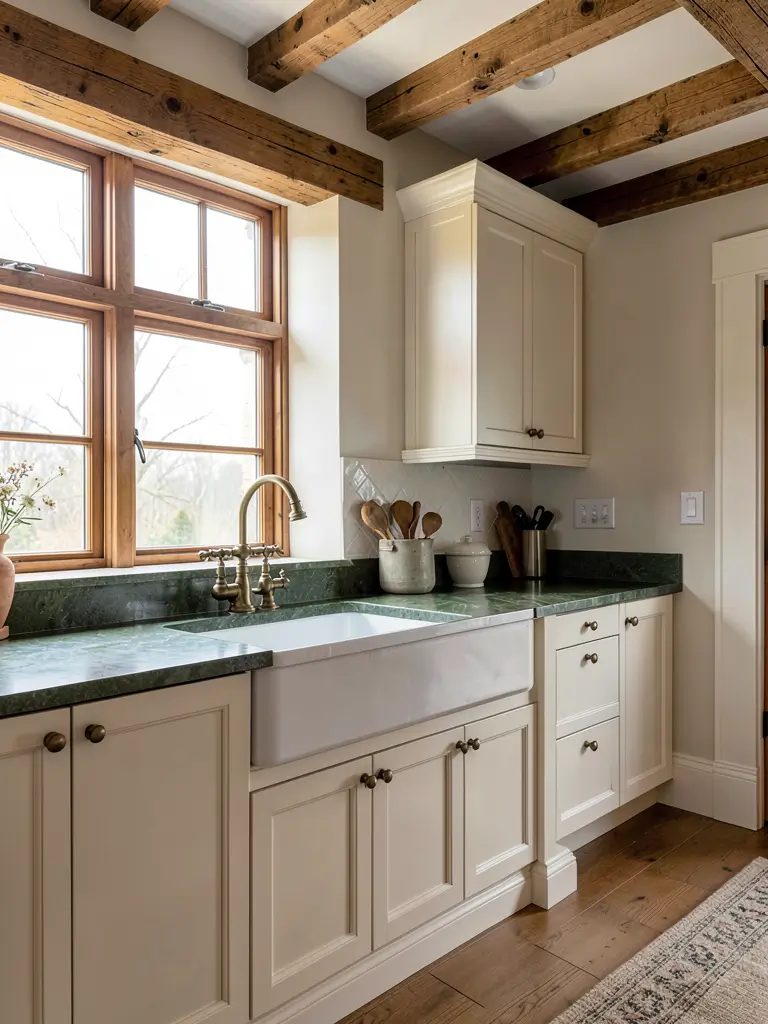
Let me introduce you to the dark horse of countertop materials—green soapstone. This stuff has been around forever, and there’s a reason it’s still standing strong in the design world.
Soapstone naturally comes in varying shades of gray-green to deep green, and it develops this gorgeous patina over time that just gets better with age. Unlike that questionable cheese in your fridge, soapstone aging is a good thing. The material is non-porous, which means bacteria can’t penetrate it, and it’s naturally heat-resistant. You can literally place a hot pan straight from the oven onto it without freaking out.
The green tones in soapstone are subtle and sophisticated. They’re not in-your-face green; they’re more like “oh, is that a hint of green? How lovely!” This makes them incredibly versatile. Pair them with white farmhouse cabinets for a traditional look, or go dark and moody with black cabinets for something more contemporary.
What I absolutely love about soapstone is how it feels under your hands—smooth, almost soft. It’s tactile in a way that other countertop materials aren’t. Plus, minor scratches can be sanded out easily, and many people actually embrace the natural scratching as part of the material’s character.
This is a timeless choice that won’t make you cringe in five years when you’re looking at kitchen photos. It’s classic, it’s practical, and it brings this understated elegance that’s honestly hard to beat.
Matte Green Countertops in a Modern Minimalist Kitchen
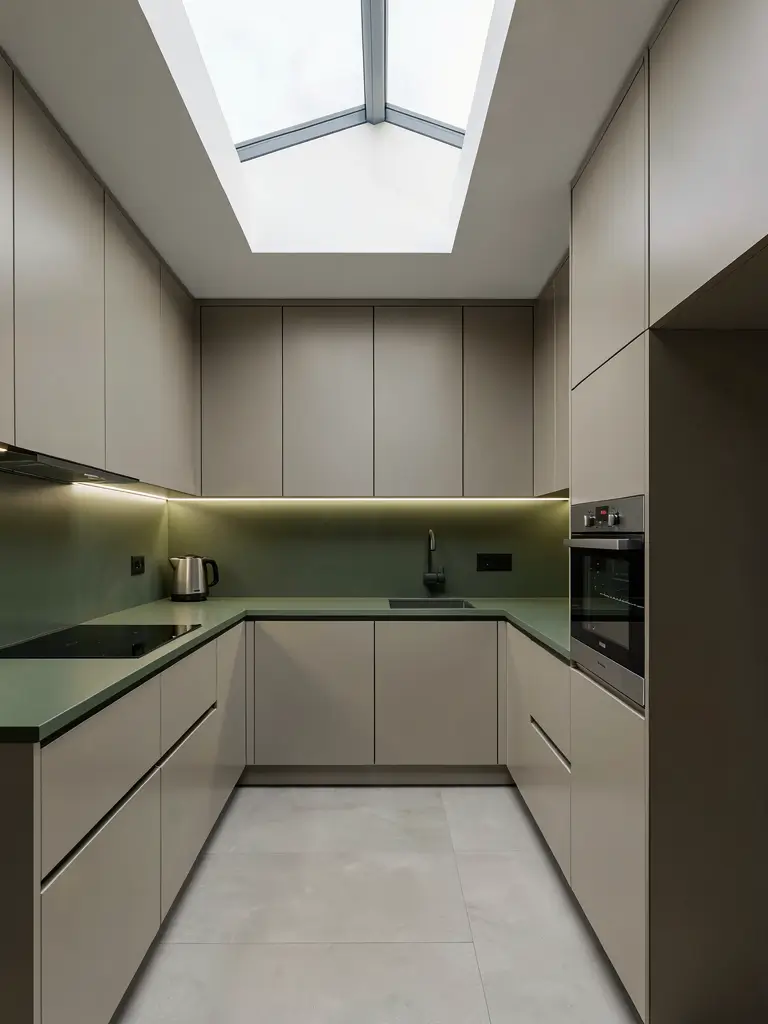
Matte finishes are having a major moment, and matte green countertops in a minimalist kitchen are basically design perfection.
The matte finish eliminates that high-gloss shine and creates this soft, touchable surface that feels modern and refined. In a minimalist kitchen where every element is intentional and clutter is basically illegal, matte green countertops add color and warmth without disrupting the clean aesthetic.
Think flat-front cabinets in white or light gray, handleless designs, and simple geometric lighting. The green countertops become your statement piece in a sea of neutrals. The matte finish also has practical benefits—it hides fingerprints and water spots way better than polished surfaces, which is clutch if you’re actually using your kitchen.
The key to pulling off this look is restraint. Don’t add unnecessary decorative elements or fussy details. Let the clean lines and the beautiful green countertops do the talking. Maybe add one piece of statement art or a single vase with fresh greenery, and call it done.
Material options for matte green countertops include quartz with a honed finish or specially treated solid surface materials. The effect is subtle but impactful—it’s that “I didn’t try too hard but somehow nailed it” vibe that minimalist design is all about.
Green Countertops Paired with Black Cabinetry
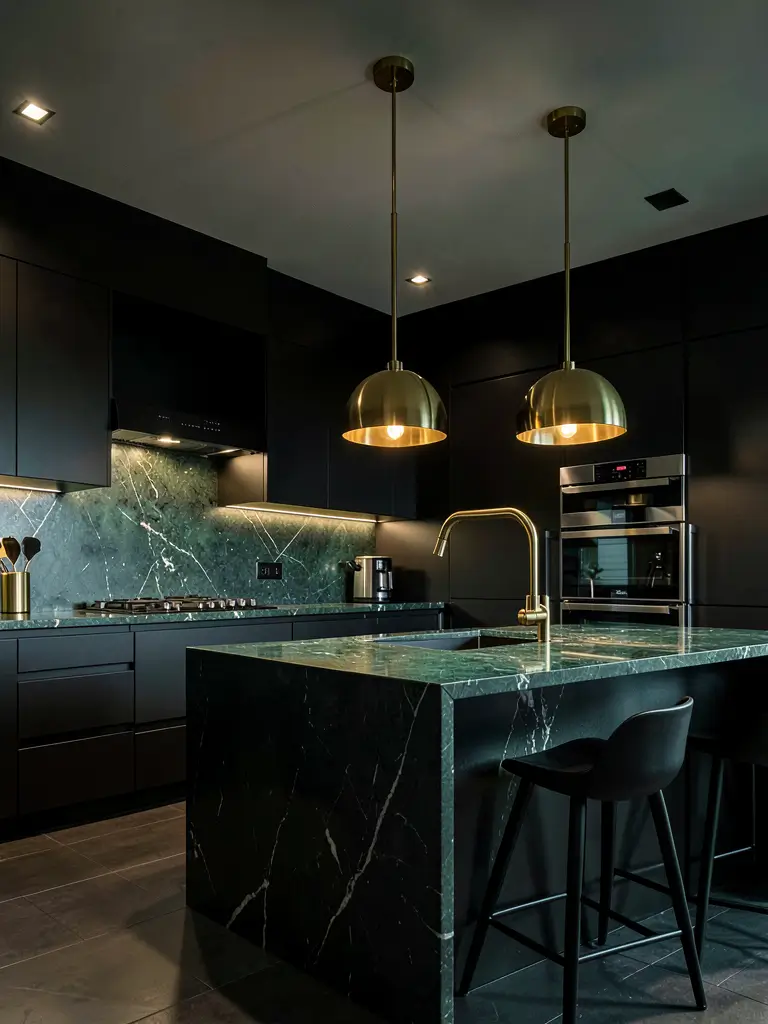
Bold meets bold in this combination, and honestly? It’s a knockout. Green countertops with black cabinets create this dramatic, high-contrast look that’s absolutely stunning.
Now, this isn’t for the faint of heart. This combination makes a statement, and you need to commit fully. But when done right, it’s magazine-cover material. The black cabinetry provides this strong, grounding element while the green countertops add life, color, and unexpected energy.
I’d recommend going with a medium to dark green for this pairing—think jade, emerald, or deep sage. The contrast is what makes it work. If you go too light with the green, it might get washed out next to the black. You want them to complement each other while each holding their own ground.
Lighting is crucial with this combo. Black cabinets can absorb light, so make sure you have plenty of it—both natural and artificial. Under-cabinet lighting, pendant lights over the island, and maybe some recessed ceiling lights will keep things from feeling too heavy.
Add brass or gold hardware to warm things up, and consider a white or light-colored backsplash to break up the darkness. White subway tiles work great, or if you’re feeling fancy, a white marble backsplash adds luxury without competing with your showstopper counters and cabinets.
This pairing works especially well in larger kitchens where the darker elements won’t overwhelm the space. :/ In a tiny kitchen, this might feel claustrophobic, so use your judgment.
Also Read: 15 Elegant Black and Copper Kitchen Ideas for Modern Homes
Vintage-Inspired Kitchen with Jade Green Countertops
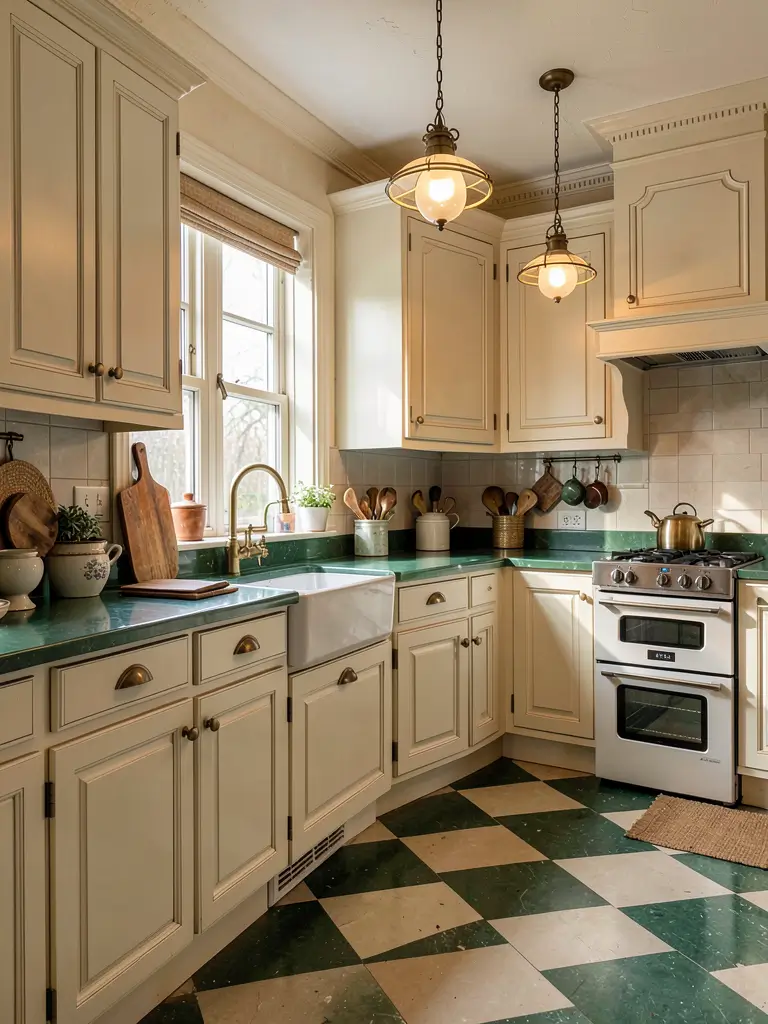
Vintage kitchens have this charm that modern designs sometimes struggle to replicate, and jade green countertops are the perfect anchor for this aesthetic.
Jade green is that retro-leaning shade that feels like it belongs in a 1950s diner but somehow works perfectly in contemporary spaces too. Pair it with vintage-style appliances (or modern appliances designed to look vintage—we see you, SMEG), cream or butter-yellow cabinets, and some checkerboard flooring, and you’ve transported yourself back in time.
What makes this work is the playfulness. Vintage design doesn’t take itself too seriously. Add some open shelving with colorful dishware, a retro clock on the wall, and maybe a vintage-style radio, and you’re building a space with personality and character.
Chrome fixtures and hardware work beautifully in vintage spaces. That shiny, reflective finish pairs wonderfully with jade green and adds to that retro diner vibe. You could also incorporate some black-and-white photos or vintage advertising posters to really lean into the aesthetic.
The beautiful thing about vintage-inspired design is that it’s forgiving. Mismatched elements actually add to the charm rather than detract from it. Your grandmother’s kitchen table? Perfect. That quirky light fixture you found at a flea market? Even better. Jade green countertops tie everything together while being distinctive enough to anchor the entire design.
Two-Tone Kitchen Design Featuring Green Countertops
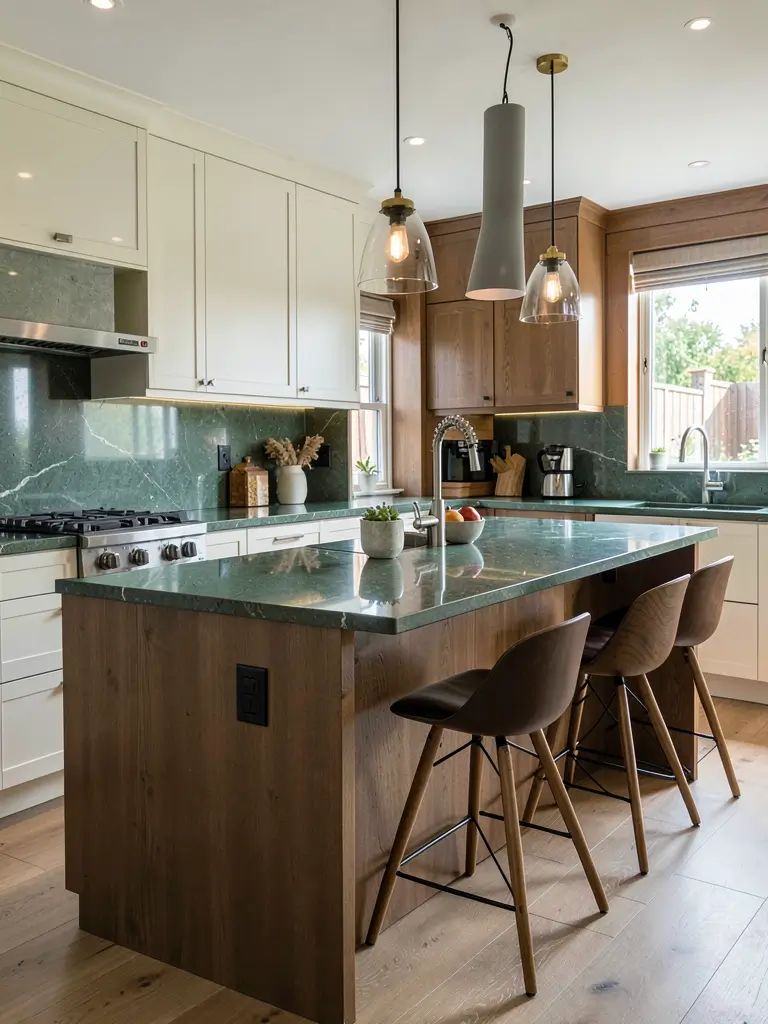
Can’t decide between green countertops and something more traditional? Why not both? Two-tone kitchen designs let you have your cake and eat it too (preferably on your gorgeous new countertops).
The most common approach is using green countertops on your island while keeping perimeter counters in a neutral material like white quartz or marble. This creates a focal point without overwhelming the space. The island becomes your statement piece, and the green adds just the right amount of personality without going overboard.
Another approach flips this—neutral island, green perimeter counters. This works well if your island is smaller or if you want the green to feel more present in your daily cooking space rather than just being a centerpiece.
The key to making two-tone work is ensuring the materials complement each other. You want cohesion, not competition. If you’re going with a veined marble for your perimeter, choose a solid green for your island. If your green has movement and pattern, keep your secondary counters simple and clean.
Cabinet color plays into this too. You could do matching cabinets throughout with different countertops, or get really adventurous with different colored cabinets on the island versus perimeter. Just remember—balance is your friend. Too much contrast can feel chaotic rather than intentional.
This approach is perfect for those who love green but aren’t quite ready to commit to it everywhere. It’s like dipping your toe in the water instead of cannonballing into the deep end.
Green Countertops with a Matching Backsplash Statement Wall
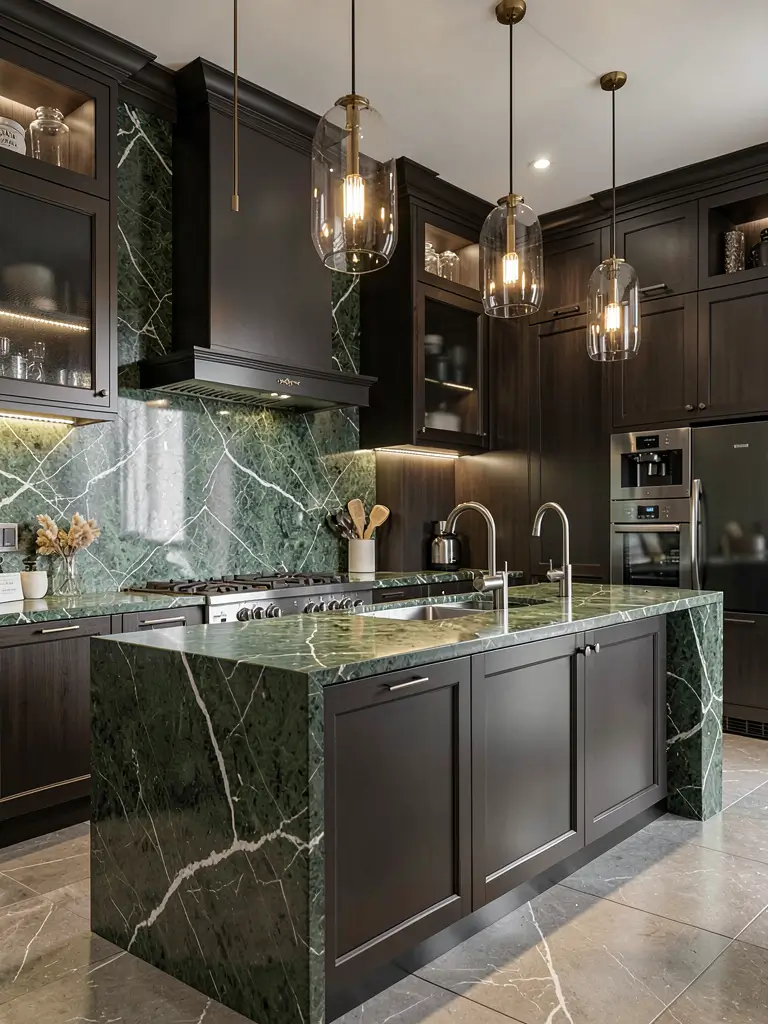
Why stop at countertops when you can extend that gorgeous green up the wall? A matching backsplash creates a cohesive, intentional look that’s seriously impressive.
This works especially well with tile—think green subway tiles, hexagons, or even larger format tiles in complementary green shades. The matching backsplash creates visual flow and makes your countertops feel like part of a larger design story rather than just a standalone element.
Now, you don’t have to match exactly. In fact, varying the shades slightly can add depth and interest. Maybe your countertops are sage green quartz, and your backsplash is a glossy sage green tile with slightly more gray in it. The variation adds dimension while maintaining the color story.
Pattern plays a role here too. If your countertops are solid green, your backsplash can have pattern or variation—maybe a green marble tile or a patterned cement tile with green as the dominant color. Conversely, if your counters have a lot of movement, keep your backsplash simpler.
This approach is bold, there’s no denying it. But when you commit fully to a color like this, the payoff is huge. It creates a designed, purposeful space that feels curated and special. Add some open shelving, display your prettiest dishes and glasses, and let that green backdrop make everything pop.
One word of caution—make sure you have enough neutral elements elsewhere to give your eyes a place to rest. All green all the time can be overwhelming, so balance with neutral cabinets, flooring, or walls.
Cottage-Style Kitchen with Soft Sage Green Countertops
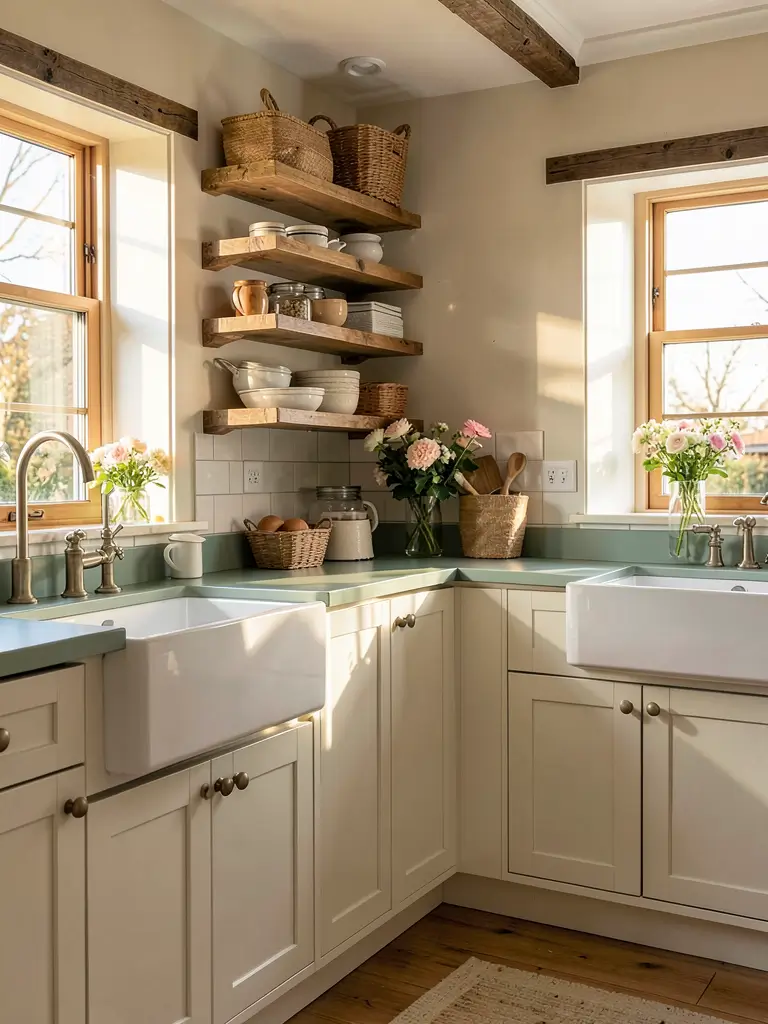
There’s something incredibly cozy about cottage-style kitchens, and soft sage green countertops fit into this aesthetic like they were born for it.
Cottage style is all about warmth, comfort, and that lived-in feel that makes guests immediately relax. Soft sage green brings color without being too bold, and it pairs beautifully with the typical cottage elements—beadboard, open shelving, farmhouse sinks, and vintage-inspired fixtures.
Think white or cream cabinets, maybe with glass fronts on some uppers to display your collection of mismatched vintage dishes. Add some butcher block or reclaimed wood accents, a pot rack hanging from the ceiling, and fresh herbs growing in small pots on the windowsill. The sage green counters tie everything together with that organic, garden-inspired vibe.
Natural materials are key in cottage design. Wood, stone, ceramic, linen—these textures create layers and depth. Your sage green countertops complement rather than compete with these elements. They’re soft enough to feel approachable and durable enough for actual cooking and baking (because cottage kitchens are made for homemade pies, obviously).
Lighting in cottage kitchens tends toward warm and soft. Think pendant lights with fabric shades or vintage-style fixtures that cast a gentle glow. This warm lighting makes the sage green feel even more inviting and cozy.
This is comfort food for your eyes—familiar, welcoming, and timeless.
Contemporary Kitchen with Deep Moss Green Countertops
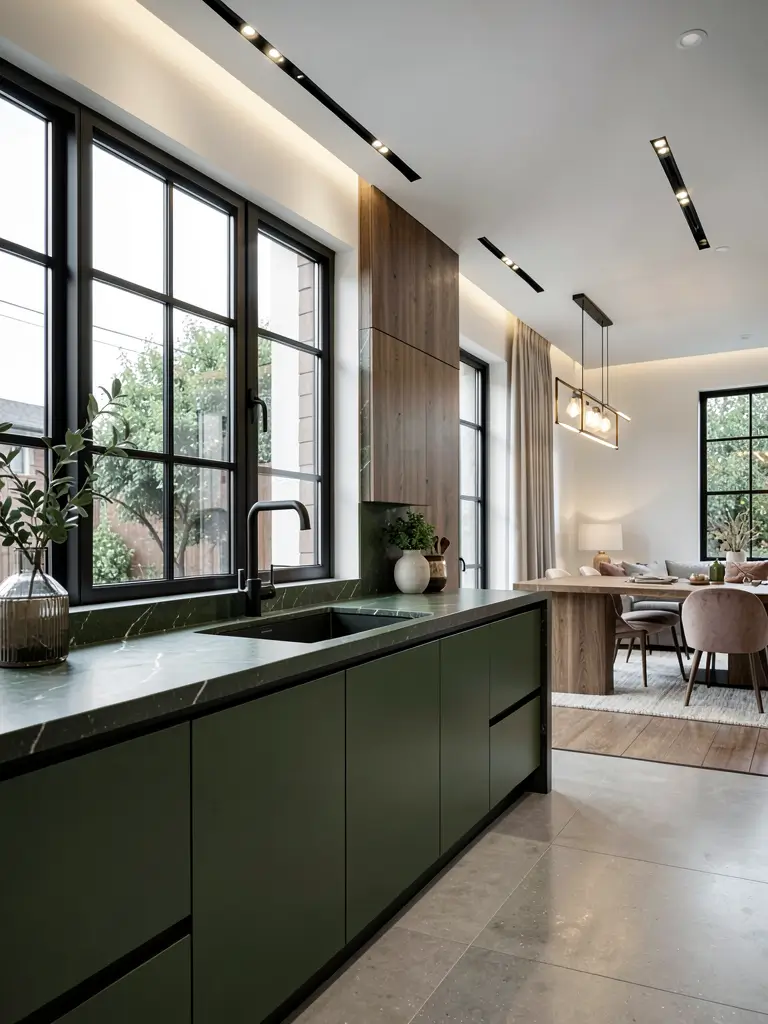
Contemporary design loves clean lines, minimal ornamentation, and unexpected pops of color. Enter deep moss green countertops—the sophisticated, grown-up green that works beautifully in sleek, modern spaces.
Moss green is deeper and more complex than lighter greens. It has gray and brown undertones that make it feel grounded and substantial. In a contemporary kitchen with flat-front cabinets, integrated appliances, and minimal hardware, these countertops add warmth and organic beauty without disrupting the clean aesthetic.
Pair deep moss green counters with white, gray, or even concrete-look cabinets. The contrast between the organic color and the streamlined cabinetry creates visual interest. Add stainless steel appliances, simple pendant lighting, and maybe some concrete or large-format tile flooring, and you’ve got a contemporary space with heart.
Texture matters in contemporary design since you’re working with minimal ornamentation. Consider a honed or leathered finish on your moss green countertops to add subtle tactile interest. The less-shiny surface feels modern and sophisticated while still being practical for everyday use.
This color works particularly well if you have large windows and good natural light. The moss green shifts throughout the day as the light changes, keeping your kitchen from feeling static or boring. It’s like having artwork that constantly evolves—except you can chop vegetables on it.
Small Kitchen Makeover with Light Green Countertops and Open Shelving
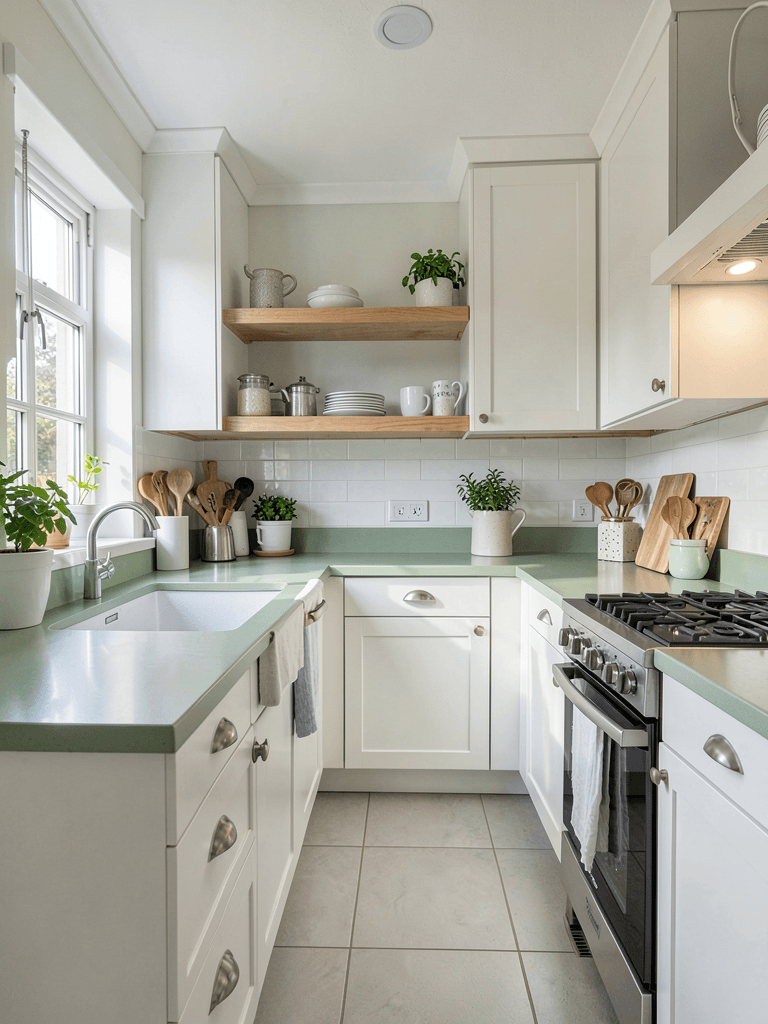
Small kitchens present unique challenges, but light green countertops paired with open shelving can actually make your space feel bigger and brighter.
Light green—think pale sage, mint, or seafoam—reflects light beautifully and doesn’t visually weigh down a space the way darker colors can. When you combine this with open shelving instead of upper cabinets, you create an airy, open feel that tricks the eye into thinking the space is larger than it actually is.
The key here is keeping everything light and bright. White or very light gray walls, light-colored flooring, and minimal heavy elements will maximize your space. The light green counters add personality and warmth without closing things in.
Open shelving has practical benefits in small kitchens too. It forces you to edit your belongings and keep only what you actually use and love. Plus, it makes everything easily accessible without having to open cabinet doors in tight quarters. Display your pretty dishes, glasses, and maybe some plants or decorative objects to add personality.
Keep your small appliances minimal or find ones that match your aesthetic—stainless steel or white typically work well. The fewer visual interruptions you have, the bigger your space will feel. Light green countertops provide color and interest without cluttering the visual field.
Add under-cabinet lighting where you do have cabinets, and make sure you have good task lighting over your work areas. Light is your best friend in small spaces, and the reflective quality of light green countertops helps bounce it around beautifully.
So there you have it—15 ways to incorporate green countertops into your dream kitchen, from subtle sage to dramatic emerald and everything in between. The beautiful thing about green is its versatility. It works in traditional kitchens, modern spaces, coastal vibes, vintage-inspired designs, and everything else you can imagine.
Green brings the outdoors in, adds organic warmth, and creates interest without being as bold as, say, bright red or sunny yellow. It’s sophisticated enough for luxury kitchens but approachable enough for everyday family spaces. Whether you’re doing a full renovation or just dreaming about future possibilities, green countertops deserve serious consideration.
My advice? Find a stone yard or showroom and actually look at samples in person. Photos are great, but seeing how the light plays across different green stones and materials is essential. Bring home samples if you can and live with them for a few days. See how they look in your actual light, with your actual cabinets and flooring.
And hey, if you decide green countertops aren’t for you after all, at least you spent some time daydreaming about gorgeous kitchens. That’s never time wasted in my book. But honestly? I think once you see the right shade of green, you’ll be sold. Happy designing, friend—may your countertops be green and your coffee strong!