15 Stunning Rustic Farmhouse Kitchen Ideas for Cozy Living
Rustic farmhouse kitchens are basically the warm hug of interior design—comforting, inviting, and impossible not to love. I’ve been completely obsessed with this aesthetic for years, and honestly, the appeal only grows stronger. There’s something about reclaimed wood, apron-front sinks, and open shelving that makes you want to bake bread from scratch and host Sunday suppers (even if your actual cooking skills top out at reheating leftovers).
What makes rustic farmhouse kitchens so enduringly popular? They balance old-world charm with modern functionality, creating spaces that feel collected over time rather than designed all at once. They’re cozy without being cluttered, vintage-inspired without feeling dated, and welcoming in a way that sterile modern kitchens sometimes aren’t.
Let’s explore 15 genuinely stunning rustic farmhouse kitchen ideas that’ll transform your space into a cozy haven. Whether you’re planning a full renovation or just want to add some farmhouse charm to your existing kitchen, these ideas will give you all the inspiration you need. Grab your coffee (bonus points if it’s in a vintage enamelware mug) and let’s get started.
1. Modern Rustic Farmhouse Kitchen Makeover Ideas
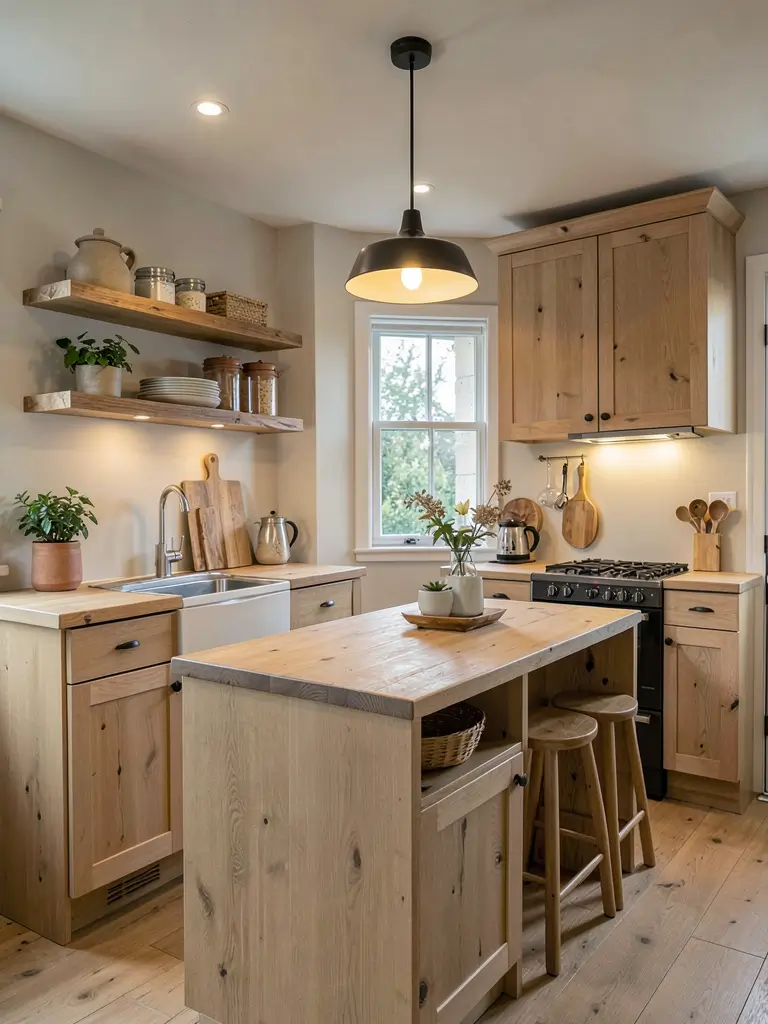
Modern rustic farmhouse kitchens blend traditional farmhouse charm with contemporary clean lines—and honestly, it’s the perfect marriage. This approach takes classic farmhouse elements and updates them with modern materials and streamlined design for spaces that feel both timeless and current.
The key is balancing rustic character with modern simplicity. You’re not going full-on country cottage, but you’re definitely not doing minimalist either.
Creating modern rustic farmhouse style:
Contemporary Elements:
- Clean-lined cabinets: Shaker style rather than overly ornate
- Modern appliances: Stainless steel or panel-ready integrated
- Sleek countertops: Quartz or honed marble rather than busy granite
- Minimal hardware: Simple pulls in matte black or brass
- Streamlined lighting: Farmhouse-inspired but not overly vintage
Rustic Touches:
- Reclaimed wood accents: Island, open shelving, or ceiling beams
- Farmhouse sink: White apron-front is non-negotiable
- Natural materials: Stone, wood, linen, ceramic
- Vintage-inspired details: But edited and curated, not cluttered
- Warm wood floors: Wide plank or reclaimed wood
Color Palette:
- Whites and creams as foundation colors
- Warm wood tones for rustic character
- Black accents for modern contrast
- Soft neutrals (greige, warm gray, soft beige)
Balance Strategy:
- Keep 60% modern/clean, 40% rustic/vintage
- Choose quality over quantity in rustic details
- Let each element breathe—don’t overcrowd
- Mix old and new deliberately
I’ve seen modern rustic farmhouse kitchens with white shaker cabinets, matte black hardware, a reclaimed wood island, and sleek pendant lights—they nail this balance perfectly. The space feels fresh and current while maintaining that essential farmhouse warmth and character.
Ever wondered why this combination works so well? The modern elements prevent the rustic details from feeling too country or dated, while the farmhouse touches keep everything from feeling cold or impersonal. It’s seriously the best of both worlds.
2. Cozy White Rustic Farmhouse Kitchen Designs
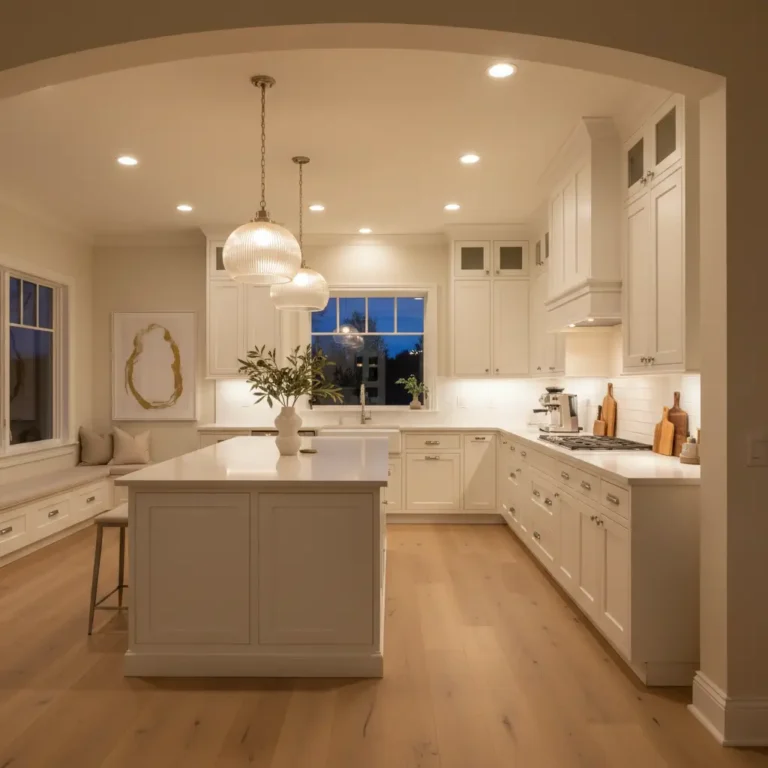
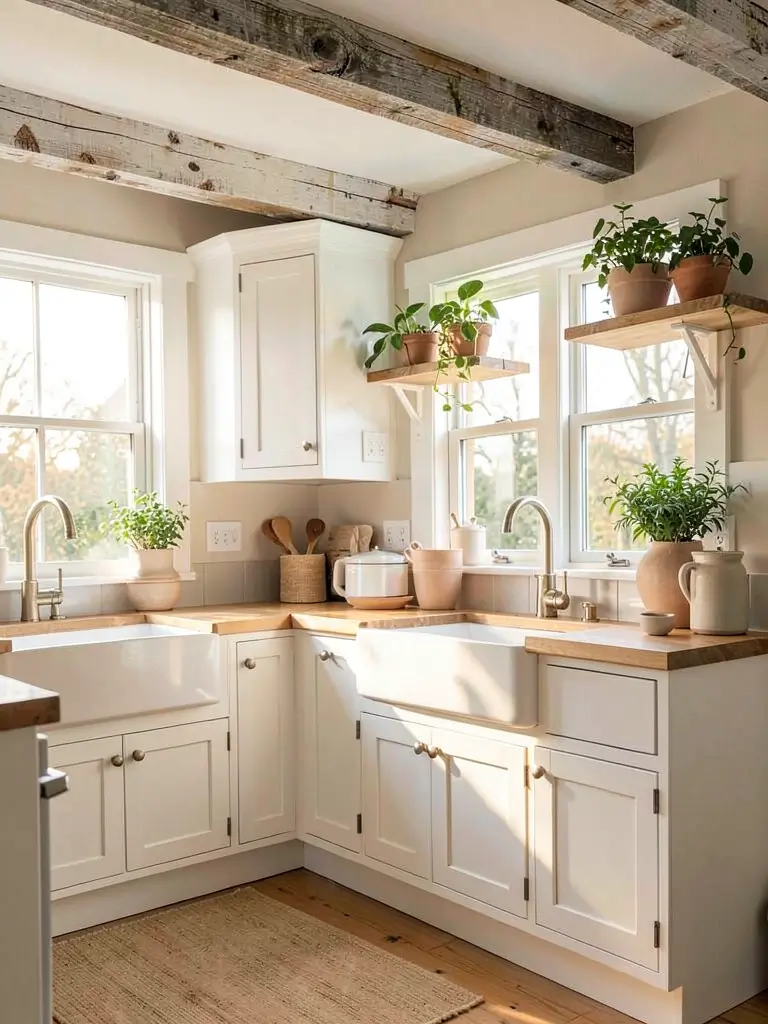
White rustic farmhouse kitchens create bright, airy spaces that still feel incredibly warm and welcoming. This approach uses white as the foundation while layering in texture, natural materials, and vintage details that prevent the space from feeling sterile or bland.
White farmhouse kitchens are basically the classic choice for a reason—they’re timeless, versatile, and create that fresh, clean aesthetic that defines farmhouse style.
White farmhouse kitchen essentials:
Cabinet and Wall Treatments:
- White shaker cabinets: Classic farmhouse profile
- White beadboard or shiplap: Adds texture and character
- Cream or warm white: Softer than stark bright white
- Painted brick: White-washed brick adds rustic texture
- White tongue-and-groove ceiling: Traditional farmhouse detail
Warming Elements:
- Butcher block countertops: Natural wood warms white cabinets
- Wide plank wood floors: Natural or lightly stained
- Open wood shelving: Breaks up white cabinet mass
- Natural fiber textiles: Linen curtains, jute rugs, cotton runners
- Vintage wood accents: Cutting boards, bowls, utensil holders
Texture Layering:
- White subway tile with texture: Handmade or beveled edges
- Textured white backsplash: Not just flat, smooth tile
- Varied white tones: Mix warm and cool whites for depth
- Natural materials: Ceramic, stoneware, wood, metal
Cozy Details:
- Fresh flowers or herbs: Living elements add warmth
- Vintage accessories: White ironstone, enamelware
- Woven baskets: Functional and textural storage
- Soft lighting: Warm LED bulbs create cozy ambiance
I’m obsessed with white farmhouse kitchens that layer different textures—white shaker cabinets, white subway tile with dark grout, butcher block counters, and natural wood floors. The monochromatic white palette creates cohesion while the varied textures prevent everything from feeling flat or boring.
The trick is adding enough warm elements to prevent white farmhouse kitchens from feeling too cold or clinical. Wood, natural fibers, and warm lighting make all the difference between “farmhouse cozy” and “hospital sterile.”
3. Small Space Rustic Farmhouse Kitchen Layout Ideas
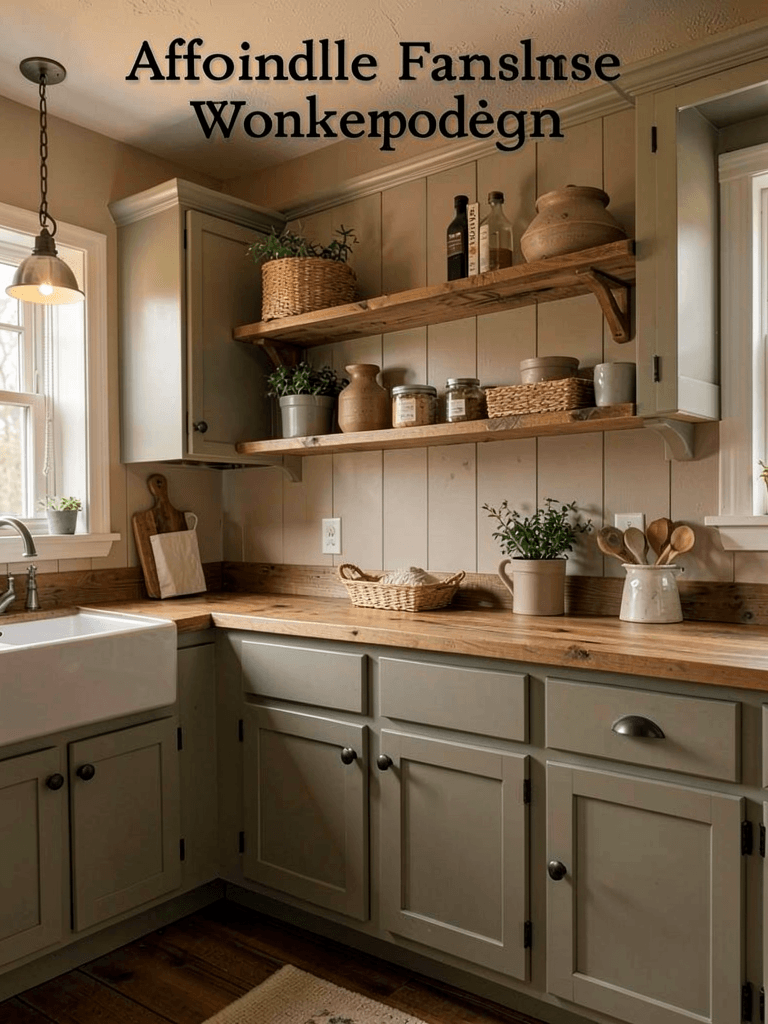
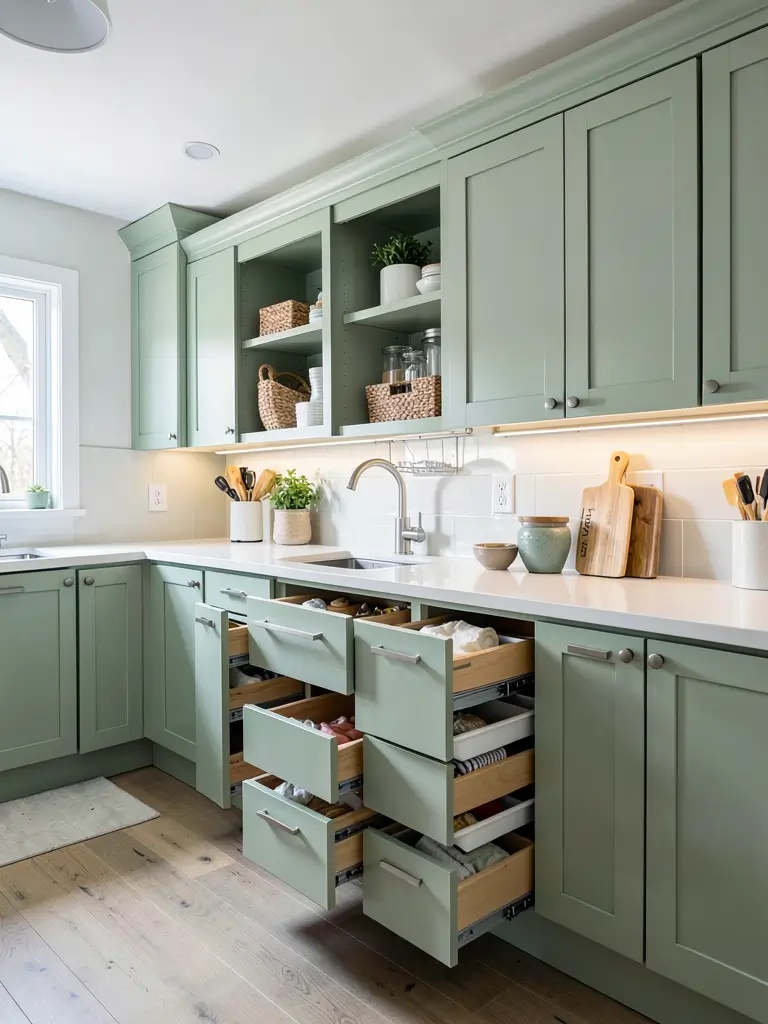
Small kitchen? Rustic farmhouse style actually works beautifully in compact spaces when you focus on smart layout, vertical storage, and carefully curated vintage details rather than overwhelming the space with too much stuff.
The farmhouse aesthetic is inherently practical and functional—those vintage elements weren’t just decorative, they served real purposes. Apply that same functionality to small space planning.
Small farmhouse kitchen strategies:
Layout Optimization:
- Galley or L-shaped layouts: Most efficient for small spaces
- Corner solutions: Lazy susans, pull-out organizers maximize awkward corners
- Slim island or rolling cart: Additional workspace without permanent footprint
- Open flow: Avoid blocking pathways with unnecessary elements
Vertical Storage Solutions:
- Floor-to-ceiling cabinets: Maximize vertical space
- Open shelving: Creates storage without visual weight of upper cabinets
- Pot racks: Hanging storage frees cabinet space
- Wall-mounted magnetic knife strips: Functional and space-saving
- Pegboard or hooks: Hang frequently-used items
Space-Enhancing Choices:
- Light colors: White or cream cabinets keep things bright
- Glass-front uppers: Create depth without solid cabinet weight
- Reflective surfaces: Glossy tile or polished counters bounce light
- Minimal upper cabinets: Maybe just open shelving for airiness
- Large window: Maximize natural light and outdoor views
Curated Vintage Details:
- One statement vintage piece: Maybe an antique hutch or farm table
- Quality over quantity: Few perfect pieces rather than lots of clutter
- Functional vintage: Use pieces that actually serve purposes
- Edited displays: Keep open shelving neat and intentional
I’ve seen tiny farmhouse kitchens—seriously, smaller than most pantries—that use white cabinets, open wood shelving, one vintage hutch, and excellent lighting to feel charming and spacious. The key is restraint and smart planning rather than cramming in every farmhouse element you love.
Small farmhouse kitchens require more discipline than large ones. You can’t have everything, so choose your favorite elements and execute them beautifully rather than trying to fit it all in. 🙂
4. Budget Friendly Rustic Farmhouse Kitchen Transformations
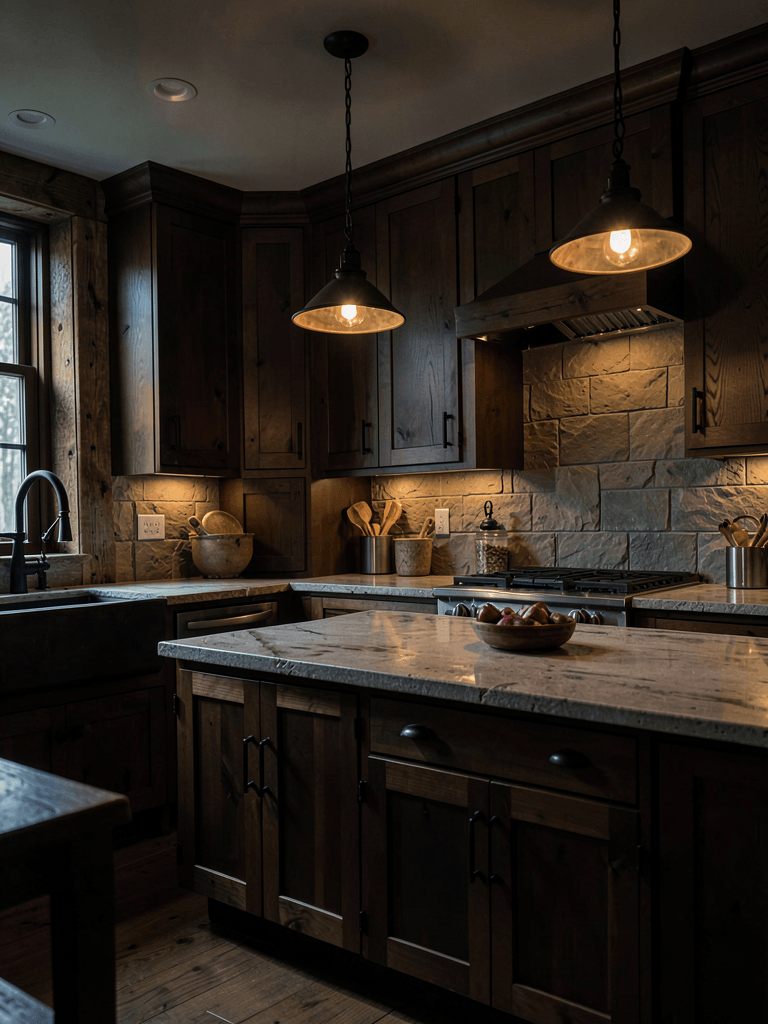
Here’s the great news about rustic farmhouse kitchens—they’re actually perfect for budget makeovers. The aesthetic celebrates vintage, reclaimed, and DIY elements that cost way less than buying everything new from fancy retailers.
Farmhouse style is inherently about making do, repurposing, and collecting over time—lean into that philosophy and your budget will thank you.
Budget farmhouse strategies:
Paint Your Way to Farmhouse:
- Paint existing cabinets white or cream: Transforms everything instantly
- DIY beadboard or shiplap: Affordable materials, doable installation
- Paint walls in warm neutrals: Fresh paint costs minimal money
- Refinish existing counters: Specialty kits create temporary solutions
- Paint floors: Yes, really—painted wood floors are very farmhouse
Thrift and Salvage Finds:
- Vintage hardware: Estate sales, salvage yards for authentic pieces
- Reclaimed wood: Free or cheap from demolition projects, pallets
- Antique accessories: Thrift stores for crocks, enamelware, cutting boards
- Vintage lighting: Restore old fixtures for fraction of new cost
- Old doors or windows: Repurpose as decorative elements
DIY Projects:
- Open shelving from reclaimed wood: Simple brackets, salvaged boards
- Concrete countertops: DIY-able and industrial-farmhouse
- Barn door from pallets: Trendy element for minimal cost
- Painted furniture as island: Old dresser or table repurposed
- Homemade pot rack: Plumbing pipes or ladder as hanging storage
Smart Splurges:
- Farmhouse sink: Splurge here if possible (major visual impact)
- Quality faucet: One beautiful fixture elevates everything
- Good cabinet paint: Cheap paint looks cheap and wears poorly
- Lighting: One statement light fixture worth the investment
I’ve seen complete farmhouse transformations for under $1,500—painted cabinets, DIY open shelving, thrifted accessories, one splurge farmhouse sink. The results look collected and authentic rather than budget-limited because farmhouse aesthetic actually celebrates that approach.
FYI, the “imperfect” nature of farmhouse style works in your favor on a budget. Slightly uneven DIY beadboard? Totally farmhouse. Mixed-and-matched thrifted dishes? Authentic farmhouse. Repurposed furniture? Classic farmhouse resourcefulness.
5. Dark Wood Rustic Farmhouse Kitchen Aesthetic Ideas
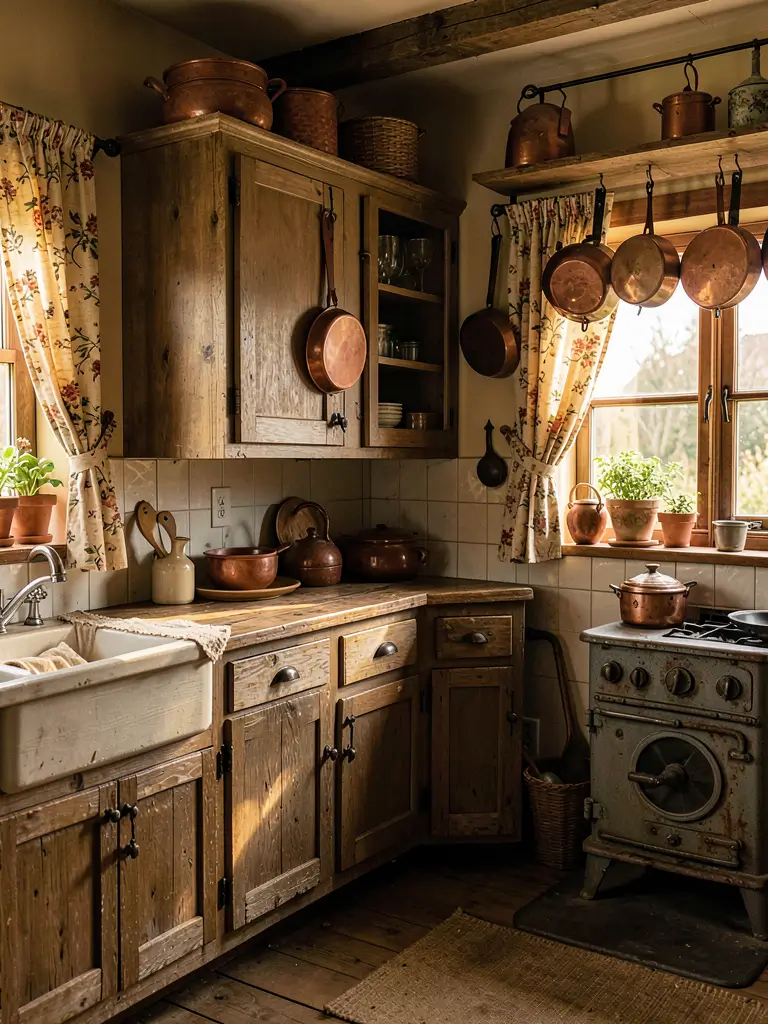
Dark wood in rustic farmhouse kitchens creates rich, sophisticated spaces with serious visual warmth and character. This approach balances darker tones with plenty of light elements to prevent the space from feeling heavy or cave-like.
Dark wood brings depth and grounding to farmhouse kitchens, creating that collected-over-generations vibe that lighter woods sometimes don’t achieve.
Dark wood farmhouse strategies:
Wood Application Options:
- Dark stained island: Walnut or espresso against white perimeter cabinets
- Dark wood floors: Grounds lighter cabinets beautifully
- Reclaimed dark beams: Ceiling beams add architectural character
- Dark wood open shelving: Creates contrast against white walls
- Dark wood furniture: Vintage farm table or hutch
Balancing Darkness:
- White or cream cabinets: Keep perimeter light with dark wood accents
- Plenty of lighting: Layer ambient, task, and accent lighting
- Light countertops: White marble or light wood counters
- White or light backsplash: Subway tile or white brick
- Large windows: Maximize natural light
Wood Choices:
- Walnut: Rich brown with gorgeous grain
- Reclaimed barn wood: Weathered character and authenticity
- Espresso-stained oak: Deep, consistent color
- Dark cherry: Warm reddish-brown tones
- Aged or weathered wood: Character through patina
Style Considerations:
- Rustic hardware: Oil-rubbed bronze or black iron
- Vintage lighting: Wrought iron or aged metal fixtures
- Natural stone: Soapstone or honed granite complements dark wood
- Neutral textiles: Cream, beige, natural linen
I love farmhouse kitchens with white shaker cabinets, a massive dark walnut island, dark wood floors, and reclaimed beams overhead—the contrast creates such sophisticated depth while maintaining farmhouse warmth and character.
The key to dark wood farmhouse kitchens is generous lighting and balancing dark with light. Too much dark wood without enough brightness can feel oppressive rather than cozy. Find that sweet spot and the results are stunning.
6. Vintage Rustic Farmhouse Kitchen Styling Inspiration
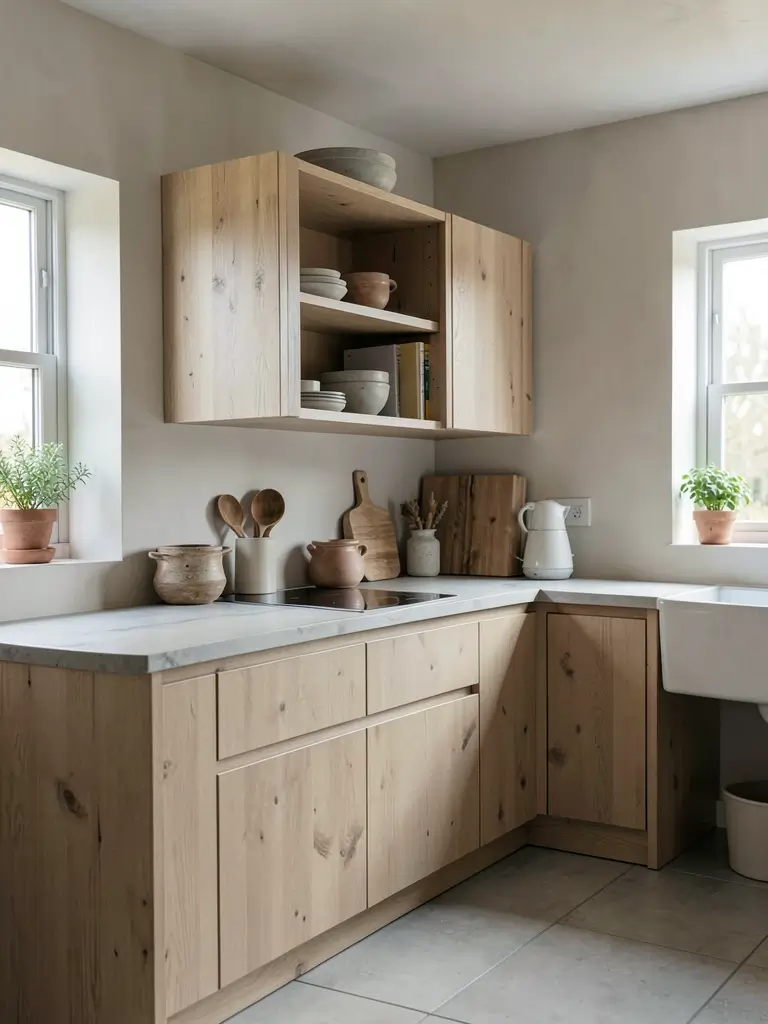
Vintage farmhouse kitchens celebrate authentic old-world charm through genuinely old pieces, vintage-inspired reproductions, and that collected-over-time aesthetic that feels genuine rather than decorator-perfect.
This approach requires patience and hunting but creates the most authentic farmhouse character you can achieve.
Vintage farmhouse essentials:
Authentic Vintage Elements:
- Vintage farm sink: Original cast iron or porcelain if you can find it
- Antique hutch or cabinet: Freestanding furniture adds character
- Vintage light fixtures: Restored originals from salvage yards
- Old cutting boards and utensils: Functional vintage on open shelves
- Antique scales or kitchen tools: Decorative and authentic
Vintage-Inspired Reproductions:
- Retro-style appliances: Big Chill or Smeg with vintage styling
- Reproduction farmhouse sinks: New but authentic-looking
- Vintage-style lighting: New fixtures with old aesthetics
- Reproduction hardware: Cup pulls, bin pulls in aged finishes
Materials and Finishes:
- Worn wood: Distressed or naturally aged
- Chippy paint: Intentionally imperfect painted finishes
- Patinated metals: Aged brass, copper, or iron
- Old brick or stone: Exposed or whitewashed
- Vintage tile patterns: Hex, penny round, or subway in traditional layouts
Styling and Display:
- Open shelving with vintage dishes: White ironstone, enamelware, stoneware
- Vintage canisters and crocks: Functional storage with character
- Old signs and artwork: Farmhouse or food-related vintage signs
- Antique textiles: Vintage grain sacks, old linens
- Collections displayed: Vintage rolling pins, whisks, cookie cutters
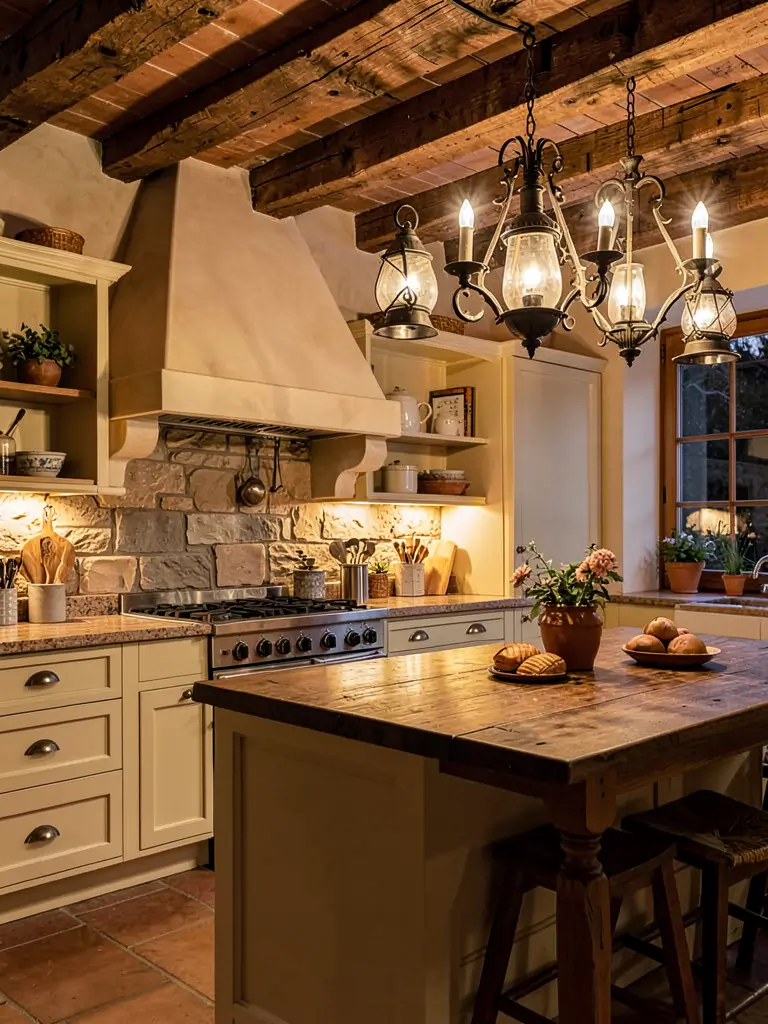
I’ve seen vintage farmhouse kitchens where literally every element has history—restored 1930s sink, genuine antique hutch, vintage pendant lights, old farm table as island. They feel like they’ve been there for a hundred years, which is exactly the point.
The trick with vintage farmhouse kitchens is balancing authenticity with livability. You want vintage character but modern functionality (because 1920s plumbing and wiring leave a lot to be desired, honestly).
7. Minimal Rustic Farmhouse Kitchen Decor Ideas
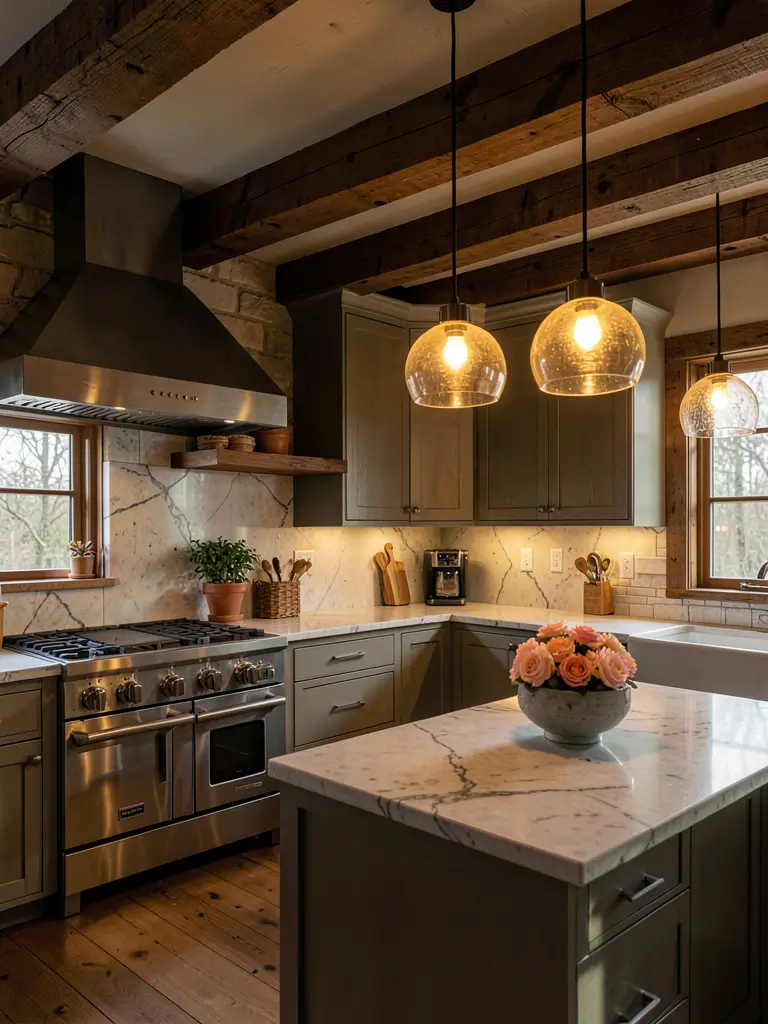
Minimalist farmhouse kitchens strip away the clutter and excessive decoration, focusing on clean lines, quality materials, and just enough rustic character to maintain warmth without overwhelming the space.
This approach proves that farmhouse doesn’t have to mean cluttered or busy—you can have rustic charm with breathing room.
Minimal farmhouse principles:
Streamlined Elements:
- Simple shaker cabinets: Classic profile without excessive detail
- Limited open shelving: Maybe one wall, not everywhere
- Minimal countertop items: Keep surfaces mostly clear
- Edited color palette: Whites, woods, maybe one accent color
- Quality over quantity: Few perfect pieces rather than lots of stuff
Essential Farmhouse Touches:
- Farmhouse sink: One signature element
- Natural wood: Maybe butcher block counter or wood shelving
- Vintage lighting: One or two statement fixtures
- Simple hardware: Cup pulls or bin handles in one finish
- Natural materials: Wood, stone, linen without excess
What to Skip:
- Excessive collections: No walls of vintage rolling pins
- Too many textiles: One rug, simple curtains, done
- Busy patterns: Solid colors or very subtle patterns only
- Clutter displays: Keep open shelving neat and minimal
- Too many vintage accessories: Choose your favorites, skip the rest
Design Approach:
- Negative space matters: Let elements breathe
- Intentional placement: Every visible item has purpose
- Hidden storage: Everything else goes behind closed doors
- Clean lines: Farmhouse character without fussiness
I’m obsessed with minimal farmhouse kitchens that have white shaker cabinets, one wood shelving unit, a farmhouse sink, simple black hardware, and maybe three items on the counter. It’s farmhouse without the visual noise—calming, sophisticated, and still genuinely warm.
IMO, this is the future of farmhouse style. We’re moving away from the “more is more” approach toward edited, intentional spaces that celebrate farmhouse character without overwhelming it with stuff.
8. Rustic Farmhouse Kitchen Island Design Ideas
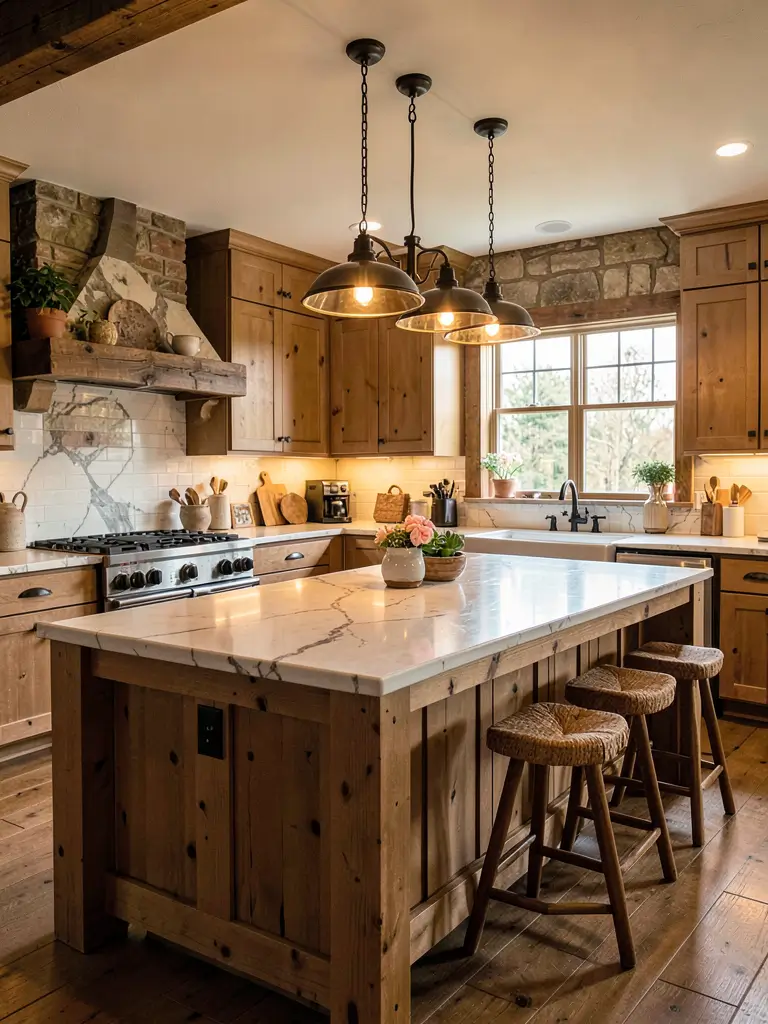
Farmhouse kitchen islands are basically the heart of these spaces—they’re where people gather, where you actually prep food, and often the most visible element in the room. Getting your island right makes the entire kitchen sing.
Islands provide perfect opportunities to introduce major farmhouse character through materials, design, and vintage-inspired details.
Farmhouse island ideas:
Material Choices:
- Reclaimed wood top: Authentic vintage character
- Butcher block: Practical and warm
- Marble or soapstone: Elegant farmhouse luxury
- Painted wood base: White, cream, or vintage color
- Reclaimed barn wood base: Maximum rustic character
Design Styles:
- Furniture-style island: Looks like antique table or cabinet
- Repurposed vintage piece: Actual old dresser, hutch, or table
- Built-in with furniture details: Legs, corbels, decorative elements
- Open shelving base: Display baskets, cookbooks, ceramics
- Two-tone: Different color or material than perimeter cabinets
Functional Elements:
- Farmhouse sink in island: Unexpected and functional
- Seating for 3-4: Family gathering spot
- Open shelving on back: Display-worthy from living areas
- Pot rack above: Hanging storage maximizes space
- Wine or plate rack built in: Functional vintage detail
Styling Details:
- Vintage bar stools: Mismatched for collected look
- Aged hardware: Bin pulls or cup handles
- Decorative corbels or legs: Furniture-like details
- Contrasting countertop: Different from perimeter counters
I love farmhouse islands built from reclaimed barn wood with butcher block tops and vintage-style bar stools—they become the focal point and conversation starter in the entire kitchen. The island is where you can really lean into rustic character.
The beauty of farmhouse islands is how they can differ from your perimeter cabinets. White cabinets everywhere? Make your island dark wood. Light wood cabinets? Paint the island in a vintage color. The contrast creates interest and focal point.
9. Farmhouse Sink Rustic Kitchen Styling Ideas
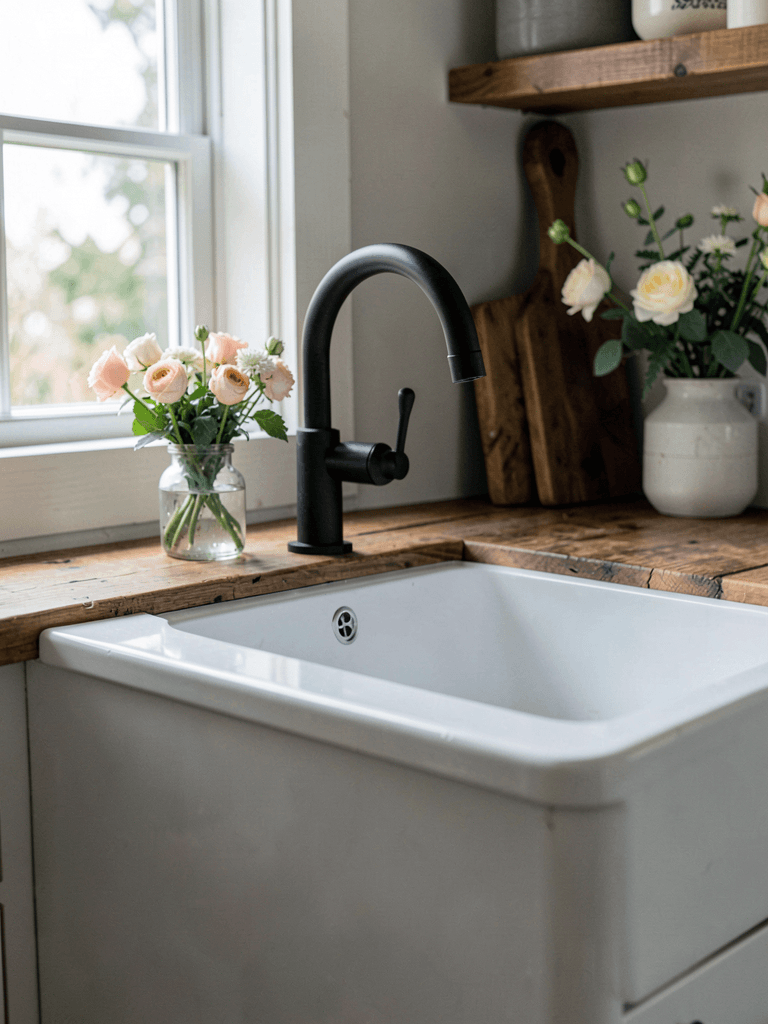
Farmhouse sinks are basically the crown jewel of rustic kitchens—they’re the one element that instantly communicates “farmhouse” more than anything else. These deep, apron-front beauties combine function and vintage charm perfectly.
A farmhouse sink transforms your kitchen even if it’s the only farmhouse element you add. They’re seriously that impactful.
Farmhouse sink styling:
Sink Materials:
- White porcelain: Classic, timeless, quintessentially farmhouse
- Cast iron with enamel: Vintage appeal with durability
- Fireclay: High-end, heat-resistant, gorgeous
- Stainless steel: Modern farmhouse compromise
- Copper: Luxury rustic with living finish
Size and Configuration:
- Single basin: Classic farmhouse look
- Double basin: More functional for some people
- 33-36 inches wide: Standard and most versatile
- Deep basin (10+ inches): Accommodates large pots and pans
Surrounding Elements:
- Wood counters: Butcher block warms white sink beautifully
- Simple faucet: Bridge, gooseneck, or wall-mount styles
- Minimal undermount: Let the sink be the star
- Tile backsplash: Subway or handmade tile complements
- Open shelving nearby: Display vintage dish towels, soap
Styling Details:
- Vintage-style faucet: Brass, oil-rubbed bronze, or chrome
- Cutting board: Rests on sink edges for extra workspace
- Simple dish soap dispenser: Built-in or simple bottle
- Minimal surrounding clutter: Let sink’s beauty show
- Fresh flowers or herbs: Small arrangement near sink
I’ve seen kitchens where a farmhouse sink installation completely transformed the aesthetic from builder-grade to charming farmhouse. It’s genuinely worth saving up for if you’re doing any kitchen renovation.
The thing about farmhouse sinks is they’re both beautiful and functional. That deep basin accommodates ridiculous amounts of dishes, oversized pots, and even bathing small children or dogs (not that I’m speaking from experience or anything… :/).
10. Rustic Open Shelving Farmhouse Kitchen Ideas
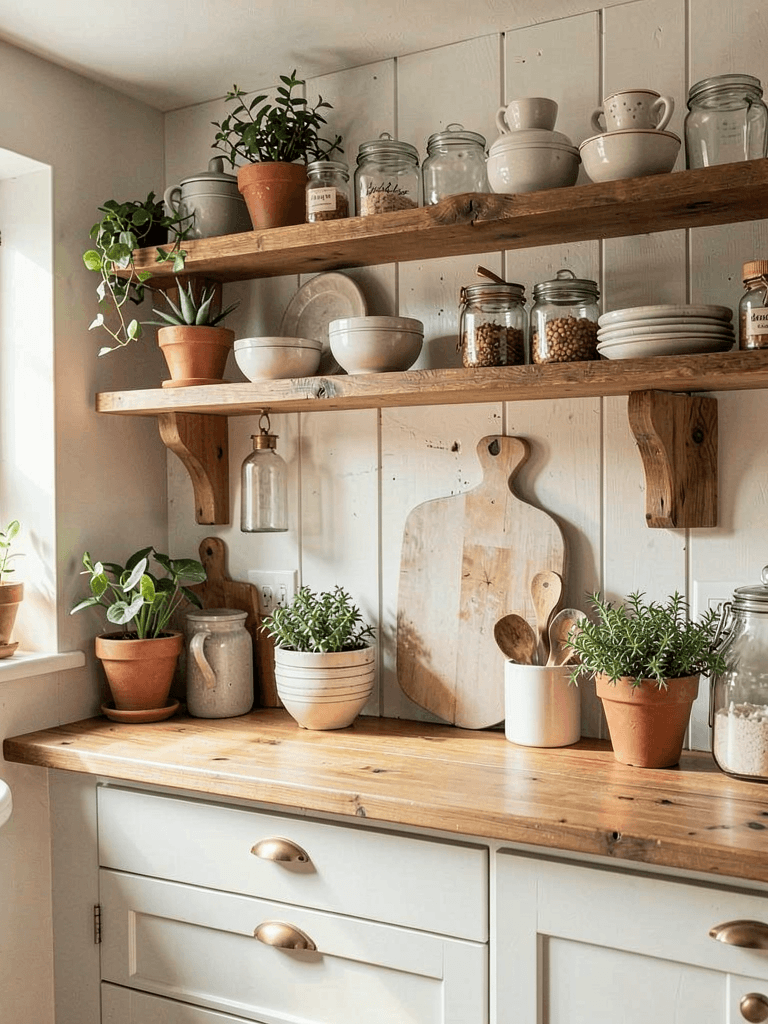
Open shelving in farmhouse kitchens serves double duty—functional storage and decorative display. When styled properly, open shelves add rustic character while showcasing your favorite dishes, vintage finds, and everyday items.
Open shelving is quintessentially farmhouse because it celebrates the beauty of everyday objects rather than hiding everything behind closed doors.
Open shelving farmhouse style:
Shelving Materials:
- Reclaimed wood planks: Authentic rustic character
- Butcher block: Warm, substantial, beautiful
- White-painted wood: Bright and farmhouse-appropriate
- Metal brackets with wood: Industrial-farmhouse combination
- Floating shelves: Clean, modern farmhouse
Strategic Placement:
- Flanking range or sink: Traditional symmetrical placement
- One wall instead of uppers: Opens up the kitchen visually
- Corner shelving: Makes use of awkward spaces
- Above windows: Unexpected and charming
- Mixed with closed cabinets: Not all open, just strategic areas
What to Display:
- White dishes: Ironstone, porcelain, simple white ceramics
- Vintage crocks and pitchers: Functional and decorative
- Cookbooks: Attractive spines add color and interest
- Glassware and mugs: Everyday items become decor
- Woven baskets: Contain clutter while adding texture
- Cutting boards and serving pieces: Lean against wall
Styling Principles:
- Curated, not cluttered: Less is more
- Vary heights and shapes: Creates visual interest
- Leave breathing room: Don’t pack shelves full
- Cohesive color palette: Mainly whites, woods, neutrals
- Functional beauty: Display things you actually use
I love farmhouse kitchens with reclaimed wood open shelving displaying white dishes, vintage crocks, and woven baskets. It looks collected and authentic rather than styled to death—like a kitchen where people actually cook and live.
One reality check about open shelving: it requires maintaining that curated look. Dust happens, grease settles, and mismatched random stuff can pile up. If you’re not willing to keep it neat, maybe stick to closed cabinets with just a bit of open shelving for decoration.
11. Elegant Rustic Farmhouse Kitchen Lighting Ideas
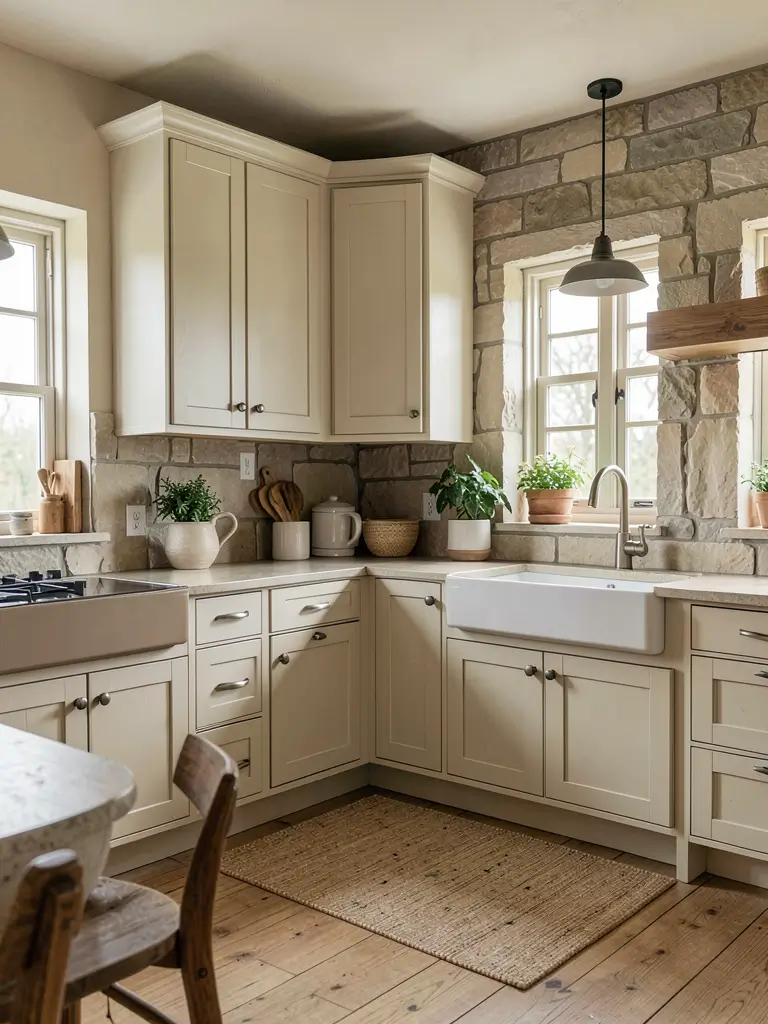
Lighting in rustic farmhouse kitchens sets the entire mood—it’s functional necessity that also serves as major decorative element. The right fixtures bring vintage charm, warmth, and that essential farmhouse character.
Farmhouse lighting balances practicality with vintage-inspired beauty, creating well-lit spaces that feel cozy and charming.
Farmhouse lighting options:
Pendant Light Styles:
- Schoolhouse pendants: Classic glass shades over island
- Barn lights: Metal shades in black, white, or aged finishes
- Mason jar or glass jug lights: Quintessentially farmhouse
- Wire cage pendants: Industrial-farmhouse combination
- Rustic wood and metal: Mixed materials for character
Chandelier Options:
- Candelabra-style: Traditional elegance
- Wagon wheel or wood beam: Dramatic rustic statement
- Wrought iron: Old-world farmhouse charm
- Crystal and metal: Elegant farmhouse luxury
- Simple drum shade: Modern farmhouse restraint
Functional Lighting:
- Under-cabinet LED strips: Hidden task lighting
- Recessed cans: Ambient lighting throughout
- Sconces flanking range or sink: Decorative and functional
- Track lighting: Adjustable for task areas (but make it farmhouse-appropriate)
Fixture Finishes:
- Oil-rubbed bronze: Warm, aged appearance
- Matte black: Modern farmhouse contrast
- Aged brass or copper: Vintage warmth
- Galvanized metal: Authentic farmhouse character
- Weathered wood: Rustic and organic
Placement Strategy:
- Multiple pendants over island (usually 2-3)
- Chandelier over dining table in open concept
- Sconces for ambient lighting and decoration
- Layer different types for flexibility and warmth
I’m obsessed with farmhouse kitchens featuring oversized barn pendants in black over the island, a rustic wood chandelier over the dining table, and simple sconces flanking the range. The layered lighting creates warmth and functionality while providing serious farmhouse character.
The beauty of farmhouse lighting is how statement-making it can be. Even if your budget is limited elsewhere, investing in gorgeous light fixtures transforms the entire space and establishes that farmhouse aesthetic immediately.
12. DIY Rustic Farmhouse Kitchen Decor Hacks
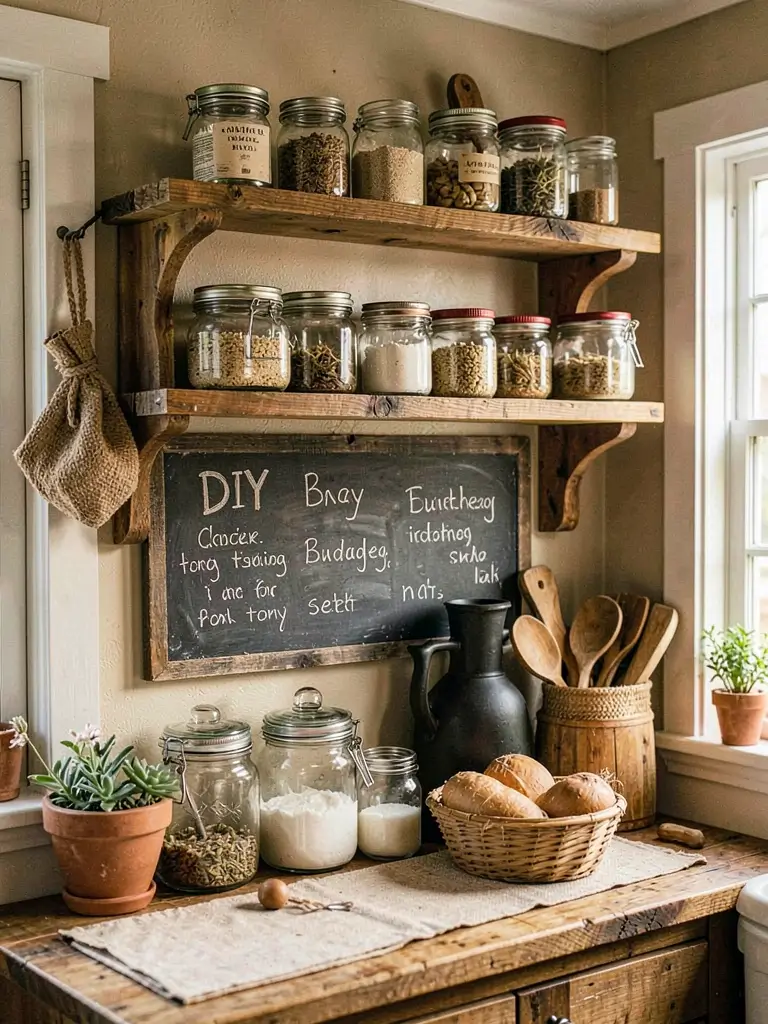
DIY projects are basically synonymous with farmhouse style—this aesthetic celebrates handmade, repurposed, and creatively resourceful elements. Plus, DIY saves serious money while adding authentic character.
Farmhouse style is inherently about making do and creating with your hands. Lean into that spirit and your kitchen will feel genuinely farmhouse rather than catalog-bought.
DIY farmhouse projects:
Cabinet and Storage DIYs:
- Paint existing cabinets: Transform with farmhouse white or cream
- Add beadboard to cabinet ends: Textural farmhouse detail
- Install DIY open shelving: Reclaimed wood and simple brackets
- Create pot rack from ladder: Hang from ceiling for storage
- Repurpose dresser as island: Paint and add countertop
Backsplash and Wall Treatments:
- Peel-and-stick subway tile: Affordable temporary option
- DIY shiplap: Inexpensive boards create farmhouse texture
- Painted brick: Whitewash existing brick yourself
- Beadboard backsplash: Paintable and budget-friendly
- Reclaimed wood accent wall: Salvaged boards create character
Decor and Accessories:
- Mason jar storage: Free/cheap organizational solution
- Paint terra cotta pots: Create vintage-looking planters
- Frame vintage tea towels: Instant farmhouse art
- Create chalkboard from salvaged wood: Menu board or art
- Refinish vintage finds: Thrifted pieces restored to glory
Lighting DIYs:
- Wire basket pendant lights: DIY from hardware store baskets
- Mason jar chandelier: Multiple jars wired together
- Painted fixture makeover: Transform dated fixtures with paint
- Industrial pipe light: Plumbing pipes create industrial-farmhouse lighting
I’ve completed several DIY farmhouse projects—painted cabinets, built reclaimed wood shelving, created a pot rack from an old ladder—and the satisfaction is genuinely incredible. Plus, you get exactly what you want at a fraction of retail cost.
The thing about DIY farmhouse projects is they don’t have to be perfect. Slightly crooked shiplap? Farmhouse character. Uneven paint on that refinished vintage hutch? Authentic patina. The “handmade” quality is actually part of the appeal.
13. Neutral Tone Rustic Farmhouse Kitchen Ideas
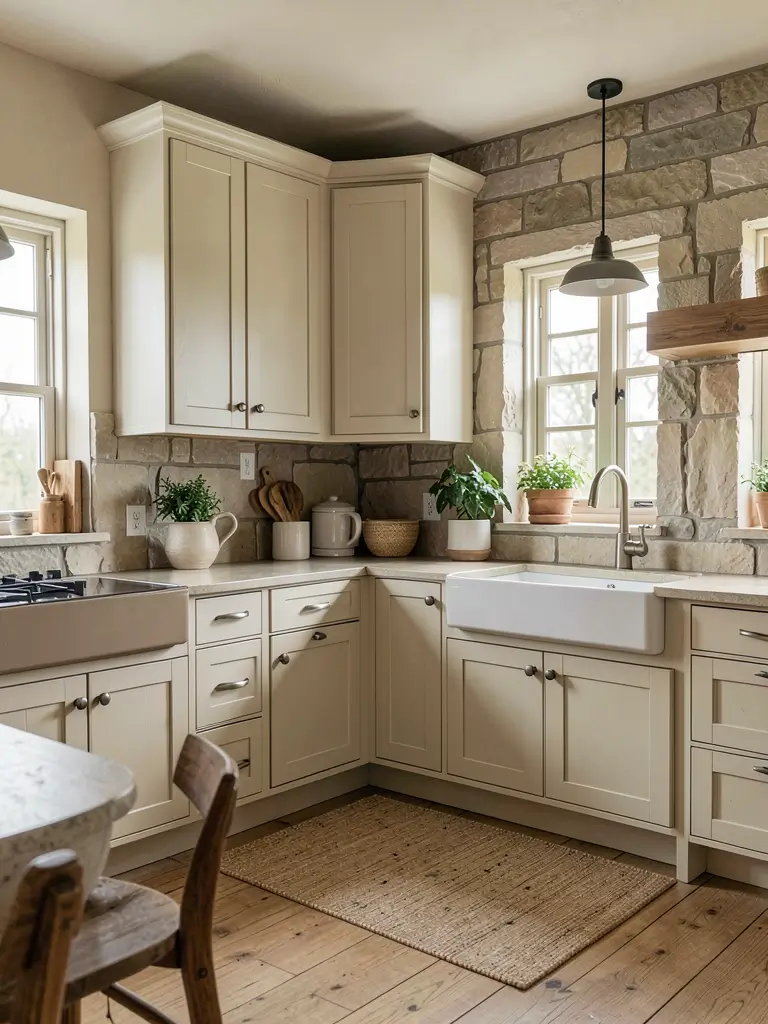
Neutral farmhouse kitchens create serene, sophisticated spaces using shades of white, cream, beige, gray, and natural wood. This palette feels timeless, calming, and allows materials and textures to shine.
Neutral doesn’t mean boring in farmhouse kitchens—it means celebrating natural materials and subtle variations rather than relying on color for interest.
Neutral farmhouse palette:
Cabinet Colors:
- Warm white or cream: Soft and inviting
- Light gray: Contemporary farmhouse neutral
- Greige: Perfect blend of gray and beige
- Natural wood: Light to medium tones
- Two-tone neutral: White uppers with gray or wood lowers
Countertop Choices:
- White or cream quartz: Clean and practical
- Marble: Classic farmhouse luxury in neutral tones
- Butcher block: Warm wood neutral
- Honed granite: Subtle neutral stone
- Concrete: Industrial-farmhouse neutral
Backsplash Options:
- White or cream subway tile: Timeless neutral
- Natural stone: Travertine, limestone, marble
- Neutral handmade tile: Subtle color variation
- Beadboard painted neutral: Textural and simple
- Brick whitewashed or natural: Organic neutral
Accent Neutrals:
- Soft linen: Curtains, seat cushions, towels
- Natural jute or sisal: Rugs and textiles
- Woven baskets: Storage in warm neutral tones
- Ceramic and stoneware: Neutral dishes and accessories
- Aged metals: Bronze, brass, copper as neutrals
Texture is Essential:
- Layer different neutral tones for depth
- Mix matte and glossy finishes
- Combine smooth and rough textures
- Vary materials (wood, stone, fabric, metal)
I love neutral farmhouse kitchens with cream cabinets, white marble counters, natural wood floors, and linen curtains—the monochromatic palette creates cohesion while varied textures prevent everything from feeling flat.
The key to successful neutral farmhouse kitchens is understanding that texture becomes your color. Without bold hues, you need interesting materials, varied finishes, and dimensional elements to create visual interest.
14. Luxury Rustic Farmhouse Kitchen Designs
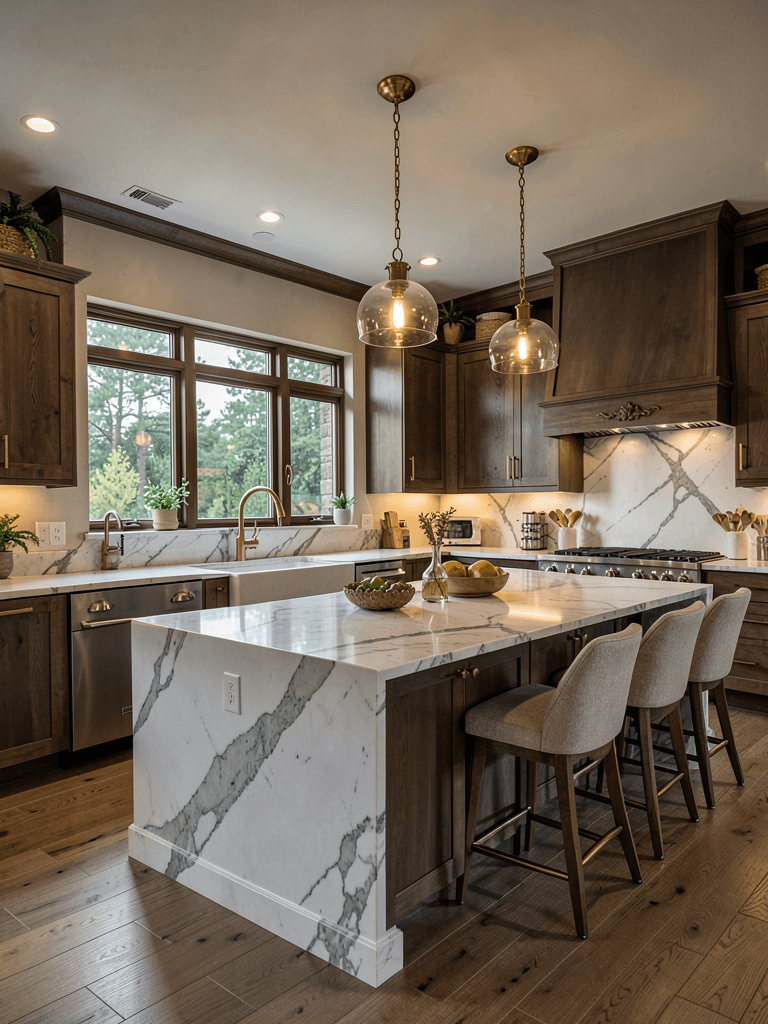
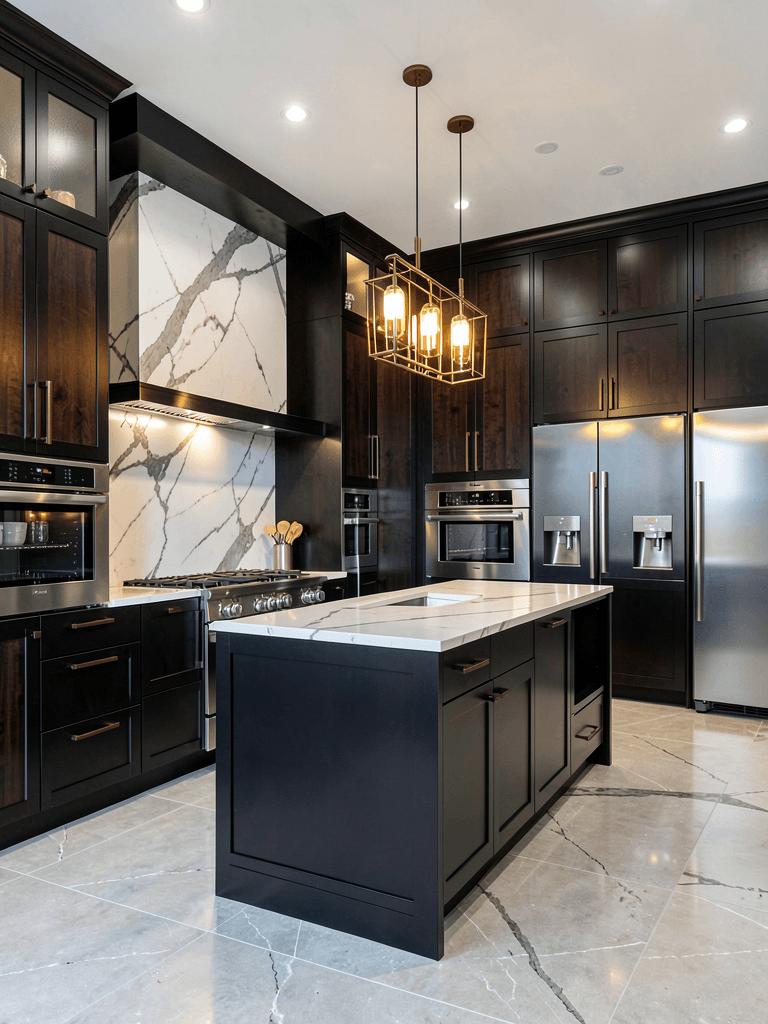
Luxury rustic farmhouse kitchens prove that farmhouse doesn’t mean budget or basic—it means creating sophisticated spaces using premium materials, custom details, and high-end finishes while maintaining rustic warmth.
This approach elevates farmhouse charm with quality craftsmanship and luxurious touches that create genuinely elegant spaces.
Luxury farmhouse elements:
Premium Materials:
- Marble countertops: Calacatta or Statuary marble
- Custom cabinetry: Highest quality construction and finish
- Reclaimed antique wood: Authentic beams or counters with provenance
- High-end appliances: Professional ranges, panel-ready refrigerators
- Quality hardware: Solid brass, hand-forged iron, or custom pieces
Architectural Details:
- Coffered or beamed ceilings: Custom woodwork overhead
- Custom range hood: Plaster, wood, or stone focal point
- Built-in hutch or butler’s pantry: Custom storage solutions
- Crown molding and trim: Substantial, quality millwork
- Archways or custom doorways: Architectural character
Luxury Touches:
- Chandelier lighting: Crystal, wrought iron, or custom fixtures
- Farmhouse sink in premium material: Fireclay, copper, or hand-hammered
- Wine storage or beverage center: Built-in luxury convenience
- Pot filler faucet: Functional luxury at range
- Heated floors: Hidden comfort and luxury
Custom Details:
- Furniture-quality island: Custom-built with fine details
- Glass-front cabinets with lighting: Display-worthy interiors
- Custom tile work: Handmade or artistic backsplash
- Antique or custom hardware: Unique pieces with character
I’ve toured luxury farmhouse kitchens with reclaimed 200-year-old beams, custom white oak cabinetry, marble slab backsplashes, and enormous iron chandeliers—they’re stunning, sophisticated, and maintain genuine farmhouse soul despite the luxury price tag.
The trick with luxury farmhouse is balancing high-end finishes with authentic rustic character. Too polished and you lose farmhouse warmth. The imperfect, aged, organic elements keep it grounded and real.
15. Warm Cozy Rustic Farmhouse Kitchen Inspiration
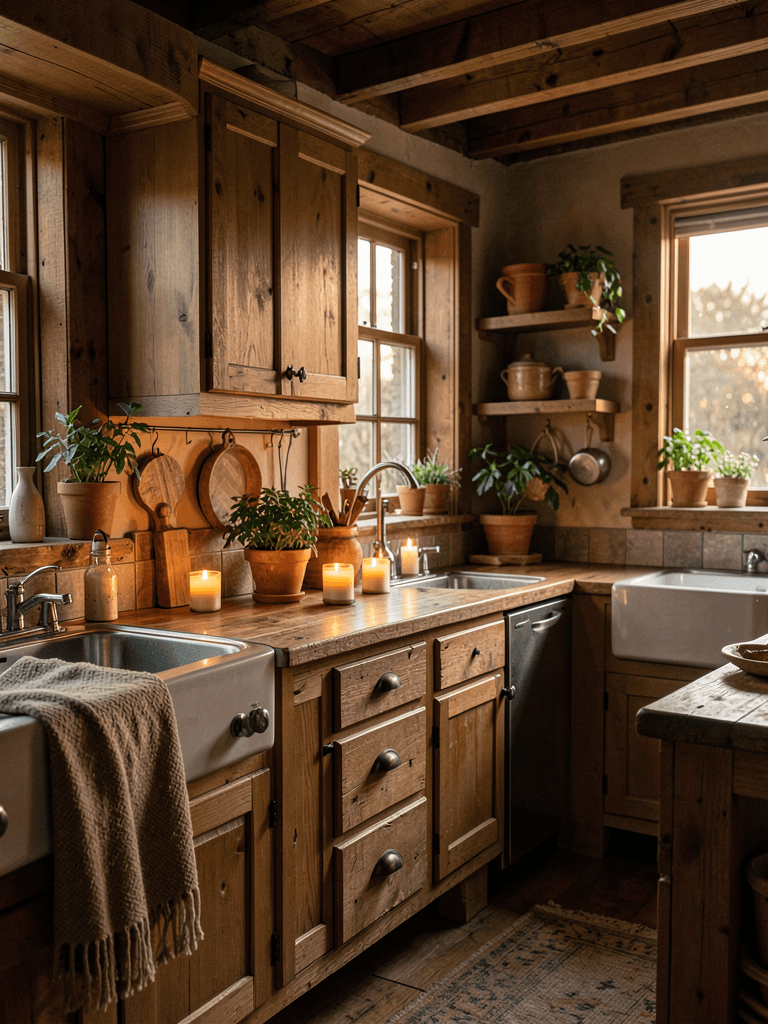
Warm, cozy farmhouse kitchens create those genuinely inviting spaces where everyone wants to gather. These kitchens prioritize comfort, warmth, and that lived-in feeling over perfection or trendiness.
This is farmhouse at its coziest—the kitchens that make you want to bake cookies, host friends, and linger over coffee on Sunday mornings.
Creating ultimate coziness:
Warm Color Palette:
- Cream and warm white: Instead of stark bright white
- Honey or golden wood tones: Warm rather than cool grays
- Soft beige and tan: Neutral warmth throughout
- Maybe soft sage or muted blue: Gentle color accents
- Warm metals: Brass, copper, aged bronze
Cozy Materials:
- Butcher block counters: Warm wood you can touch
- Wide plank wood floors: Natural warmth underfoot
- Soft textiles everywhere: Linen curtains, cotton rugs, fabric seat cushions
- Natural fiber baskets: Woven warmth and texture
- Worn wood: Vintage or distressed finishes
Comfort Elements:
- Seating at island: Comfortable stools invite lingering
- Reading nook or window seat: If space allows
- Coffee station: Dedicated spot for morning ritual
- Fresh flowers or herbs: Living warmth and fragrance
- Cookbooks displayed: Invite cooking and sharing
Lighting for Warmth:
- Warm LED bulbs (2700K temperature)
- Dimmable lights: Adjust for time of day and mood
- Multiple sources: Layer for flexibility and coziness
- Candles: Flickering warmth (safely placed)
- Pendant lights with warm glow: Amber glass or warm metal
Lived-In Details:
- Visible cookware: Beautiful pots hung or displayed
- Fresh bread or fruit: Real food as decoration
- Family photos or children’s art: Personal touches
- Well-worn cutting boards: Patina from actual use
- Comfortable imperfection: Not styled to death
I love cozy farmhouse kitchens with cream cabinets, butcher block everywhere, warm wood floors, soft linen curtains, and that lived-in feeling where you can tell people actually cook and gather. They’re the opposite of pristine showrooms—they’re real, welcoming, genuinely warm spaces.
The secret to cozy farmhouse kitchens is embracing imperfection and prioritizing comfort over perfection. Slightly messy open shelves? That’s real life. Dog bed in the corner? Family member. Fresh flowers starting to wilt? Still beautiful. The imperfection is what makes it cozy.
So there you have it—fifteen genuinely stunning approaches to rustic farmhouse kitchens that create cozy, welcoming spaces across every budget, size, and style preference from minimal modern farmhouse to vintage-packed charm.
What I love most about rustic farmhouse kitchens is how they celebrate authenticity, warmth, and that collected-over-time aesthetic. These aren’t kitchens trying to impress—they’re spaces designed for actual living, cooking, gathering, and making memories.
Whether you’re ready to commit to a full farmhouse renovation with reclaimed beams and custom cabinetry, working with a tight budget and DIY skills, or just adding farmhouse touches to your existing kitchen, this style adapts beautifully to your situation and resources.
The beauty of farmhouse style is how it embraces imperfection, celebrates handmade and vintage elements, and creates spaces that feel genuinely welcoming rather than decorator-perfect. It’s design for real life, which makes it eternally appealing.
Now if you’ll excuse me, I need to go scroll through more farmhouse kitchen photos and add to my ever-growing collection of vintage crocks and enamelware. For inspiration purposes, naturally. Happy farmhouse designing, friends! 🙂