15 Stunning Sage Green Kitchen Ideas for a Dream Makeover
Look, I’m just gonna say it—sage green is having a serious moment right now, and I’m absolutely here for it. If you’re tired of the same old boring white kitchens or those aggressive navy blue cabinets that everyone and their mother installed in 2019, sage green might just be your kitchen’s salvation. It’s earthy without being boring, sophisticated without screaming “I tried too hard,” and honestly? It makes your morning coffee routine feel like you’re living in a Parisian cottage.
I’ve been obsessed with sage green kitchens for a while now (maybe a little too obsessed, according to my partner who’s tired of me screenshotting kitchen inspo at 2 AM). But seriously, this color works magic in kitchens of all sizes and styles. Whether you’re working with a shoebox-sized apartment kitchen or a sprawling open-plan space that makes the rest of us jealous, sage green adapts like a chameleon.
So grab your favorite beverage, get comfy, and let’s chat about 15 absolutely stunning ways to incorporate sage green into your kitchen makeover. Trust me, by the end of this, you’ll be texting your contractor. 🙂
1. Sage Green Kitchen Cabinets with Gold Hardware
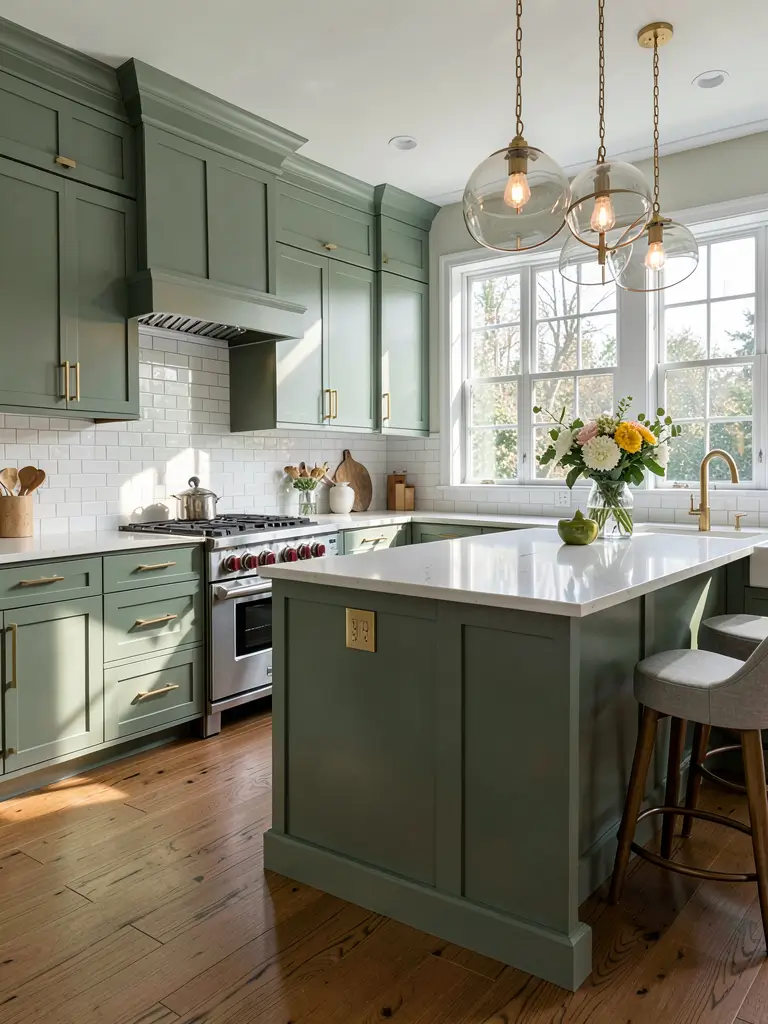
Okay, can we talk about how ridiculously gorgeous sage green cabinets look with gold hardware? This combination is basically the “little black dress” of kitchen design—timeless, elegant, and works for almost any occasion (or in this case, any kitchen style).
The magic happens when that soft, muted sage meets warm brass or brushed gold handles and knobs. The green provides this calming, natural foundation, while the gold adds just enough warmth and luxury to prevent the space from feeling too casual or dated. I’ve seen this combo in person, and the way light catches those gold accents against the sage background? Chef’s kiss.
Here’s what makes this pairing work so well:
- Warm-toned gold (like brass or champagne finishes) complements the yellow undertones in sage green
- The contrast creates visual interest without being jarring
- It bridges traditional and modern aesthetics effortlessly
- Small hardware changes can completely transform the look without breaking the bank
Pro tip: Don’t go for super shiny, lacquered gold—it can look cheap against sage green. Instead, opt for brushed, satin, or antique gold finishes. They have this subtle patina that makes your kitchen look collected over time rather than “I bought everything from the same catalog in one afternoon.”
2. Modern Sage Green Kitchen Design Ideas
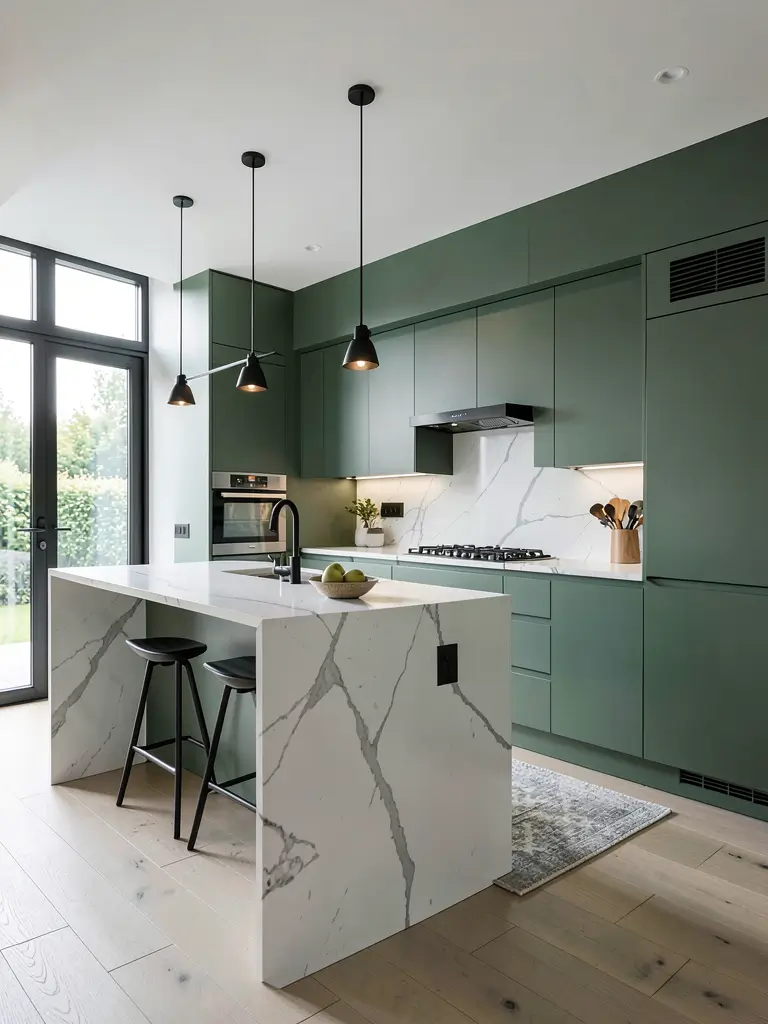
Ever wondered why sage green works so perfectly in modern kitchens? It’s because this color manages to soften all those clean lines and minimalist vibes without compromising the contemporary aesthetic.
In modern sage green kitchens, you’ll want to focus on sleek cabinet profiles—think flat-panel doors or simple shaker styles without ornate details. The sage green becomes your statement element, so you don’t need fussy moldings or decorative corbels competing for attention. Pair your sage cabinets with ultra-modern elements like integrated appliances, handleless cabinets (those push-to-open mechanisms are so satisfying, FYI), and waterfall countertops in neutral materials.
The modern approach also means playing with different sheens and textures:
- Matte sage cabinets create that sophisticated, velvety look
- High-gloss finishes reflect light and make small spaces feel bigger
- Mixed materials like concrete countertops or stainless steel appliances provide industrial contrast
I’m particularly obsessed with modern sage green kitchens that incorporate open shelving. The combination of those clean sage lower cabinets with floating wooden or metal shelves creates this perfect balance between structured and organic. Plus, you get to display your fancy ceramics collection (we all have one, right?).
3. Small Sage Green Kitchen Makeover Inspiration
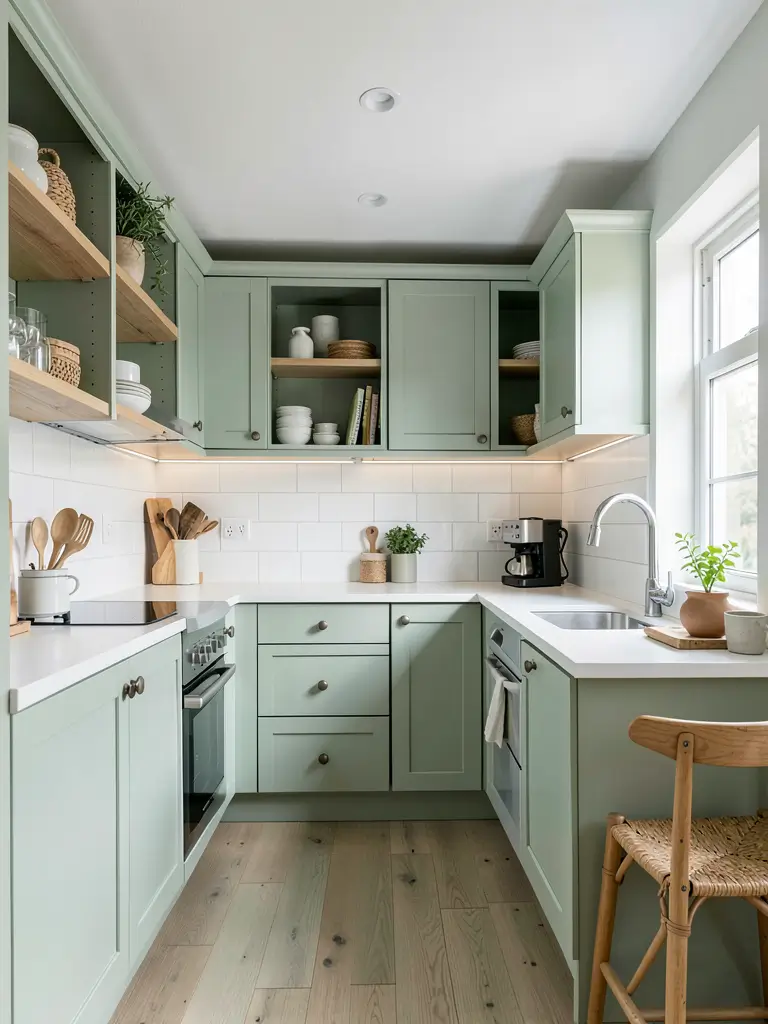
Small kitchen? Don’t even worry about it. Sage green might actually be your secret weapon for making that compact cooking space feel way more spacious and inviting than it actually is.
Here’s the deal: unlike darker colors that can make small kitchens feel like caves, sage green has enough lightness to keep things airy while still providing color personality. It’s not as stark as white (which can feel cold and sterile in windowless galley kitchens), but it doesn’t close in the walls like forest green or charcoal gray.
For small sage green kitchen makeovers, consider these game-changing strategies:
- Paint upper cabinets in sage and keep lower cabinets white or cream to maintain openness
- Use sage on an accent wall rather than all four walls if you’re nervous about commitment
- Incorporate reflective surfaces like glass tile backsplashes to bounce light around
- Choose lighter sage shades with more gray undertones for maximum space-enhancing power
I’ve seen tiny kitchens transformed with just a fresh coat of sage green paint on the cabinets and some updated hardware. Seriously, the before-and-afters are wild. The color draws your eye around the space in a way that makes it feel intentionally cozy rather than frustratingly cramped.
And honestly? Small kitchens with sage green feel like those charming European apartments where everything is compact but somehow perfectly appointed. You’re not “making do” with a small kitchen—you’re creating an intimate, stylish culinary space.
4. Sage Green and White Kitchen Color Combinations
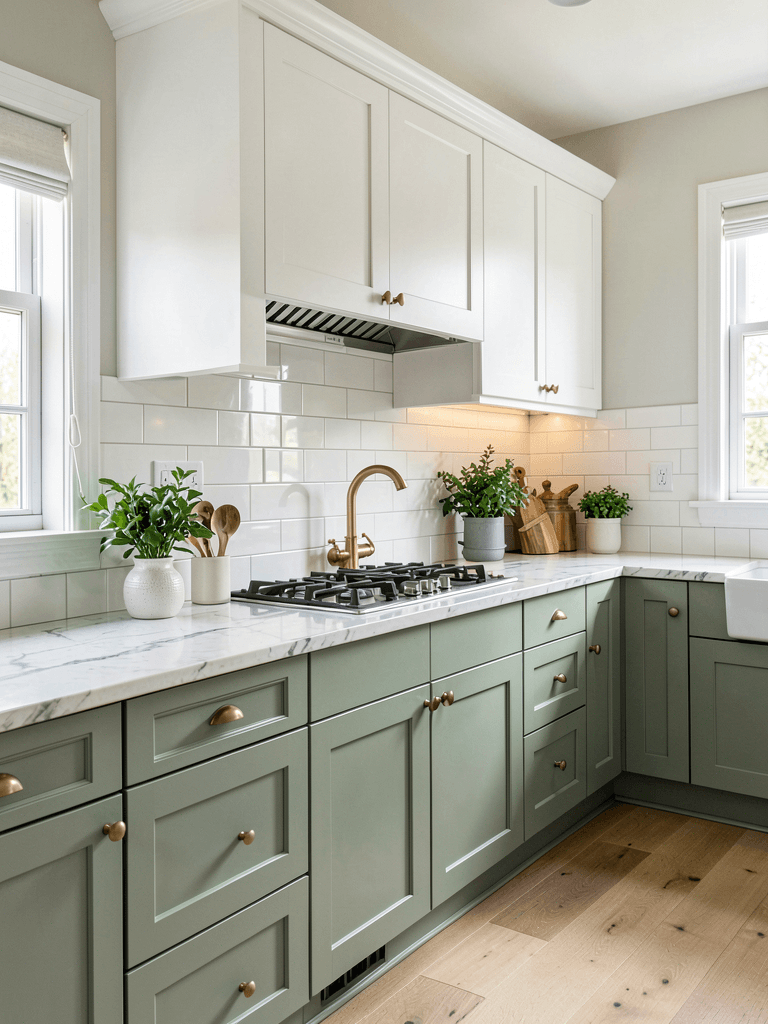
This combo is basically foolproof. Like, you’d have to actively try to mess this up. The pairing of sage green and white creates this fresh, clean aesthetic that works in literally every design style from coastal to contemporary to cottage.
The beauty of sage and white lies in the balance. White keeps things bright and crisp, preventing the sage from ever feeling heavy or outdated. Meanwhile, the sage provides warmth and character that pure white kitchens often lack (we’ve all seen those all-white kitchens that feel like operating rooms, right?).
Here are my favorite ways to combine these two colors:
- Sage lower cabinets + white upper cabinets: Creates visual lightness and doesn’t overwhelm the space
- White cabinets + sage walls: Perfect if you’re renting or not ready to commit to colored cabinets
- Sage island + white perimeter cabinets: Makes your island the focal point
- White subway tile + sage grout: Subtle but surprisingly impactful
The proportions matter here. If you’re going for a calming, spa-like vibe, use more white with sage accents. Want something bolder and more personality-driven? Flip the ratio and let sage dominate with white as the supporting player.
IMO, adding natural wood elements to this color scheme takes it from good to absolutely stunning. A butcher block countertop or wooden open shelving introduces warmth that complements both the sage and white beautifully.
5. Luxury Sage Green Kitchen with Marble Accents
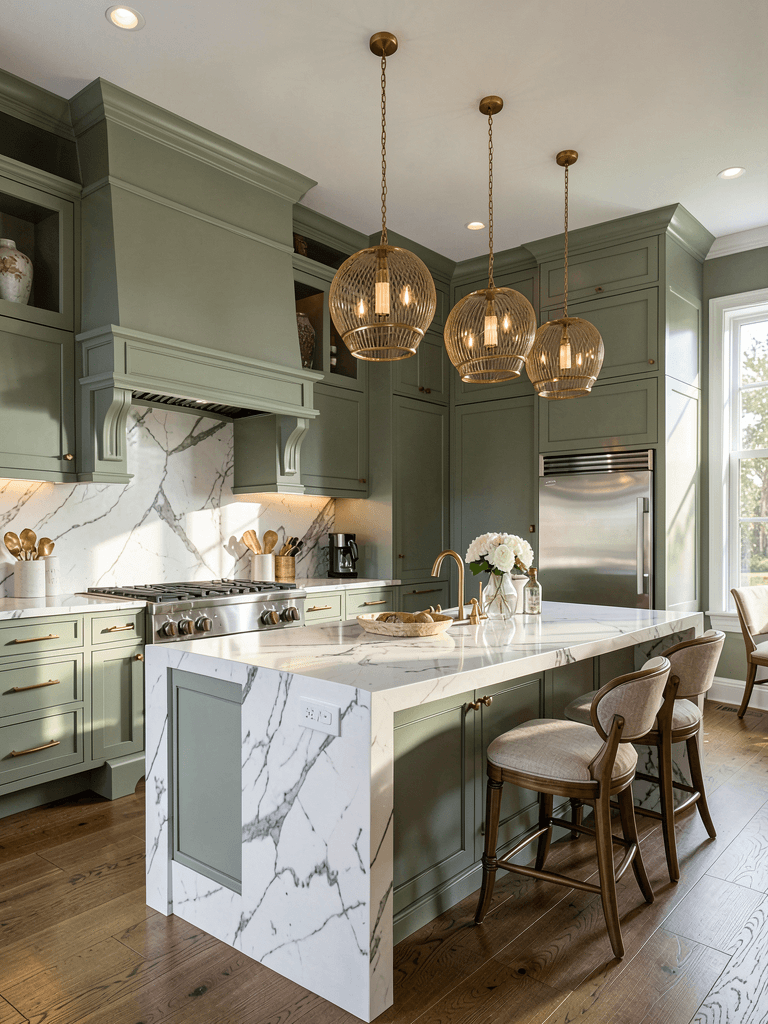
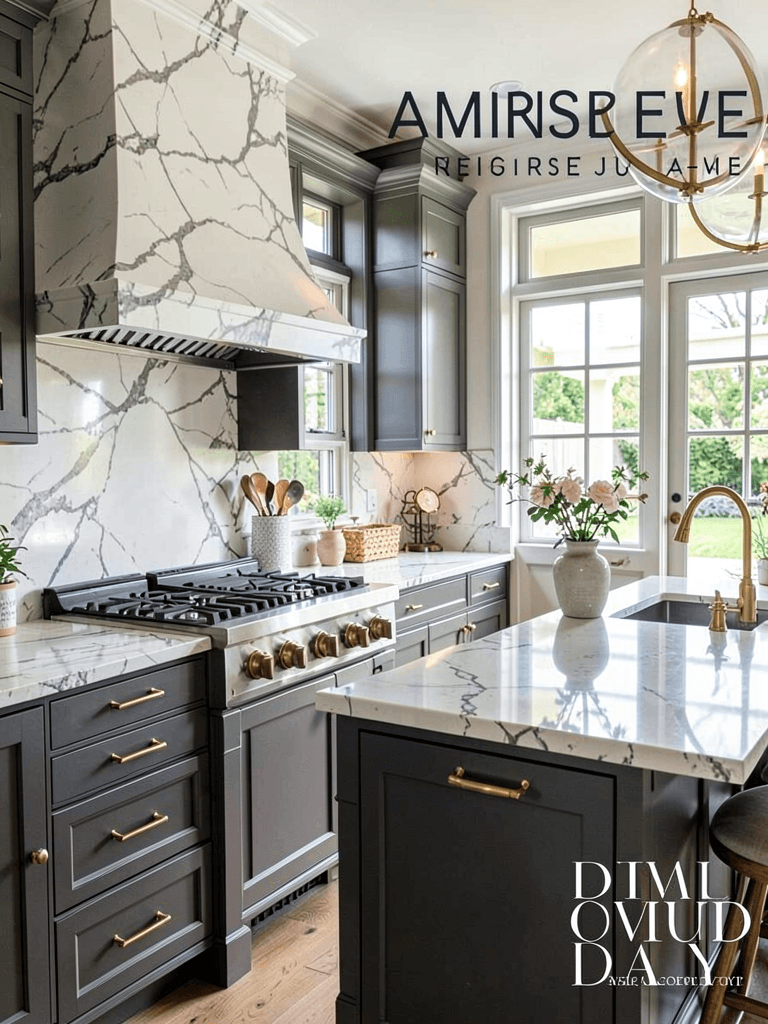
Wanna know how to make sage green feel genuinely luxurious? Two words: marble accents. This combination screams high-end without being flashy or over-the-top, and I’m absolutely obsessed.
There’s something about sage green paired with marble’s natural veining that creates this organic, sophisticated aesthetic. The cool gray tones in most marble varieties complement sage’s subtle undertones perfectly, while the stone’s inherent luxury elevates the entire space.
For a truly luxurious sage green kitchen with marble accents, consider:
- Full-height marble backsplash: Dramatic, stunning, and surprisingly practical (no grout lines to clean!)
- Marble waterfall countertops: Nothing says luxury quite like thick marble slabs cascading to the floor
- Marble accents on the range wall: Creates a focal point that feels intentional and refined
- Carrara or Calacatta marble for classic elegance, or green marble varieties (like Verde Alpi) for something more adventurous
One thing I’ve learned from drooling over countless luxury sage kitchens—lighting makes or breaks this look. Install quality under-cabinet lighting to highlight the marble’s veining, and consider a statement chandelier or pendant lights that add another layer of sophistication.
Yeah, marble can be high-maintenance (red wine and acidic foods are not its friends), but that’s kind of part of the luxury appeal, isn’t it? It requires care and attention, which makes it feel precious and special. Plus, modern sealants have come a long way in protecting these surfaces.
6. Farmhouse Sage Green Kitchen Decor Ideas
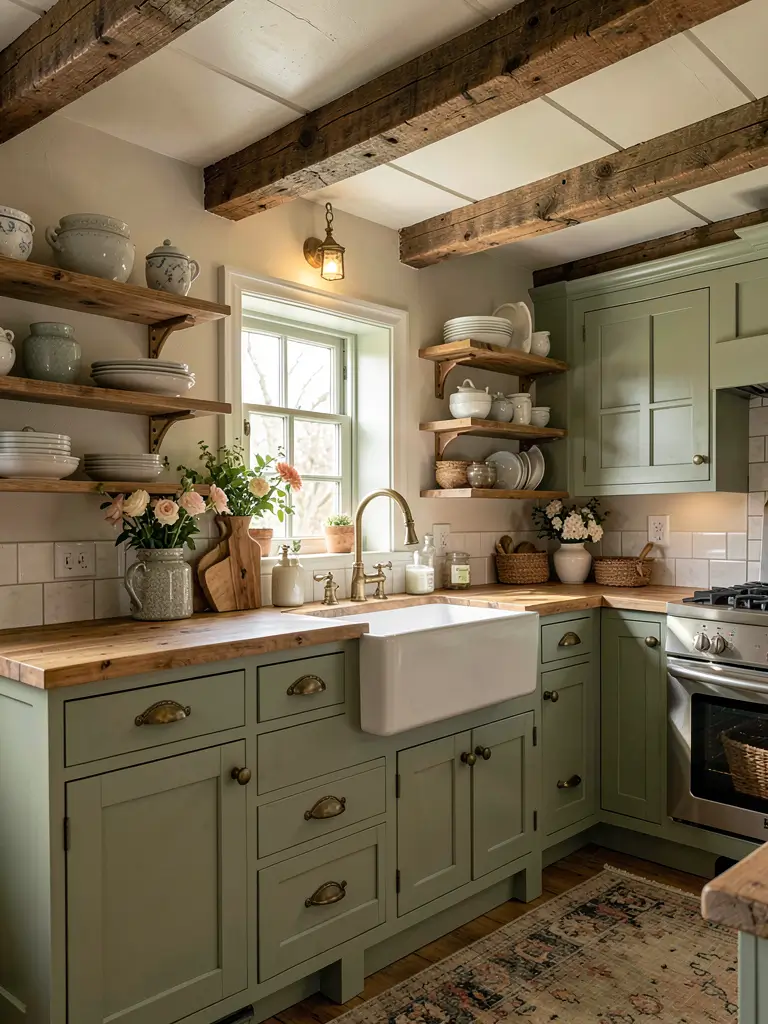
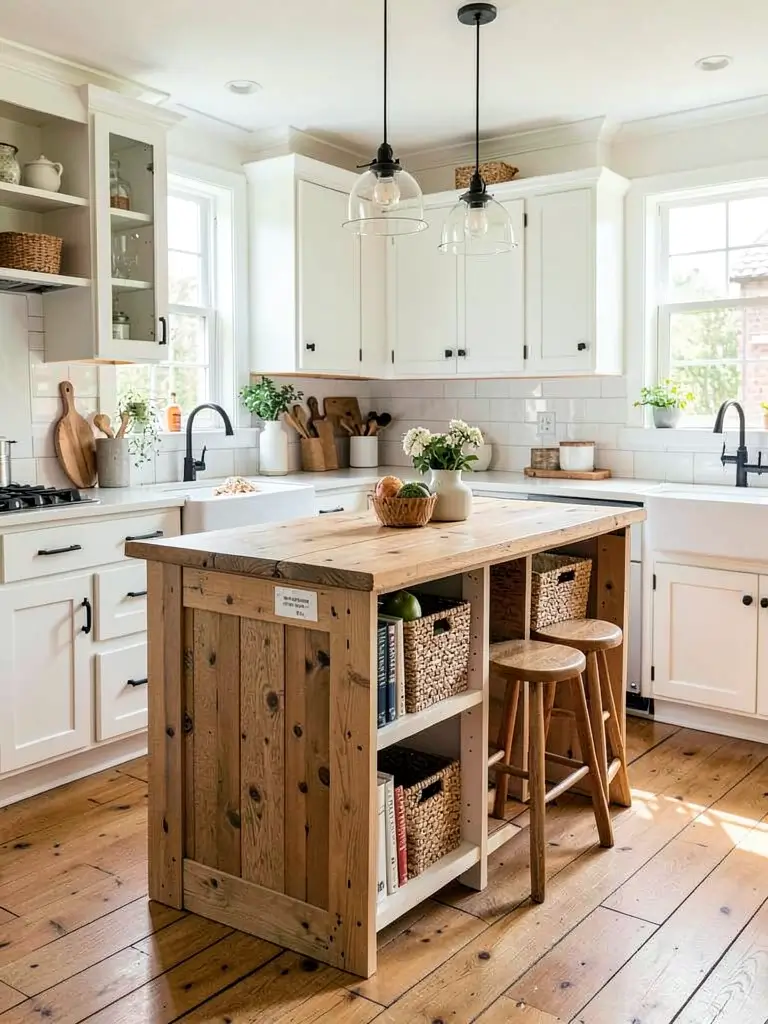
If there’s a more perfect marriage than sage green and farmhouse style, I haven’t found it yet. This combination captures that effortlessly charming, lived-in aesthetic that makes farmhouse kitchens so appealing.
Sage green brings an authentic, heritage quality to farmhouse kitchens. It feels like a color that’s been there for generations, gently faded by time and sunlight. Unlike the stark white farmhouse kitchens that dominated Instagram a few years back, sage-infused spaces feel warmer and more inviting—like somewhere you’d actually want to spend Sunday mornings making pancakes.
Essential elements for nailing the farmhouse sage green kitchen:
- Shaker-style cabinets in sage: The simple, traditional profile is quintessentially farmhouse
- Apron-front sinks: Preferably in white porcelain to contrast with sage cabinets
- Open shelving with vintage finds: Display your ironstone collection and vintage glassware
- Butcher block or reclaimed wood countertops: Adds warmth and that essential farmhouse texture
- Vintage or vintage-inspired hardware: Think bin pulls and cup handles in oil-rubbed bronze or black iron
Layer in those farmhouse staples like sliding barn doors (if you have the space and the architectural context to pull it off), exposed beams if you’re lucky enough to have them, and plenty of natural materials. Woven baskets for storage, linen Roman shades on the windows, and maybe some shiplap on a single accent wall (yes, shiplap can still work if you don’t go overboard).
The key is making it feel collected rather than catalog-ordered. Mix in some genuinely old pieces with your new sage cabinets, and suddenly you’ve got a kitchen with soul.
7. Sage Green Kitchen Islands That Steal the Show
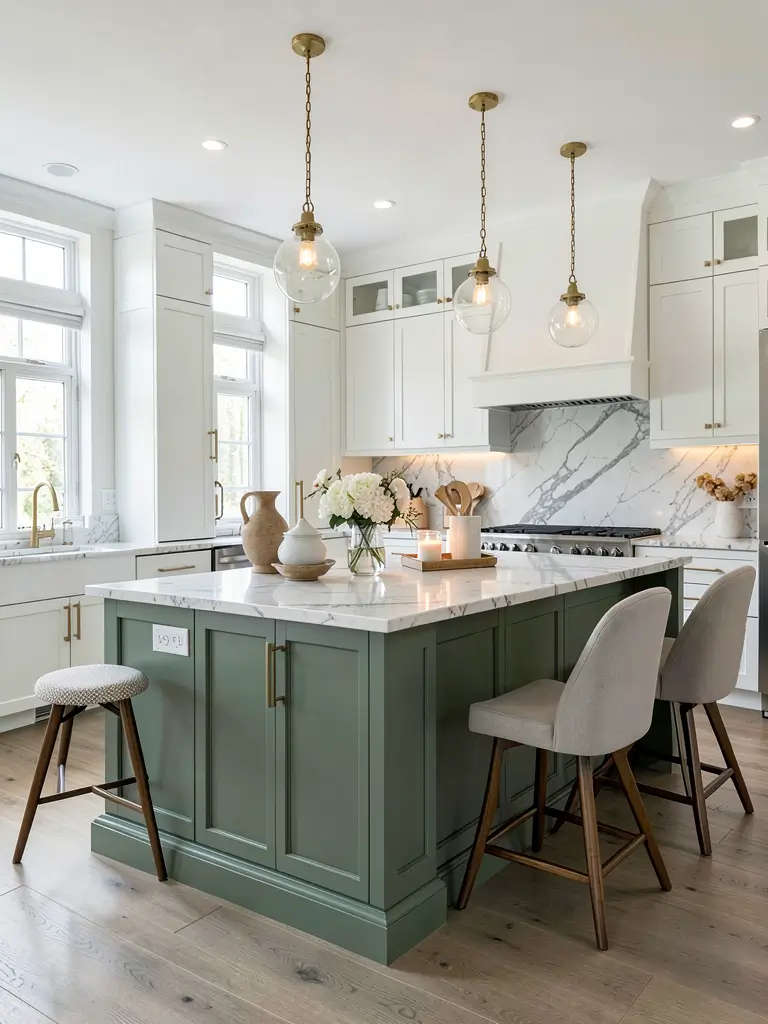
Want to test-drive sage green without committing to an entire kitchen’s worth of cabinets? A sage green island is your answer, and honestly, it’s a showstopper move.
Kitchen islands naturally draw the eye since they’re usually centrally located and approached from multiple angles. Painting yours in sage green creates an instant focal point that anchors the entire space. It’s bold enough to make a statement but soft enough to feel welcoming rather than aggressive.
I’ve seen sage green islands work magic in otherwise neutral kitchens. You keep your perimeter cabinets in white, cream, or natural wood, then BAM—here comes this gorgeous sage island that ties everything together while adding personality and depth.
Styling tips for show-stopping sage islands:
- Contrast the countertop material: White marble or light wood on a sage base looks incredible
- Add seating: Bar stools in natural materials like rattan or wood complement the organic vibe
- Incorporate storage solutions: Open shelving on one side, closed cabinets on the other
- Top with statement lighting: Pendant lights that echo the sophistication of the sage color
One thing I love about the sage island approach is flexibility. You can paint just the island now and see how you feel about the color in your space. Love it? Great, expand to more cabinets. Not quite right? You’ve only invested in painting one island rather than the entire kitchen. Low commitment, high impact—my favorite kind of design decision. 🙂
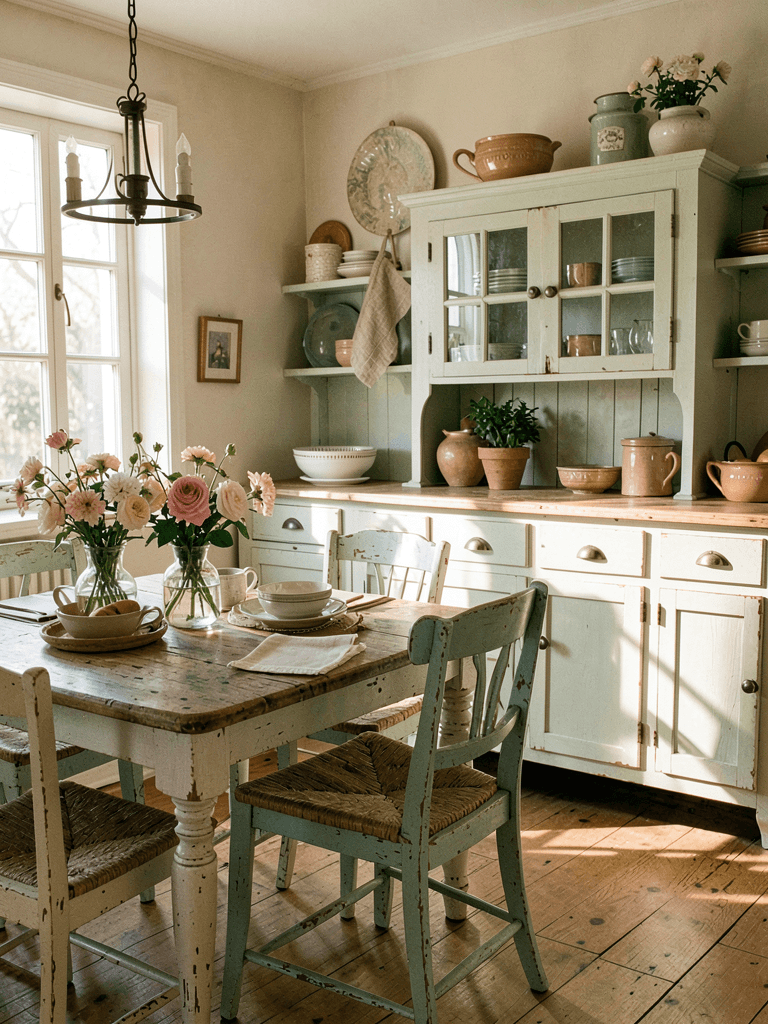
8. Cozy Cottage Style Sage Green Kitchens
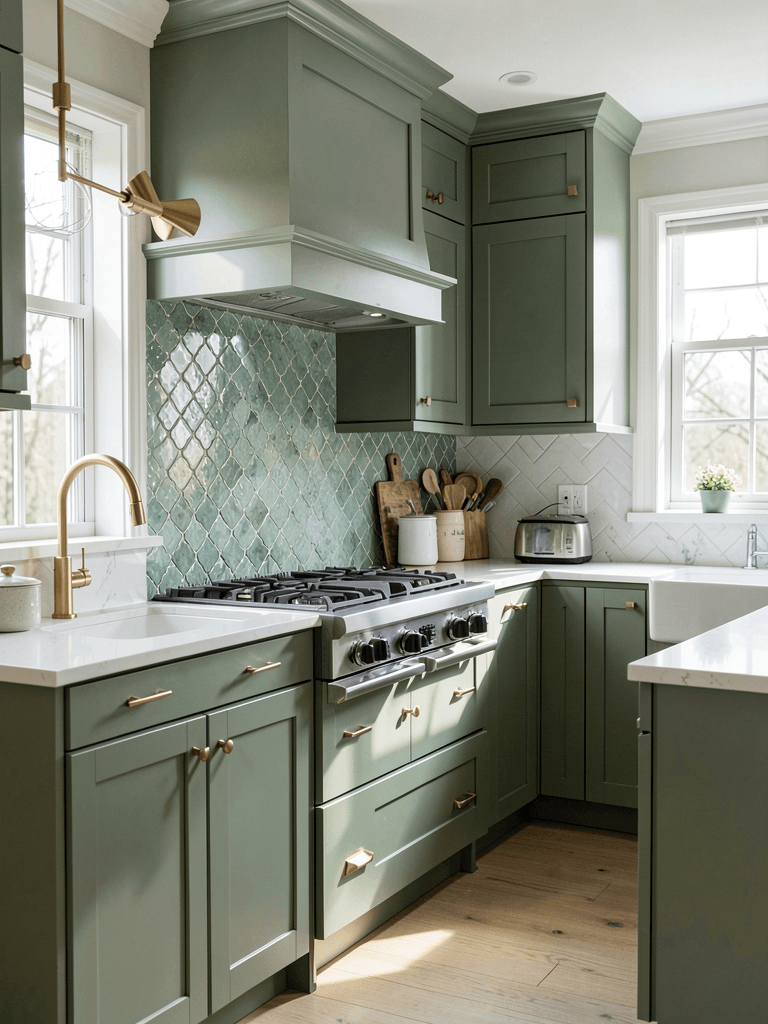
If “cozy” were a color, it would probably be sage green. These cottage-style sage kitchens create the warmest, most inviting spaces that make you want to curl up with a cup of tea and a good book (even though you’re in the kitchen, which is slightly weird but also totally understandable).
Cottage kitchens thrive on charm, comfort, and that perfectly imperfect aesthetic. Sage green enhances all of these qualities by providing a soft, nature-inspired backdrop that feels both timeless and lived-in. Unlike stark whites or bold colors, sage whispers rather than shouts—exactly the vibe you want in a cottage kitchen.
Creating that cottage magic with sage green involves:
- Beadboard or tongue-and-groove details: On cabinet doors or as wainscoting
- Sage painted cabinets with glass-front uppers: So you can display pretty dishes and vintage finds
- Floral or botanical textiles: Roman shades, curtains, or seat cushions in complementary patterns
- Mix of sage tones: Not everything needs to match perfectly; slight variations add authenticity
- Vintage lighting: Think schoolhouse pendants or fabric shades in cream or soft yellow
Cottage kitchens should feel a bit collected, like you’ve gathered pieces over time. Mix your sage cabinets with some open shelving in natural wood, add vintage hardware that doesn’t all match perfectly, and incorporate plenty of textiles. Tea towels, pot holders, and table linens in cream, soft yellow, or subtle florals all complement sage beautifully.
The goal is creating a space that feels like a warm hug—comfortable, familiar, and utterly charming.
9. Sage Green Kitchen Backsplash Design Inspiration
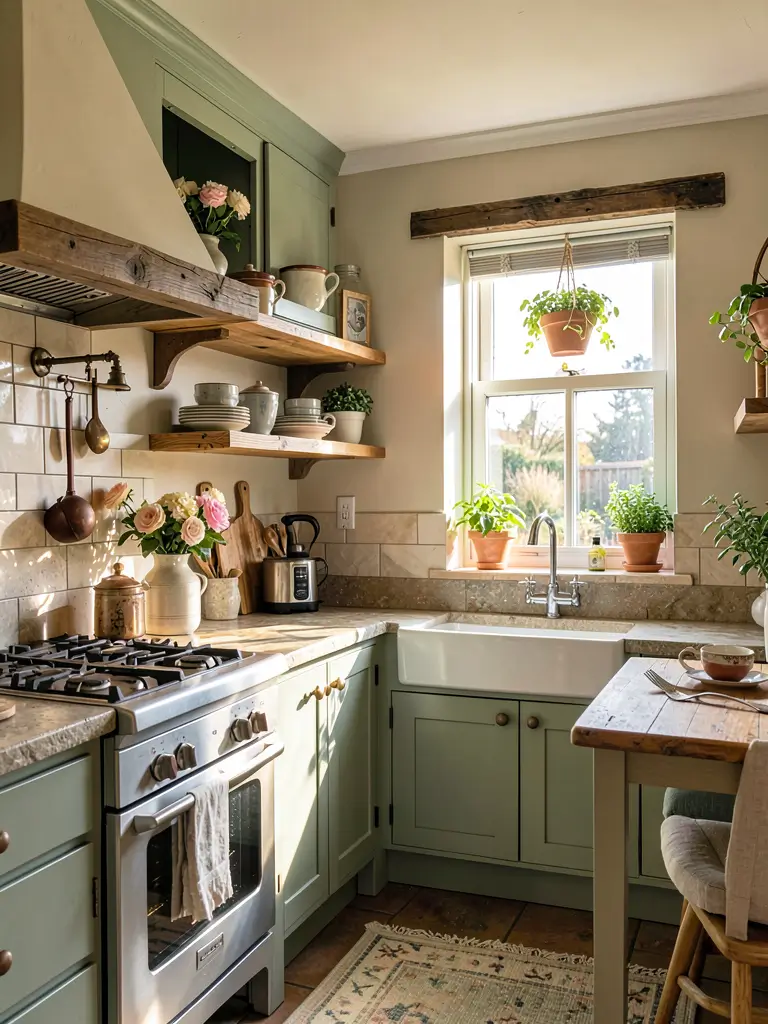
Not ready to commit to sage cabinets? I get it—cabinets feel permanent and slightly terrifying. But a sage green backsplash? That’s a beautiful middle ground that still delivers major impact.
Backsplashes are like jewelry for your kitchen. They’re the perfect place to introduce color and personality without overwhelming the space. A sage green backsplash becomes a focal point that draws the eye and sets the tone for the entire room.
You’ve got tons of options for incorporating sage into your backsplash:
Tile Options:
- Sage subway tile: Classic shape in an unexpected color—love it
- Sage zellige or handmade tiles: The subtle variations create gorgeous depth
- Geometric patterns in sage and white or cream
- Large-format sage tiles: Modern and seamless
Design Approaches:
- Floor-to-ceiling coverage: Dramatic, especially behind the range
- Standard backsplash height: Safe and practical
- Accent area only: Just behind the stove or sink for a pop of color
I’ve seen sage green glass tiles that catch the light beautifully, creating this luminous effect that changes throughout the day. There are also these gorgeous sage ceramic tiles with a crackle glaze that add vintage character to modern kitchens.
One thing to consider: if you’re going with sage on the backsplash, keep your cabinets neutral. Sage cabinets plus sage backsplash can feel like sensory overload (unless you’re using different shades intentionally, which can work but requires a good design eye).
10. Dark Wood and Sage Green Kitchen Pairings
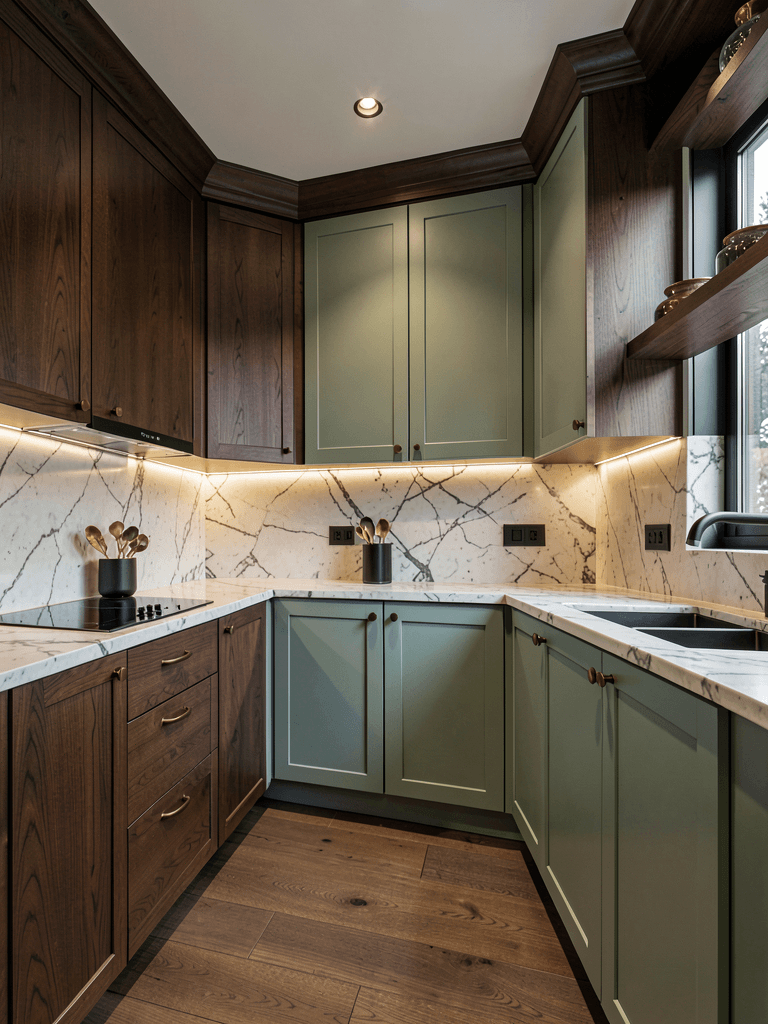
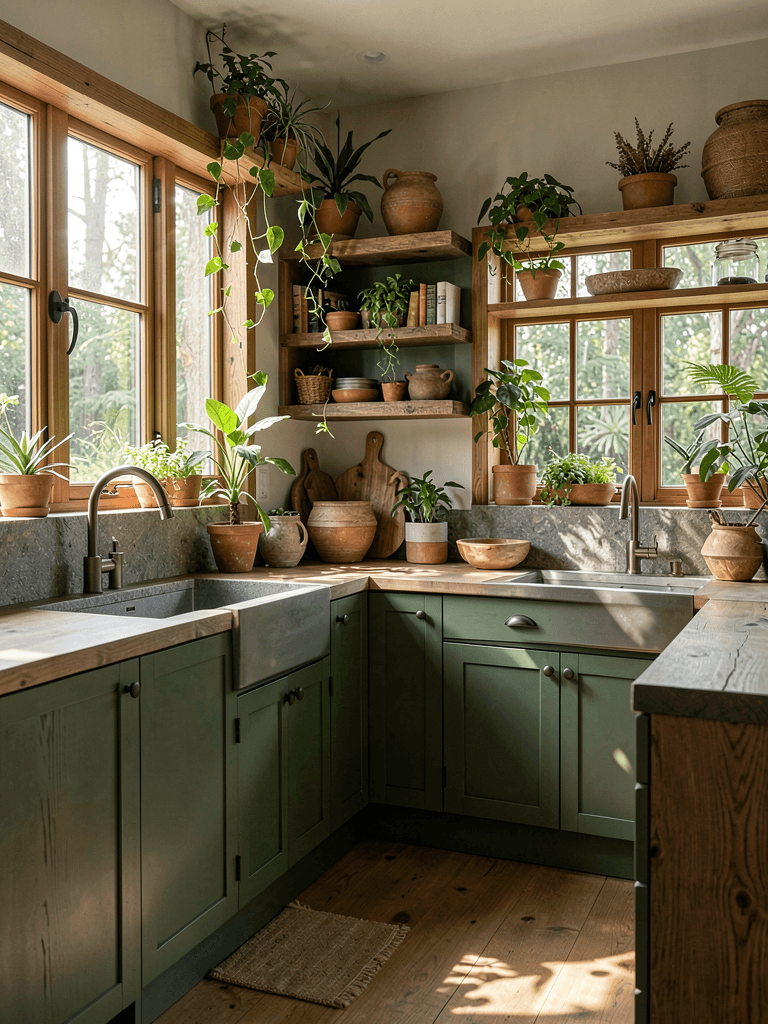
This combination is so underrated, and I’m kind of annoyed more people aren’t talking about it. Dark wood and sage green create this rich, sophisticated palette that feels both traditional and surprisingly fresh.
The contrast between deep, warm wood tones and soft sage green provides visual interest without creating harsh edges. Whether you’re working with walnut, espresso-stained oak, or reclaimed barn wood, these dark tones ground the lighter sage and prevent it from feeling too sweet or cottage-y (not that there’s anything wrong with cottage, but sometimes you want something with more gravitas, you know?).
Successful dark wood and sage combinations:
- Dark wood floors + sage cabinets: The floor anchors the lighter cabinets and creates depth
- Sage cabinets + dark wood open shelving: Provides contrast and warmth
- Dark wood island + sage perimeter cabinets: Creates a focal point with substantial presence
- Butcher block countertops in dark wood: Adds warmth and practical work surface
I’m particularly fond of sage green cabinets with dark walnut countertops. The walnut’s chocolate-brown tones and gorgeous grain patterns play beautifully against sage’s subtle complexity. It’s sophisticated without being stuffy, warm without being overly rustic.
Just watch your proportions here—too much dark wood can make the space feel heavy, while too little won’t provide enough contrast. Balance is everything. Maybe dark floors and countertops with lighter wood accents on open shelving, or a dark wood island with lighter wood stools.
11. Minimalist Sage Green Kitchen Styling Ideas
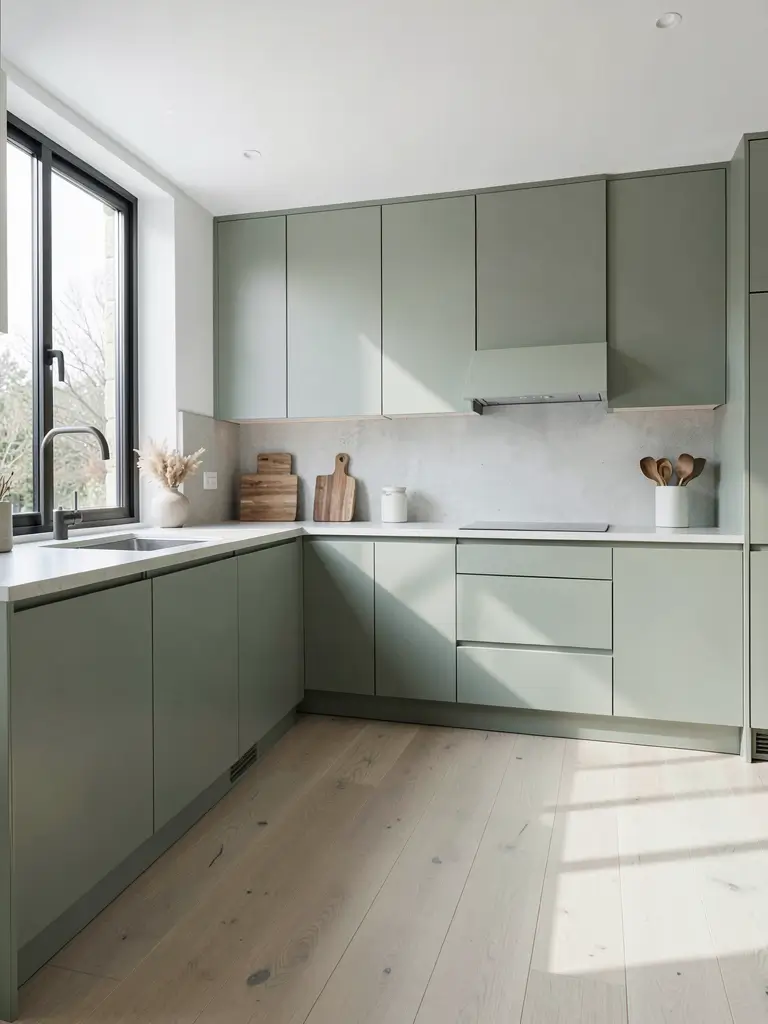
Minimalism and sage green might seem like an unlikely pairing at first (isn’t minimalism usually all white and gray?), but they actually work together beautifully. Sage brings warmth and softness to minimalist spaces without adding visual clutter.
The minimalist approach to sage green kitchens focuses on clean lines, intentional choices, and quality over quantity. You’re not layering on a bunch of farmhouse accessories or cottage charm here—instead, you’re letting the sage itself be the statement.
Key principles for minimalist sage kitchens:
- Streamlined cabinet design: Flat panels or simple shakers without ornate details
- Integrated appliances: Panel-ready refrigerators and dishwashers maintain clean lines
- Limited color palette: Sage plus one or two neutrals (white, gray, or wood tones)
- Uncluttered countertops: Only essential items displayed
- Quality materials: Invest in beautiful materials rather than decorative accessories
In minimalist sage kitchens, every element serves a purpose. Your sage cabinets provide color and warmth, sleek hardware adds subtle detail, and maybe one beautiful object—like a ceramic vase or wooden cutting board—provides organic texture.
The beauty here is in restraint. You’re not trying to fill every space or add personality through collections of objects. The sage itself, combined with quality materials and thoughtful design, creates a serene, sophisticated environment.
This approach works especially well in urban apartments or contemporary homes where you want calm, uncluttered spaces. It’s proof that minimalism doesn’t have to feel cold or impersonal—sage green solves that problem beautifully.
12. Bright and Airy Sage Green Kitchen Designs
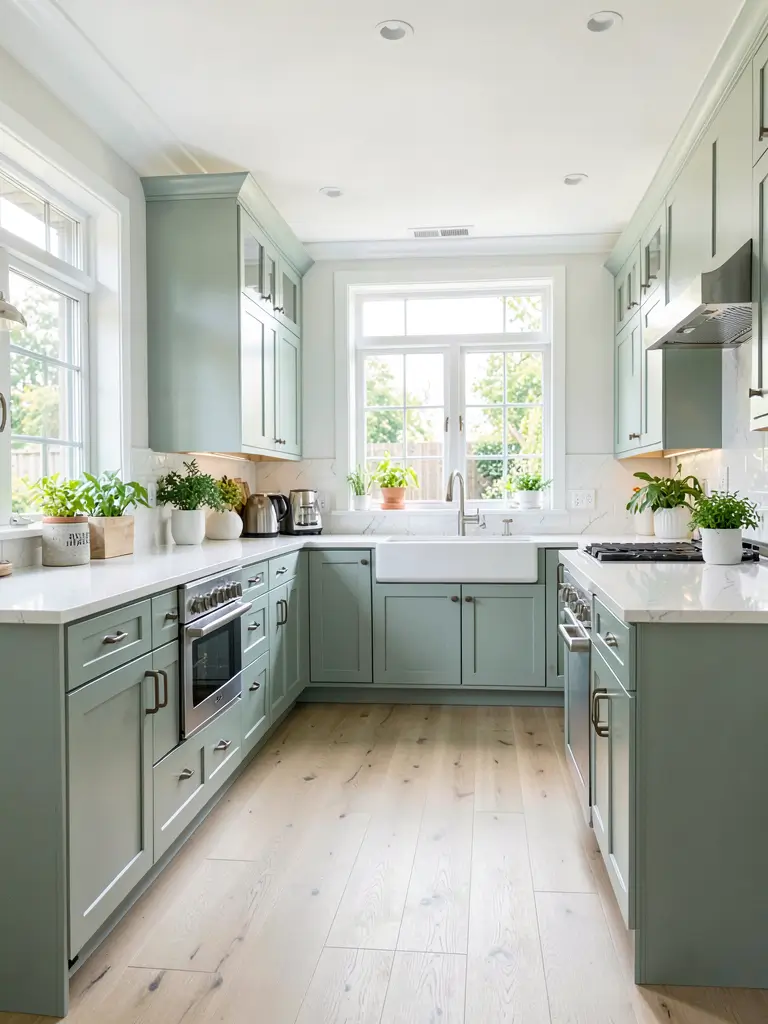
Got a kitchen with great natural light? Lucky you, and sage green is about to become your best friend. This color absolutely glows in bright, sun-filled spaces, creating an airy atmosphere that feels fresh and energizing.
The trick to bright and airy sage kitchens is working with the light rather than fighting it. Choose lighter sage shades with gray or blue undertones that reflect light rather than absorbing it. Pair these with plenty of white or cream surfaces, and you’ll create a space that feels expansive and welcoming.
Elements that enhance the bright and airy vibe:
- Large windows: Obviously not something you can just add, but maximize what you have with simple window treatments
- Light sage cabinets: Choose shades that lean toward the lighter end of the spectrum
- White or very light countertops: Quartz in white or cream keeps things bright
- Reflective surfaces: Glass tile backsplashes or glossy cabinet finishes
- White or light wood floors: Maintains the overall lightness
I love the look of bright sage kitchens with lots of white subway tile—the classic combination never gets old, and it maximizes light reflection. Add some potted herbs on the windowsill (basil, rosemary, thyme) and the space feels like a sun-drenched European kitchen where everything is fresh and alive.
The goal is creating a space that feels like spring morning light all the time. Sage provides just enough color to feel interesting and grounded, while the overall lightness keeps everything feeling open and optimistic. It’s basically the antidote to those dark, moody kitchens that might photograph well but feel kind of depressing to cook in every Tuesday evening, you know? :/
13. Sage Green Kitchen Storage and Organization Ideas
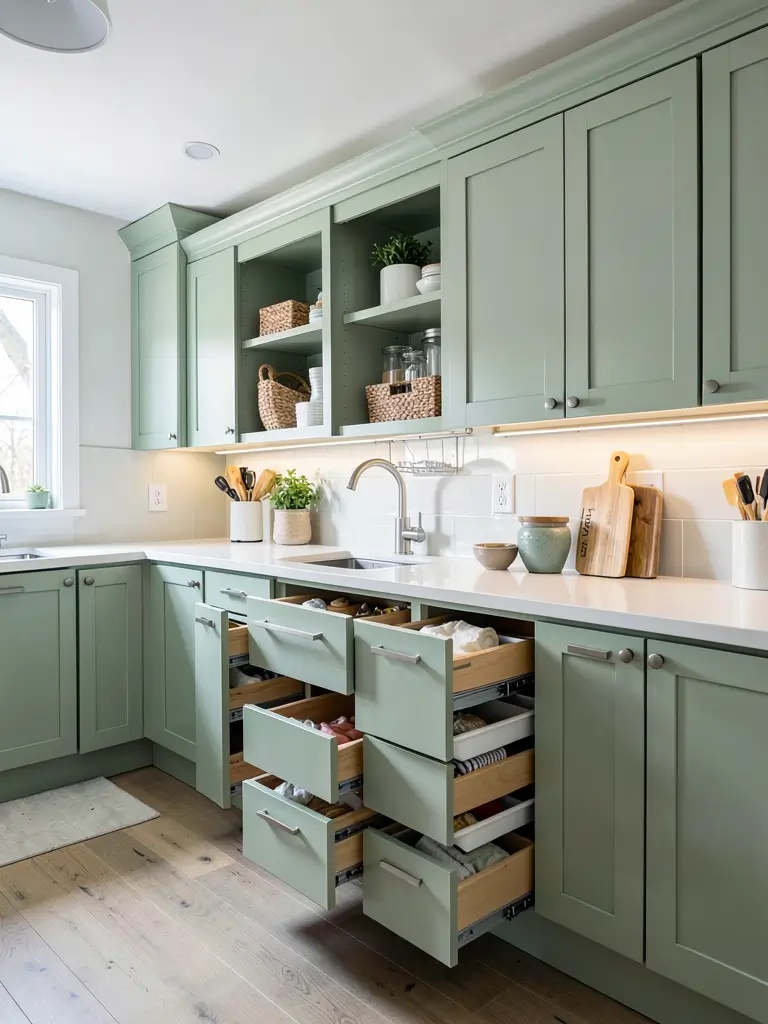
Let’s get practical for a minute because beautiful is great, but functional is essential. Sage green kitchens can be absolute champions of organization when you plan storage thoughtfully.
The nice thing about sage is that it’s neutral enough to work with virtually any organizational system or storage solution. Whether you’re into labeled containers, woven baskets, or color-coded everything, sage provides a calming backdrop that makes organization feel less obsessive and more organic.
Smart storage ideas for sage green kitchens:
For Cabinets:
- Pull-out drawers and organizers: Hidden behind sage cabinet doors, they maximize space
- Glass-front cabinets: Show off organized dishware while keeping things tidy
- Deep drawers for pots and pans: More accessible than lower cabinets
- Toe-kick drawers: Hidden storage in that usually wasted space
For Open Storage:
- Floating shelves in natural wood: Complement sage while providing display space
- Woven baskets on upper shelves: Contain clutter while adding texture
- Pegboards in sage or coordinating colors: Functional and visually interesting
- Rolling carts: Mobile storage that can be sage-painted to match
I’m obsessed with the idea of a sage green pantry with organized clear containers and wooden shelving. The sage walls create this cozy, contained feeling while the organization makes everything easy to find. Add some labels in a pretty font, and suddenly grocery organization feels like a design choice rather than a necessity.
Also, FYI: sage green hides minor imperfections and everyday mess better than stark white. Those inevitable splatters and dings blend into the color more gracefully, which means your kitchen can be both beautiful and realistic for actual daily use.
14. Vintage-Inspired Sage Green Kitchen Interiors
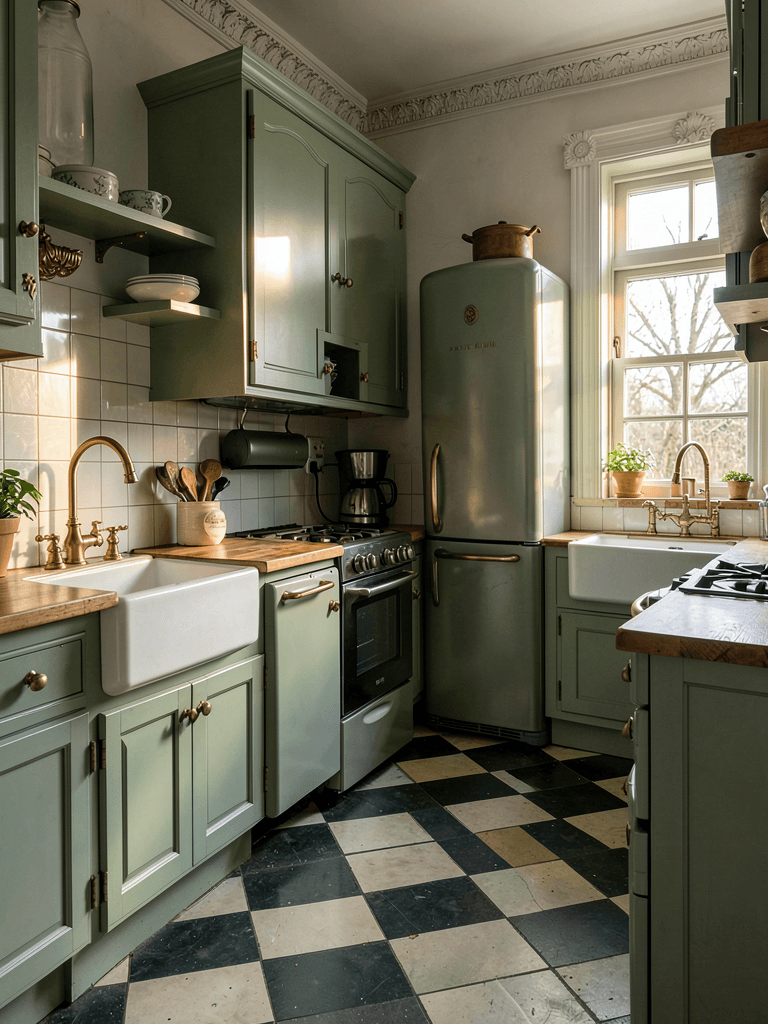
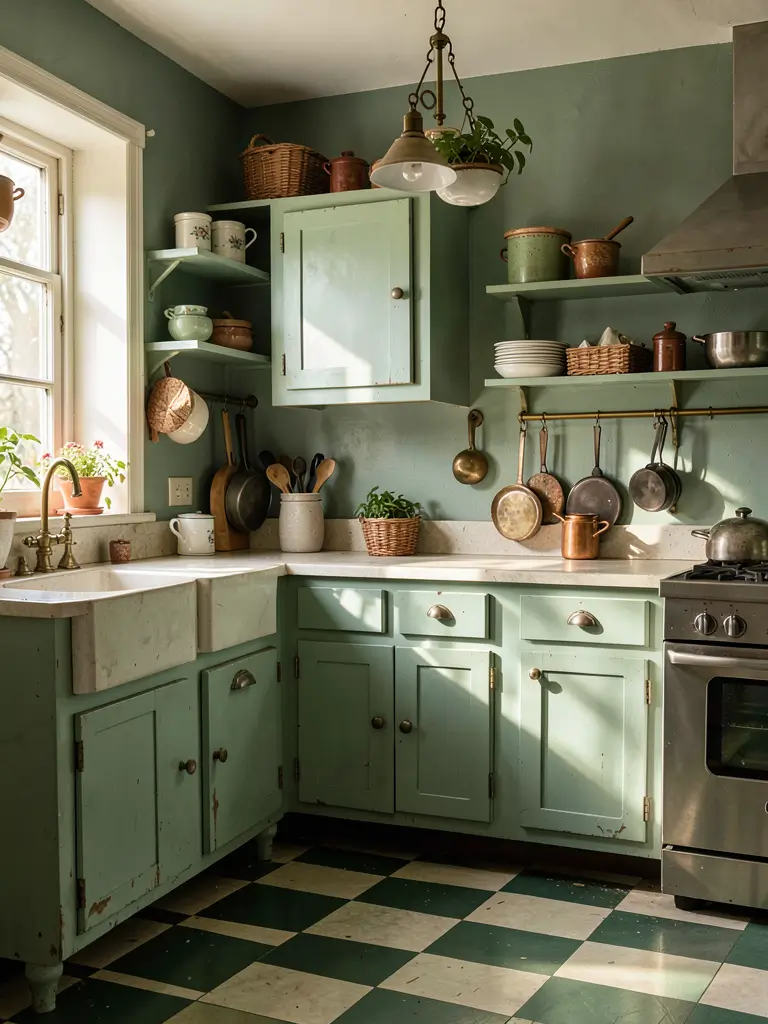
Sage green and vintage aesthetics are basically soulmates. This color has genuine historical roots—it was popular in kitchens throughout the early-to-mid 20th century, which means using it in vintage-inspired spaces feels authentic rather than forced.
Creating a vintage sage green kitchen is about capturing the charm of bygone eras while incorporating modern conveniences (because let’s be honest, we want vintage aesthetics but definitely not vintage appliance performance).
Essential elements for vintage sage kitchens:
- Retro-style appliances: Brands like Big Chill or Smeg offer modern appliances with vintage styling
- Vintage or reproduction hardware: Cup pulls, bin pulls, and Bakelite knobs in colors that complement sage
- Checkerboard floors: Classic black and white, or sage and cream for something different
- Vintage lighting: Schoolhouse pendants, milk glass shades, or ceramic fixtures
- Period-appropriate details: Crown molding, beadboard, or vintage tile patterns
The trick is balancing authenticity with livability. Maybe you score a genuine vintage farmhouse sink and combine it with new sage cabinets built to modern standards. Or you find vintage bar stools and reupholster them in fabric that coordinates with your new backsplash.
I love the look of sage green cabinets combined with vintage appliances—like those rounded-edge refrigerators that look like they belong in a 1950s advertisement. The sage provides a softer, less predictable color choice than the typical retro red or turquoise, making the space feel collected and personal rather than theme-y.
Thrift stores, estate sales, and online marketplaces are goldmines for vintage kitchen accessories that complement sage beautifully. Ironstone pitchers, vintage canisters, old cutting boards, and retro dish towels all add authentic vintage character without requiring major investment.
15. Budget-Friendly Sage Green Kitchen Transformations
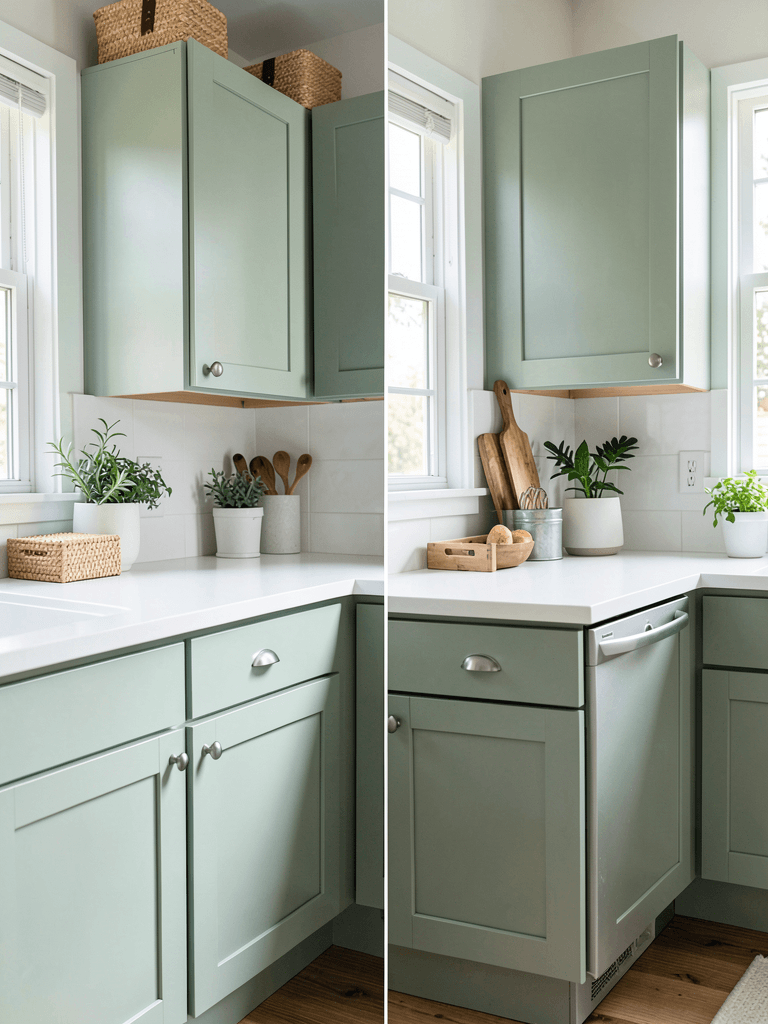
Here’s the thing about sage green kitchen makeovers—they can be surprisingly budget-friendly, especially compared to full renovations. Sometimes a fresh coat of paint works absolute magic, and sage is forgiving enough to work with existing elements you might not be able to replace immediately.
I’ve seen incredible budget transformations where someone simply painted existing cabinets sage, updated the hardware, and maybe added some peel-and-stick backsplash or a fresh coat of paint on the walls. Total transformation, minimal investment.
Budget-friendly sage green strategies:
Painting Existing Cabinets:
- Costs a fraction of new cabinets
- DIY-friendly if you’re patient and thorough
- Choose quality cabinet paint for durability
- Proper prep (cleaning, sanding, priming) makes all the difference
Affordable Updates:
- New hardware: Brass or gold pulls instantly elevate painted sage cabinets
- Peel-and-stick tiles: So much better than they used to be, honestly
- Paint or vinyl on countertops: Temporary but surprisingly effective solutions
- Thrifted accessories: Vintage finds add character without breaking the bank
What to Splurge On:
- Quality paint: Cheap paint looks cheap and wears poorly
- One statement element: Maybe a beautiful light fixture or faucet
The beauty of sage is that it elevates whatever you pair it with. Even basic IKEA cabinets look more expensive when painted in a sophisticated sage tone and fitted with quality hardware. You can work with laminate countertops (at least temporarily) if you keep them clean and neutral, letting the sage do the heavy lifting aesthetically.
I’ve also seen people paint just their lower cabinets sage while leaving uppers white or removing them entirely in favor of open shelving. This creates a custom look on a budget, and you can DIY the shelving from reclaimed wood or affordable lumber.
The point is, you don’t need a unlimited budget to create a stunning sage green kitchen. You need a clear vision, some patience, and willingness to prioritize what matters most in your space.
So there you have it—fifteen genuinely stunning ways to bring sage green into your kitchen and create that dream makeover you’ve been pinning on Pinterest at midnight. This color is ridiculously versatile, working beautifully in spaces ranging from cozy cottages to sleek modern apartments, from farmhouse chic to minimalist zen.
What I love most about sage green is how it makes kitchens feel like actual rooms where you want to spend time, not just functional spaces for cooking. It’s warm without being overwhelming, sophisticated without being stuffy, and trendy without feeling like it’ll look dated in three years.
Whether you’re ready to commit to full sage cabinets, just testing the waters with a painted island, or somewhere in between, this color brings something special to kitchen spaces. It connects us to nature, creates calm in our often-chaotic lives, and honestly just looks gorgeous with morning coffee in hand.
Now if you’ll excuse me, I have approximately 47 more sage green kitchen photos to save to my inspiration folder. You know, for “research purposes.” Happy renovating, friends!