15 Inspiring Green Kitchen Ideas to Transform Your Space
Green kitchens are having their moment, and honestly, it’s about time. I’ve watched this trend grow from a whisper on design blogs to full-blown obsession on my Pinterest feed, and I’m not complaining one bit. Whether you’re drawn to calming sage tones, dramatic emerald hues, or earthy olive shades, green brings something special to kitchen spaces that bland neutrals just can’t match.
Here’s what I love about green kitchens—they connect your space to nature without requiring you to live in a cabin in the woods (though no judgment if that’s your vibe). They’re bold enough to make a statement but versatile enough to work with almost any style. Plus, they photograph incredibly well, which matters if you’re like me and send kitchen pics to your group chat weekly asking “too much?”
Let’s talk about 15 genuinely inspiring ways to bring green into your kitchen and transform it from “meh” to “wow, when can I move in?” Trust me, by the end of this, you’ll be measuring your cabinets and Googling paint samples.
1. Sage Green Kitchen Ideas for a Calm and Elegant Look
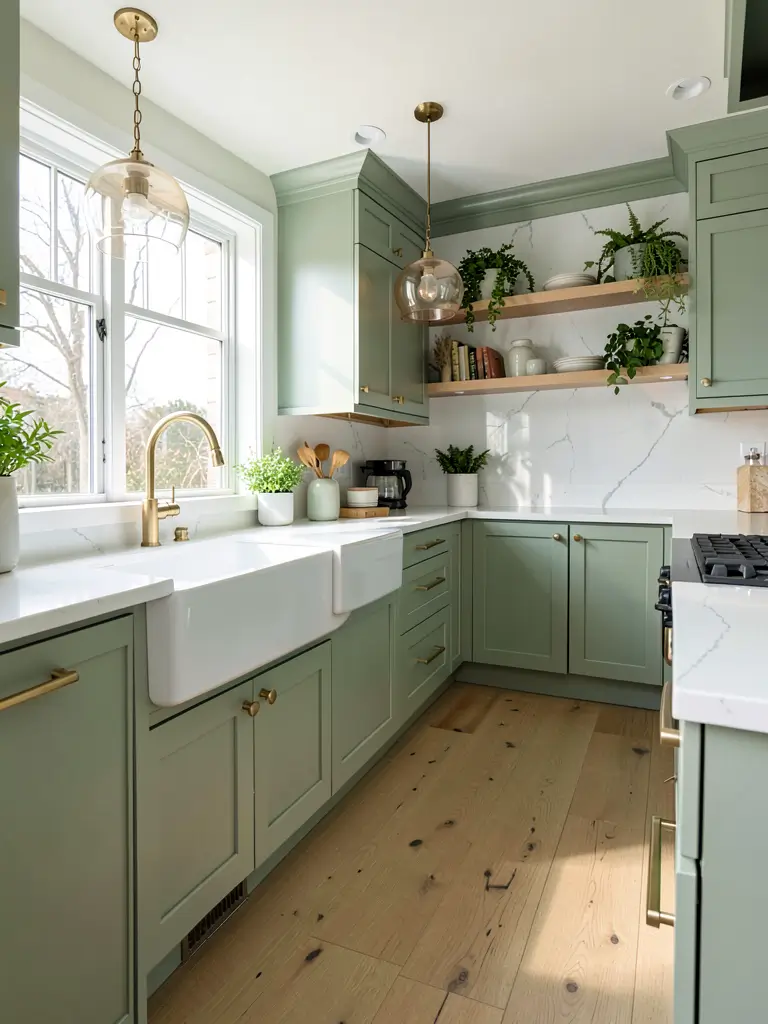
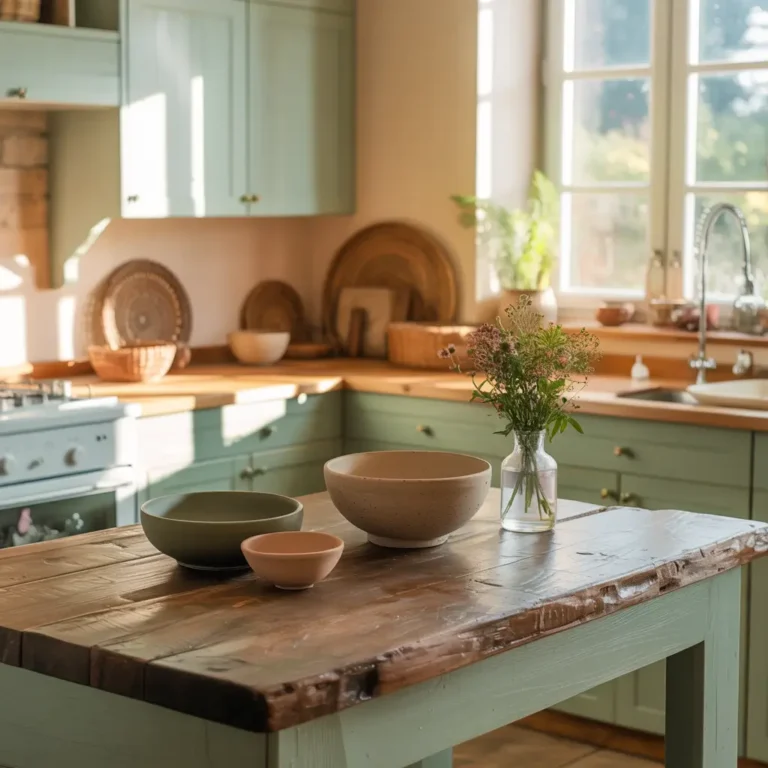
Sage green is basically the yoga instructor of kitchen colors—calm, collected, and makes everything feel zen. This muted, grayish-green tone creates such a soothing atmosphere that you’ll actually want to hang out in your kitchen even when you’re not cooking.
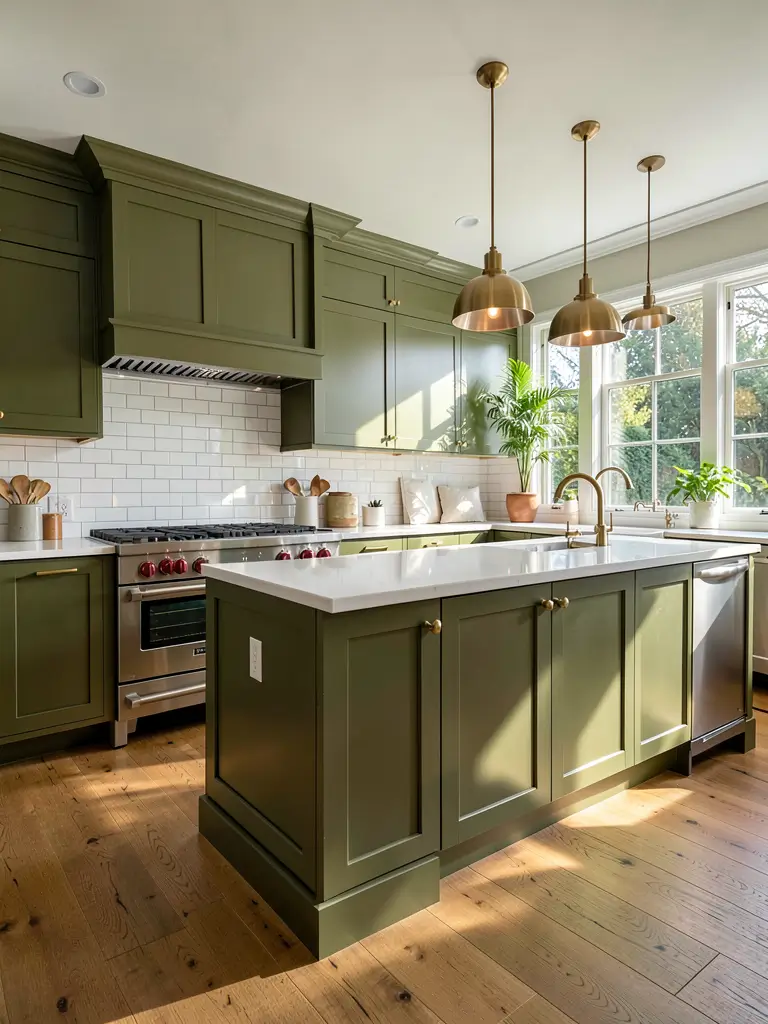
What makes sage green absolutely perfect for kitchens is its incredible versatility. It plays nicely with warm wood tones, looks stunning against white marble, and pairs beautifully with brass or gold hardware. I’ve seen sage work in tiny apartment kitchens and sprawling chef’s paradises alike.
The key to nailing the elegant sage green kitchen:
- Choose the right undertone: Sage can lean gray, blue, or slightly yellow—test samples in your actual kitchen lighting
- Layer textures: Combine matte sage cabinets with natural wood shelving and linen textiles
- Add warmth through metals: Brass, copper, or aged gold hardware prevents sage from feeling too cool
- Keep countertops light: White quartz, marble, or light wood maintains the airy, elegant vibe
I’m particularly obsessed with sage lower cabinets paired with white uppers and open shelving. This combination keeps things light while giving you that gorgeous pop of color where you need it most. Plus, it makes your fancy dish collection look even better (we all have one, right?).
For an extra touch of elegance, consider a sage-painted ceiling. Sounds bold, I know, but it creates this enveloping, cocoon-like effect that’s surprisingly sophisticated rather than overwhelming.
2. Dark Green Kitchen Cabinets That Feel Luxurious
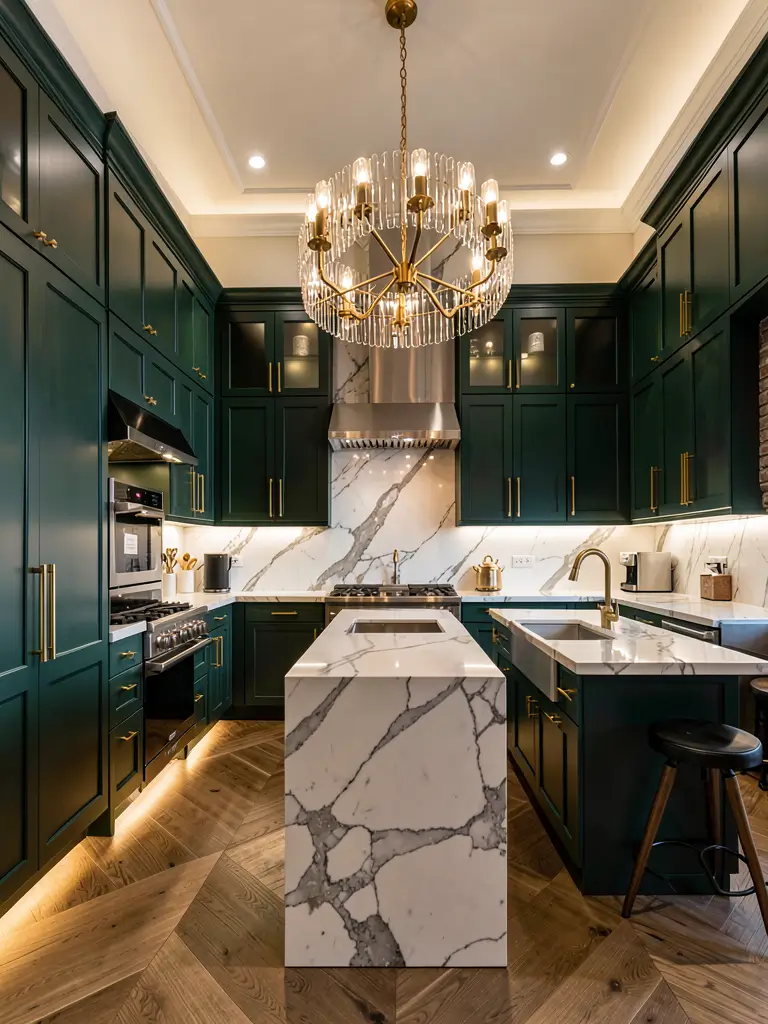
Want to make a serious statement? Dark green cabinets are calling your name. We’re talking deep forest greens, hunter tones, or those almost-black greens that look mysterious and moody in the best possible way.
Dark green kitchens exude luxury and confidence. They’re not trying to blend in or play it safe—they’re the kitchen equivalent of wearing a velvet blazer to a casual dinner party. Bold, unapologetic, and undeniably stylish.
Creating luxury with dark green cabinets involves:
- Excellent lighting: Dark cabinets need plenty of light—layer ambient, task, and accent lighting
- High-contrast elements: Pair with white marble, brass fixtures, or light wood floors
- Quality finishes: Invest in good paint or stain—cheap finishes look especially bad on dark colors
- Statement hardware: This is your chance for dramatic pulls and knobs in luxe finishes
Here’s the thing about dark green cabinets—they make everything else in your kitchen look better. Your countertops pop, your backsplash becomes art, and even basic stainless steel appliances suddenly look intentional and sophisticated.
I’ve seen dark green work beautifully in both traditional and contemporary kitchens. In traditional spaces, pair it with classic details like crown molding and marble counters. In modern kitchens, go sleek with flat-panel doors and minimalist hardware.
Just be warned: once you go dark green, you’ll judge every other kitchen for being boring. It’s a side effect I haven’t found a cure for yet. 🙂
3. Green and Wood Kitchen Ideas for Natural Warmth
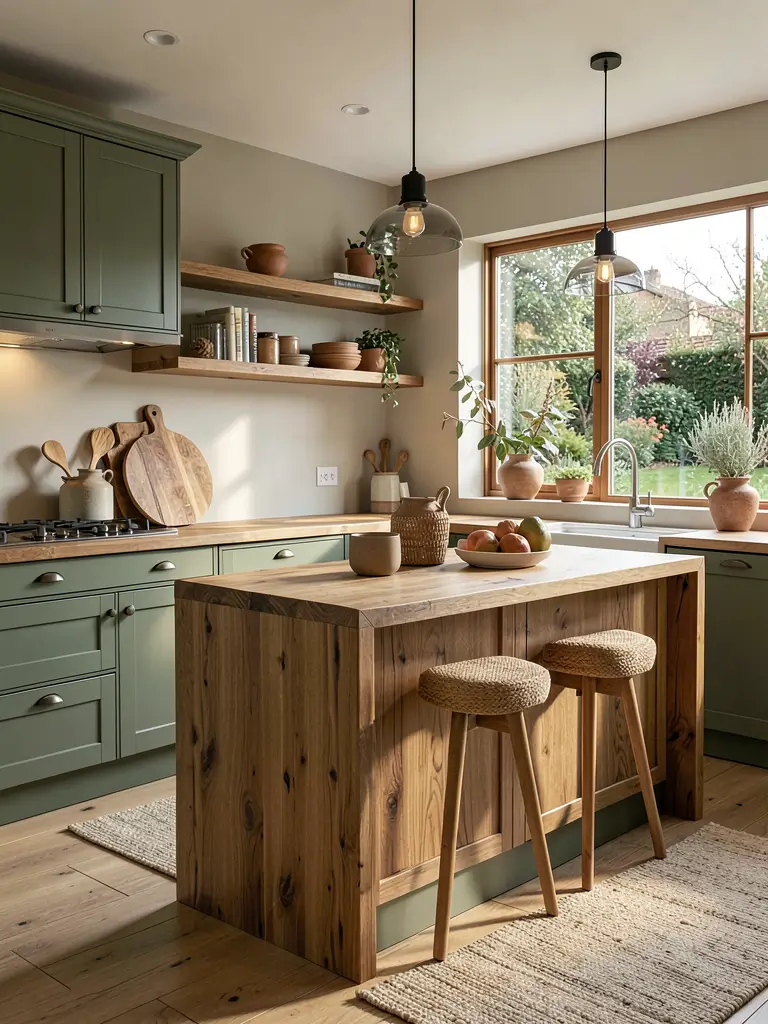
Ever wondered why green and wood combinations feel so inherently right? It’s because they mirror nature—literally. Trees, forests, gardens—we’re hardwired to find this pairing beautiful and calming.
Green and wood kitchens create this organic warmth that makes spaces feel grounded and inviting. The wood brings texture and natural variation, while the green provides color and freshness. Together, they create kitchens that feel like a breath of fresh air.
Winning combinations for green and wood kitchens:
Wood Type Matters:
- Light woods (maple, birch, light oak) with any shade of green create Scandinavian-inspired freshness
- Medium woods (walnut, cherry) pair beautifully with sage or olive greens
- Dark woods (espresso, ebony) look stunning with lighter greens for maximum contrast
Application Ideas:
- Green cabinets with wood countertops (butcher block is chef’s kiss)
- Wood cabinets with green painted island
- Green walls or backsplash with natural wood shelving
- Wood floors grounding green cabinetry
I’m completely sold on the combination of olive green cabinets with warm walnut countertops and light oak floors. The layering of wood tones against that earthy green creates such depth and richness—it’s like bringing a forest into your kitchen but with better appliances.
Pro tip: Don’t match your woods too precisely. Variation in wood tones looks collected and authentic rather than matchy-matchy catalog perfect.
4. Small Green Kitchen Ideas That Maximize Space
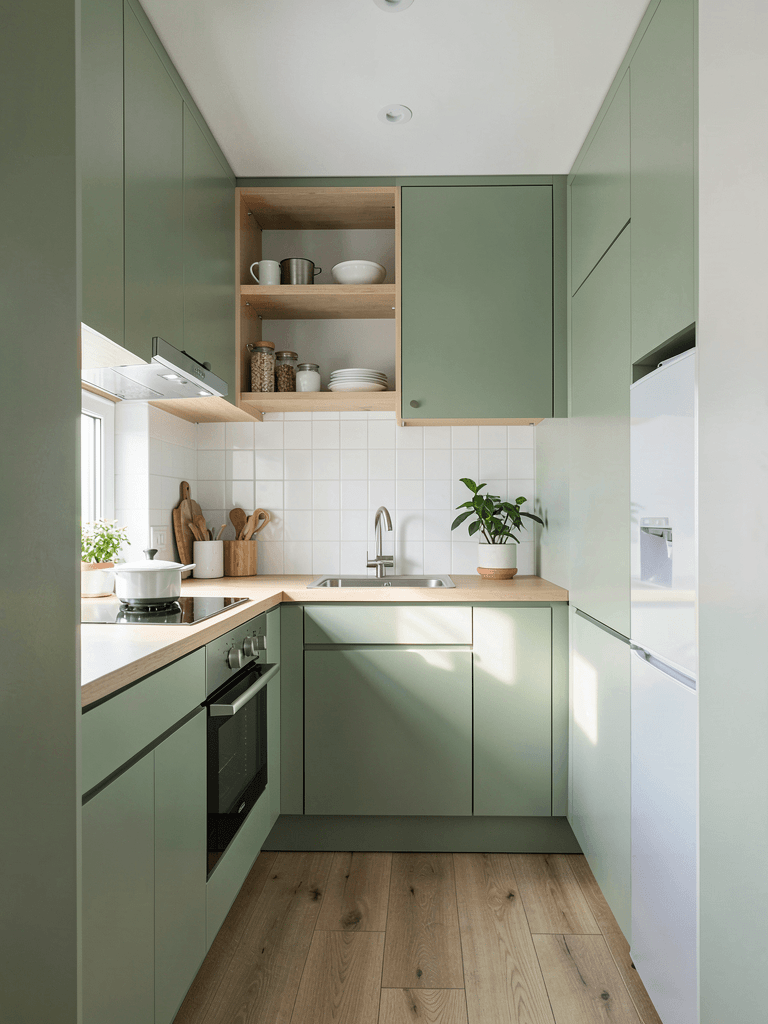
Small kitchen? Green might actually be your secret weapon. Unlike dark colors that can make compact spaces feel cave-like, the right green shades can enhance small kitchens beautifully while adding personality.
The trick is choosing greens that enhance rather than overwhelm. Lighter greens with gray or blue undertones reflect light and make walls seem to recede, creating the illusion of more space. But don’t automatically rule out darker greens—used strategically, they can add sophisticated depth.
Space-maximizing strategies for small green kitchens:
- Paint upper cabinets in light green, keep lowers white to maintain airiness
- Use green on a single accent wall to add color without closing in the space
- Choose glossy finishes that reflect light and bounce it around the room
- Incorporate mirrors or glass elements to amplify the sense of space
- Keep the green limited to lower cabinets with open shelving above
I’ve seen tiny galley kitchens transformed with just mint-green lower cabinets and white subway tile. The green draws your eye down the length of the space, making it feel longer and more interesting than all-white ever could.
Another genius move for small green kitchens: paint the inside of glass-front cabinets in a pretty green while keeping the exterior white. You get pops of color without overwhelming limited square footage, and it looks ridiculously charming.
FYI, small green kitchens photograph amazingly well, which is a bonus if you’re planning to sell or just want to make your friends jealous on social media.
5. Modern Green Kitchen Designs with Sleek Finishes
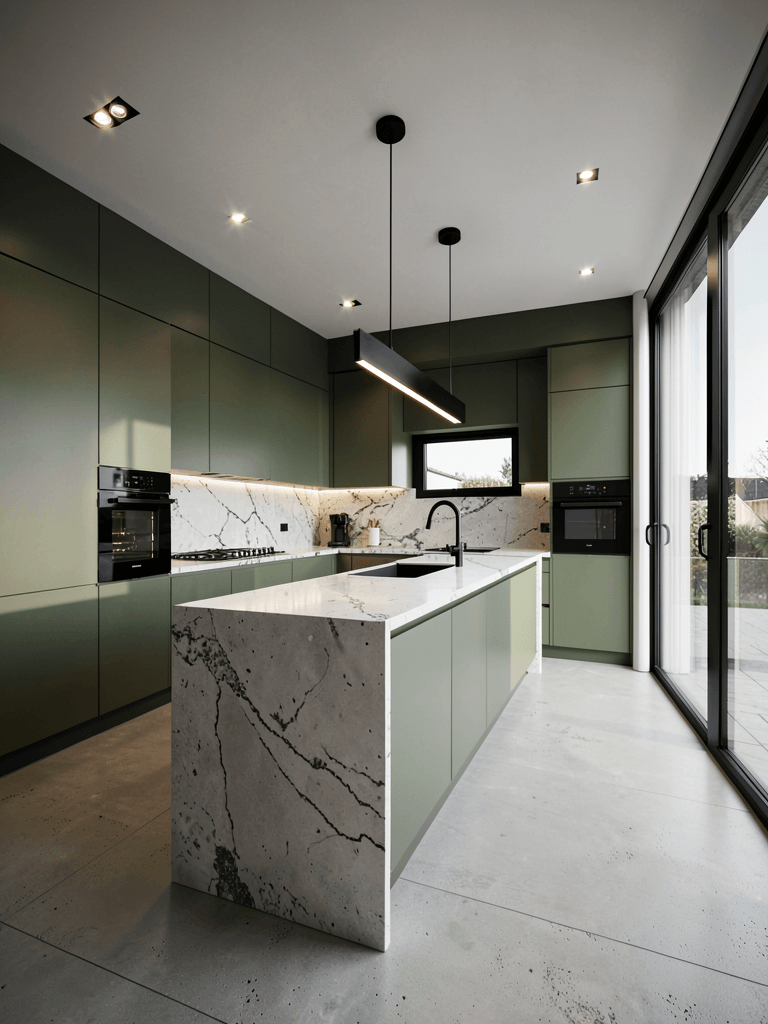
Green and modern might not seem like obvious partners, but this combination is absolutely fire when executed properly. Modern green kitchens ditch the fussy details and let clean lines, quality materials, and that gorgeous green take center stage.
In modern spaces, green becomes a sophisticated color choice rather than a cottage or traditional element. The key is pairing it with contemporary materials and keeping everything streamlined and intentional.
Modern green kitchen essentials:
Cabinet Style:
- Flat-panel or slab doors (no ornate details)
- Handleless cabinets with push-to-open mechanisms
- Consistent color throughout—no distressing or antiquing
Materials That Work:
- Concrete countertops: Industrial edge against green cabinets
- Stainless steel: Appliances and accents provide sleek contrast
- Glass: Backsplashes or cabinet inserts add contemporary polish
- Engineered quartz: Clean, low-maintenance, modern perfection
Color Approach:
- Matte green finishes for sophisticated, velvety appeal
- High-gloss greens for dramatic, reflective modern drama
- Limited color palette—green plus two neutrals maximum
I’m obsessed with modern kitchens featuring matte forest green cabinets, white quartz waterfall countertops, and integrated stainless appliances. It’s minimal but warm, contemporary but not cold—basically the sweet spot of modern kitchen design.
The beauty of modern green kitchens is how they prove that minimalism doesn’t have to mean boring. The green provides all the personality you need without cluttering the space with decorative elements.
6. Olive Green Kitchen Ideas for a Timeless Style
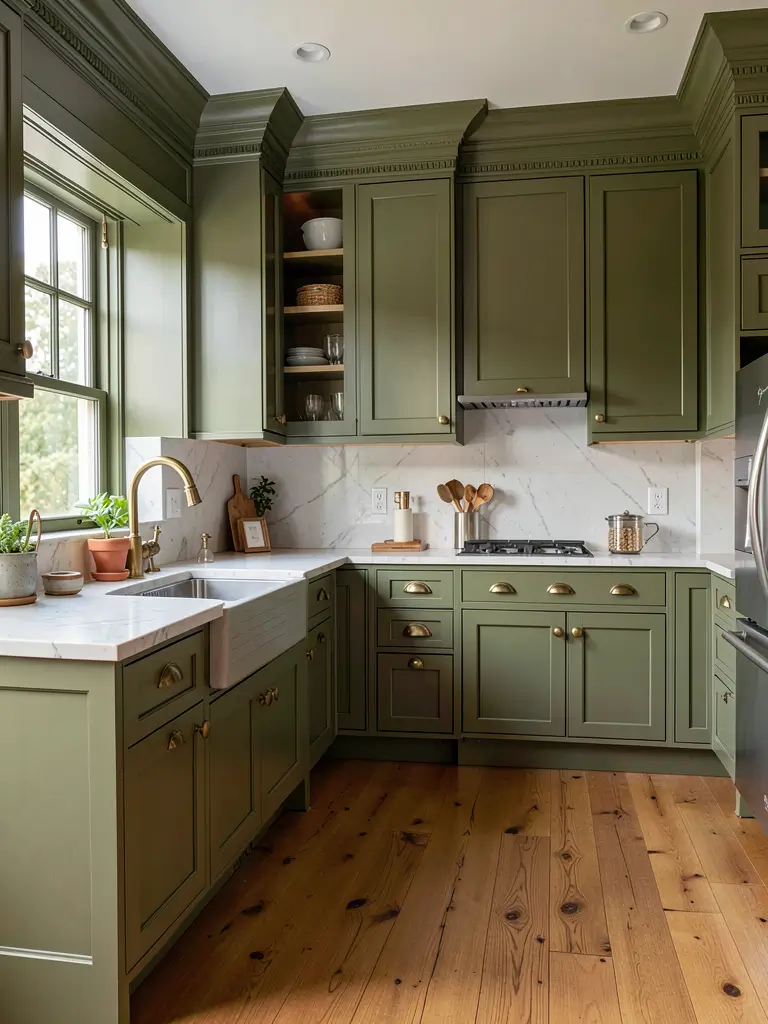
Olive green is having a serious renaissance, and I’m here for every second of it. This earthy, sophisticated shade brings warmth and depth to kitchens while maintaining a timeless quality that won’t feel dated in five years.
Olive sits beautifully between trendy and classic. It’s been used in homes for centuries (ancient Greeks and Romans loved their olive green), which gives it inherent staying power. But it also feels fresh and current when paired with contemporary elements.
Styling olive green kitchens for timeless appeal:
- Pair with natural materials: Stone, wood, linen, and ceramic all complement olive beautifully
- Add aged brass hardware: The warm metallic enhances olive’s golden undertones
- Incorporate cream or ivory rather than stark white for a softer, more timeless palette
- Layer in terracotta accents: Pots, tiles, or decorative elements echo Mediterranean vibes
- Choose classic profiles: Shaker cabinets or simple flat panels stand the test of time
The genius of olive green is how it adapts to different styles. Want Mediterranean? Add terracotta tile and wrought iron. Going for English country? Pair with cream Aga-style ranges and butcher block. Prefer mid-century modern? Combine with walnut and geometric patterns.
I’ve noticed that olive green kitchens age incredibly well in photos. Looking at spaces from 10+ years ago, the olive still looks intentional and stylish rather than dated—can’t say the same for some other color trends we’ve seen (looking at you, builder-grade cherry cabinets).
7. Green and White Kitchen Ideas for a Bright Refresh
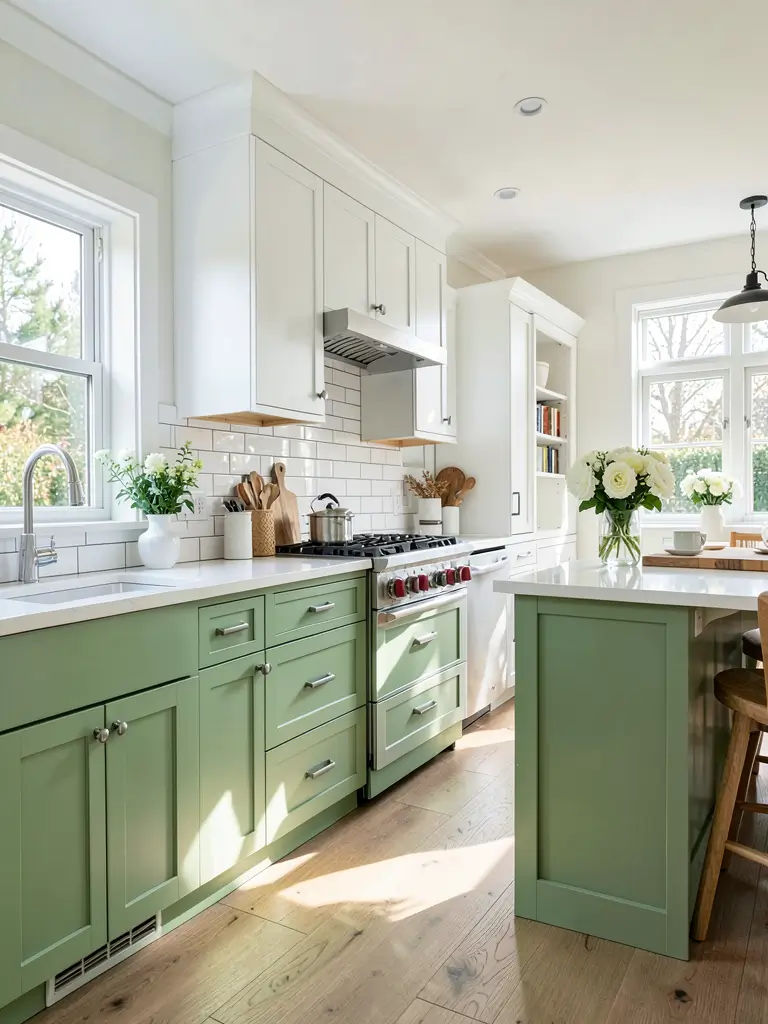
This classic combination never fails. Green and white kitchens deliver that fresh, crisp aesthetic that feels clean, bright, and endlessly appealing. It’s basically the visual equivalent of opening windows on a spring morning.
The beauty of green and white lies in the balance. White keeps everything bright and open, preventing any green shade from feeling heavy or dark. Meanwhile, the green provides personality and warmth that all-white kitchens often lack (we all know those sterile all-white spaces that feel more hospital than home).
Winning ways to combine green and white:
Color Distribution:
- Green lower cabinets + white uppers (classic, space-enhancing)
- White cabinets + green island (creates focal point)
- White cabinets + green walls or backsplash (commitment-phobic friendly)
- Alternating green and white cabinets (modern, graphic appeal)
Material Choices:
- White subway tile: Timeless backdrop for any green shade
- White marble or quartz: Keeps countertops bright and reflective
- White appliances: Surprisingly chic with the right green tone
- Painted white brick: Adds texture while maintaining brightness
The proportions matter tremendously here. Want a spa-like, calming space? Use more white with green accents. Looking for something bolder with more personality? Flip the ratio and let green dominate.
IMO, adding natural wood elements to green and white kitchens takes them from good to spectacular. A butcher block island top or floating wooden shelves introduces warmth that prevents the space from feeling too stark or cold.
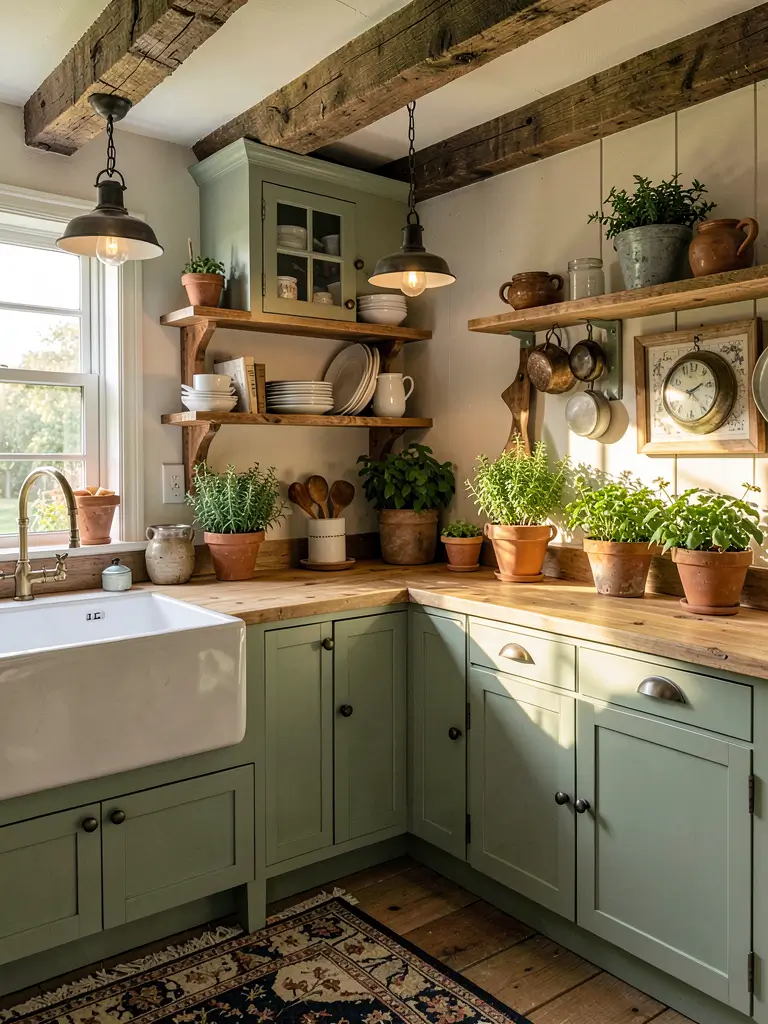
8. Farmhouse Green Kitchen Ideas with Cozy Charm
Farmhouse and green are basically destined to be together. This combination captures that effortlessly charming, lived-in aesthetic that makes you want to bake bread and host Sunday suppers (even if you normally just reheat takeout).
Green brings authentic farmhouse character in a way that white—while beautiful—sometimes doesn’t. It feels like a color that’s been there for generations, gently faded by time and sunlight. It’s warm, inviting, and inherently cozy.
Farmhouse green kitchen essentials:
Architectural Elements:
- Shaker-style cabinets: Simple, traditional profiles in any green shade
- Apron-front sinks: White porcelain against green cabinets is pure farmhouse perfection
- Open shelving: Display vintage finds and everyday dishware
- Beadboard or shiplap: Adds texture and traditional farmhouse detail
Materials and Finishes:
- Butcher block or reclaimed wood countertops
- Vintage or vintage-inspired hardware (bin pulls, cup handles)
- Natural fiber elements (woven baskets, linen textiles)
- Aged or distressed finishes on green cabinets for authentic character
Color Approach:
- Softer greens (sage, mint, seafoam) for cottage farmhouse
- Deeper greens (hunter, forest) for more masculine farmhouse style
- Layer multiple green tones for collected, authentic feel
I’ve seen farmhouse green kitchens that mix sage cabinets with darker green walls and lighter green accessories—the variation creates this authentic, collected-over-time vibe that feels genuine rather than decorator-perfect.
The key is making it feel lived-in rather than staged. Mix new green cabinets with genuinely vintage pieces, add some well-loved cutting boards and vintage textiles, and suddenly you’ve got a kitchen with soul.
9. Emerald Green Kitchen Ideas That Make a Statement
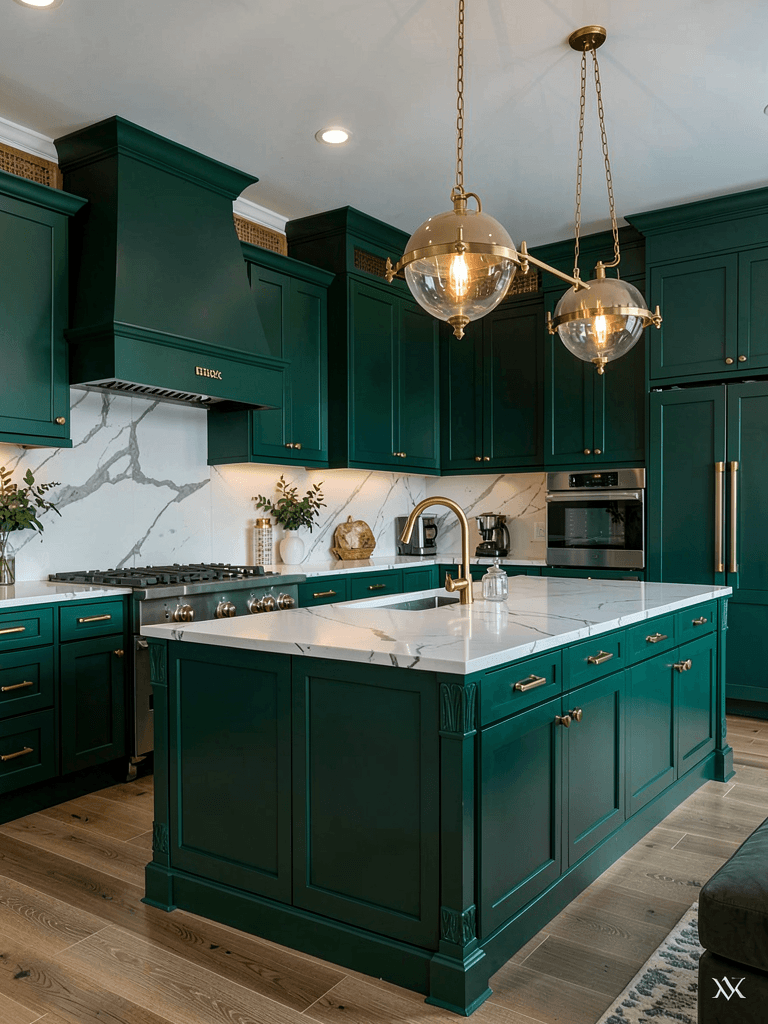
Want drama? Want your kitchen to be the room everyone remembers? Emerald green is your answer. This rich, jewel-toned green commands attention and exudes luxury in a way that safer colors just can’t match.
Emerald sits in that sweet spot between blue-green and true green, giving it depth and complexity. It’s bold enough to be memorable but sophisticated enough to feel elevated rather than garish. Think high-end hotel lobby, not children’s playroom.
Creating stunning emerald green kitchens:
Pairing Materials:
- Brass or gold fixtures: The warm metallics enhance emerald’s richness
- White or cream marble: Provides elegant contrast and luxury appeal
- Black accents: Creates sophisticated, high-contrast drama
- Natural wood tones: Grounds the boldness with organic warmth
Where to Use Emerald:
- Full cabinetry for maximum impact (brave and beautiful)
- Island only for a major focal point with less commitment
- Accent wall or backsplash for contained drama
- Lower cabinets with white or glass uppers for balance
Lighting Considerations:
- Layer multiple light sources—emerald needs good lighting to shine
- Under-cabinet lighting prevents dark corners
- Statement fixtures in brass or gold enhance the luxury vibe
I’ll be honest—emerald green kitchens aren’t for everyone. They’re bold, they’re dramatic, and they absolutely demand confidence. But if you’re ready for a kitchen that makes people gasp when they walk in? Emerald delivers that reaction every single time.
One thing I’ve learned from drooling over emerald kitchens online: they photograph incredibly well but look even better in person. That depth and richness translates beautifully to real life in ways photos can’t quite capture.
10. Budget-Friendly Green Kitchen Makeover Ideas
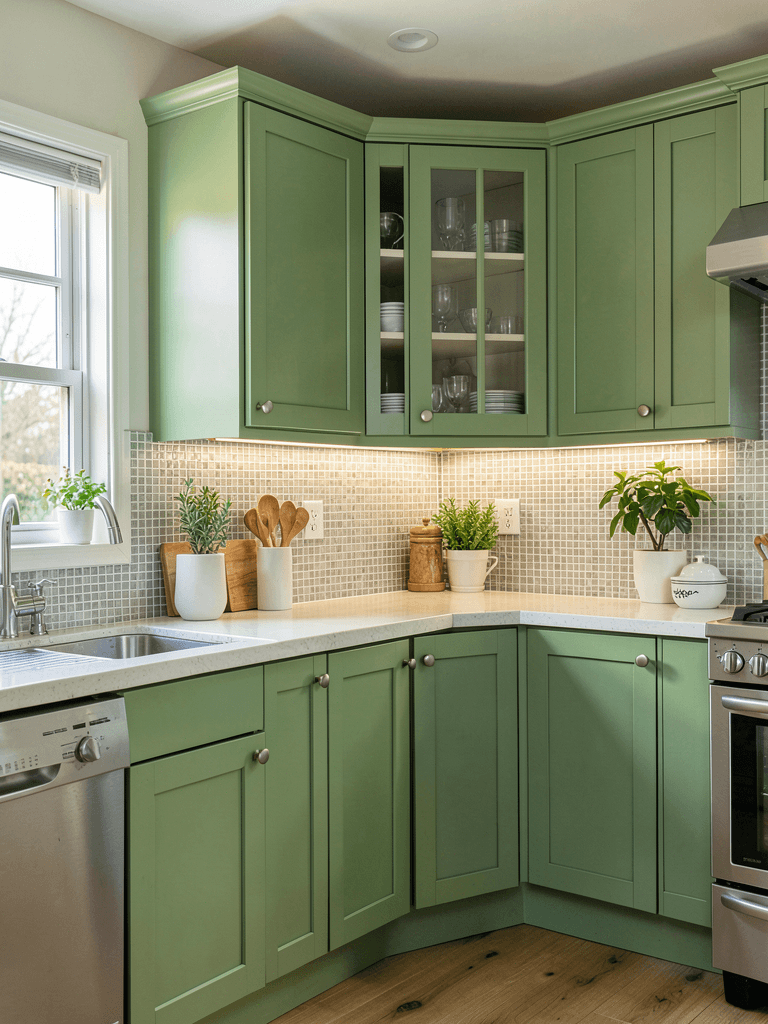
Here’s the truth—green kitchen transformations don’t require emptying your savings account. Some of the most stunning green kitchens I’ve seen came from smart, budget-conscious choices rather than unlimited renovation budgets.
Green is actually perfect for budget makeovers because paint transforms spaces dramatically for minimal investment. You can completely change your kitchen’s vibe with a few gallons of quality paint and some elbow grease (or patience if you’re hiring someone).
Budget-friendly green kitchen strategies:
Paint Your Way to Green:
- Existing cabinets can be painted for fraction of replacement cost
- Choose quality cabinet paint—this is worth the investment
- Proper prep (cleaning, sanding, priming) makes affordable paint look expensive
- Consider painting just lowers or just the island for even lower cost
Affordable Impact Updates:
- New hardware: Brass or matte black pulls transform painted green cabinets
- Peel-and-stick backsplash: Quality options exist that look surprisingly good
- Paint walls or single accent wall: Instant transformation, minimal cost
- Thrifted accessories: Vintage finds add character without breaking bank
Smart Splurges:
- Spend on quality paint (cheap paint looks cheap and wears poorly)
- Invest in one statement element (maybe a beautiful faucet or light fixture)
- Good brushes and rollers make DIY painting look professional
I’ve seen people completely transform builder-basic kitchens with sage green paint on cabinets, new brass hardware, and some thrifted vintage accessories. Total spend under $500, total transformation completely priceless.
Another genius budget move: paint interior of open shelving or glass-front cabinets green while keeping exteriors white. You get gorgeous pops of color without the time and expense of painting all exterior surfaces. :/
11. Green Kitchen Backsplash Ideas for Instant Impact
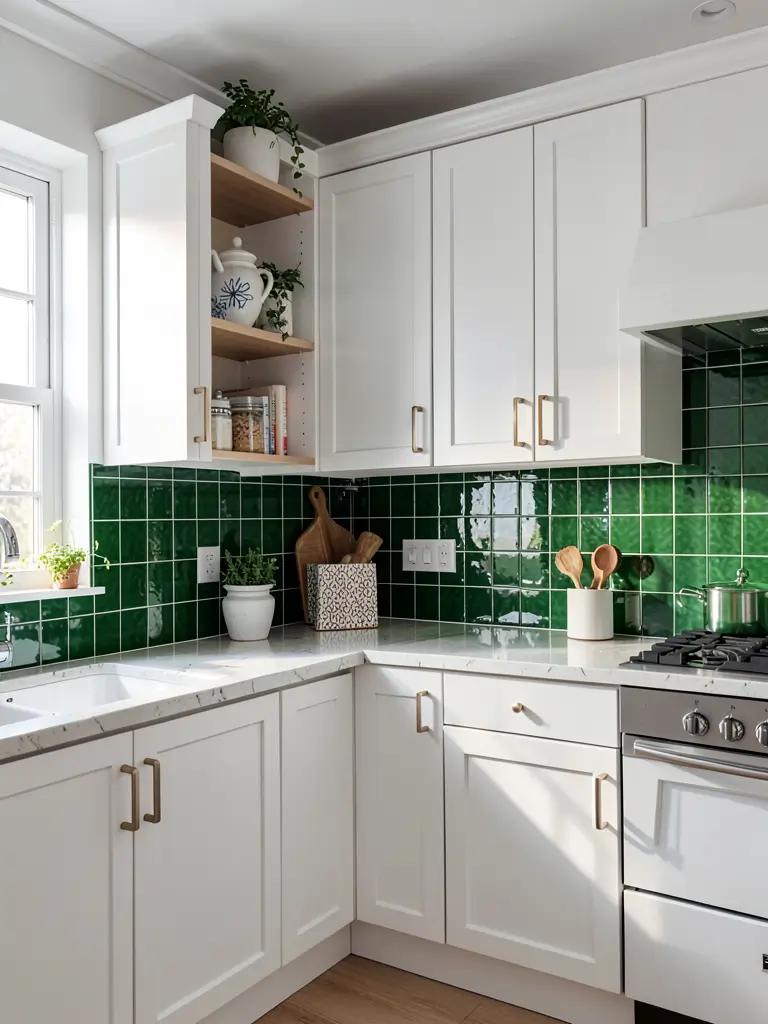
Not ready to commit to green cabinets? I totally get it—cabinets feel permanent and slightly terrifying. But a green backsplash? That’s the perfect way to test-drive this trend with major impact and manageable commitment.
Backsplashes are the jewelry of your kitchen. They’re the perfect place to introduce color, pattern, and personality without overwhelming the entire space. A green backsplash becomes an instant focal point that sets the tone for your whole kitchen.
Green backsplash options that deliver:
Tile Choices:
- Green subway tile: Classic shape, unexpected color (chef’s kiss)
- Zellige or handmade tiles: Gorgeous color variation and depth
- Glass tiles: Luminous, reflective, catches light beautifully
- Geometric patterns: Mix green with white or complementary colors
- Large-format tiles: Modern, seamless, fewer grout lines
Design Approaches:
- Floor-to-ceiling for dramatic statement (especially behind range)
- Standard height for classic, practical coverage
- Just behind stove for contained color pop
- Extend onto adjacent wall for expanded impact
Color Strategies:
- Match green backsplash to wall color for cohesive, enveloping effect
- Contrast green tile with white cabinets for graphic pop
- Layer different green shades for sophisticated depth
I’m obsessed with those green glass subway tiles that have slight color variation within each tile. They create this luminous, dimensional effect that changes throughout the day as light shifts. It’s like having art that you can also cook against (which is surprisingly difficult to find).
One consideration: if you’re going green on backsplash, keep cabinets neutral unless you’re intentionally layering green tones. Too much green in too many places can overwhelm rather than enhance.
12. Two-Tone Green Kitchen Ideas with Designer Appeal
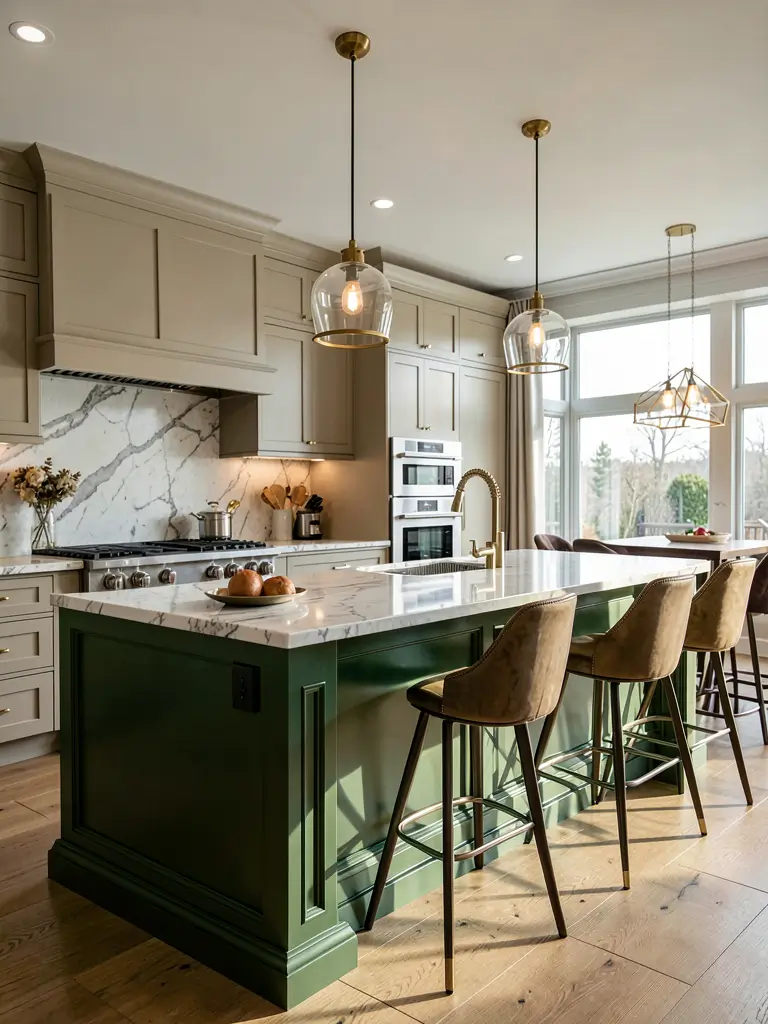
Want to look like you hired an expensive designer without actually hiring one? Two-tone green kitchens deliver that custom, high-end aesthetic with surprising accessibility.
Two-tone approaches add visual interest, create focal points, and allow you to incorporate green without going all-in. They’re perfect for people who want color but get nervous about committing to it everywhere (no judgment—that’s literally most of us).
Winning two-tone green combinations:
Color Pairings:
- Green lowers + white uppers (space-enhancing classic)
- Green island + white or wood perimeter cabinets (focal point creation)
- Dark green lowers + light green uppers (monochromatic sophistication)
- Green cabinets + natural wood island (organic warmth)
Strategic Applications:
- Paint base cabinets green, leave uppers natural wood
- Green on kitchen side, different color on dining side in open plans
- Green on full-height cabinets, contrasting color on standard height
- Mix green cabinets with green-painted walls in different shades
Designer Tricks:
- Use darker tone on bottom for visual grounding
- Ensure adequate color contrast for definition
- Repeat accent color in hardware, lighting, or accessories
- Consider how colors flow into adjacent rooms
I’ve seen sage green lowers with natural oak uppers that look like they belong in a $2 million design magazine spread. The combination feels collected, intentional, and infinitely more interesting than single-color cabinetry.
The beauty of two-tone green kitchens is the flexibility. Not loving it? You only need to repaint half your cabinets rather than the whole kitchen. That’s the kind of escape route I appreciate in design decisions.
13. Green Kitchen Island Ideas That Become the Focal Point
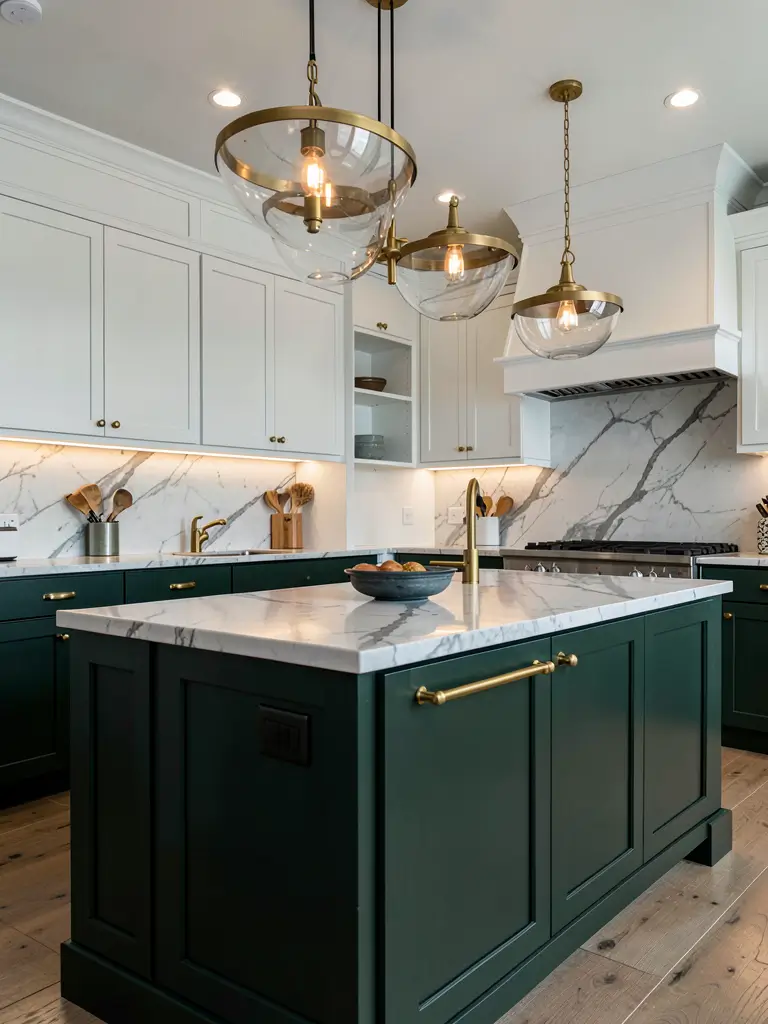
Kitchen islands naturally draw attention—they’re centrally located, approached from multiple angles, and usually where everyone congregates during parties (why does this always happen?). Painting yours green transforms it into an intentional showpiece.
A green island allows you to experiment with bolder shades you might not want on every cabinet. It creates a focal point, adds personality, and grounds the space with that pop of color right where you need it most.
Show-stopping green island ideas:
Color Choices:
- Bold emerald or hunter green: Maximum drama and statement-making
- Soft sage or mint: Subtle focal point that enhances rather than dominates
- Olive or moss green: Earthy sophistication with timeless appeal
- Dark forest green: Grounded, luxurious, unexpected
Design Elements:
- Contrast island countertop (white marble on green base is stunning)
- Add seating with natural wood or metal stools
- Incorporate open shelving on one side for display
- Top with statement pendant lighting that enhances the green
Styling Approach:
- Keep perimeter cabinets neutral to let island shine
- Echo green in accessories, textiles, or small accents
- Choose hardware that complements your green shade
- Consider waterfall countertop for modern, high-end look
I love the idea of a deep green island in an otherwise all-white kitchen. It anchors the space, provides that necessary color injection, and creates a gathering spot that actually feels intentional rather than just functional.
Plus, painting just the island is a low-commitment way to try green. Love it? Expand to more cabinets. Not quite right? You’ve only invested time and paint on one island rather than your entire kitchen.
14. Minimalist Green Kitchen Ideas with Clean Lines
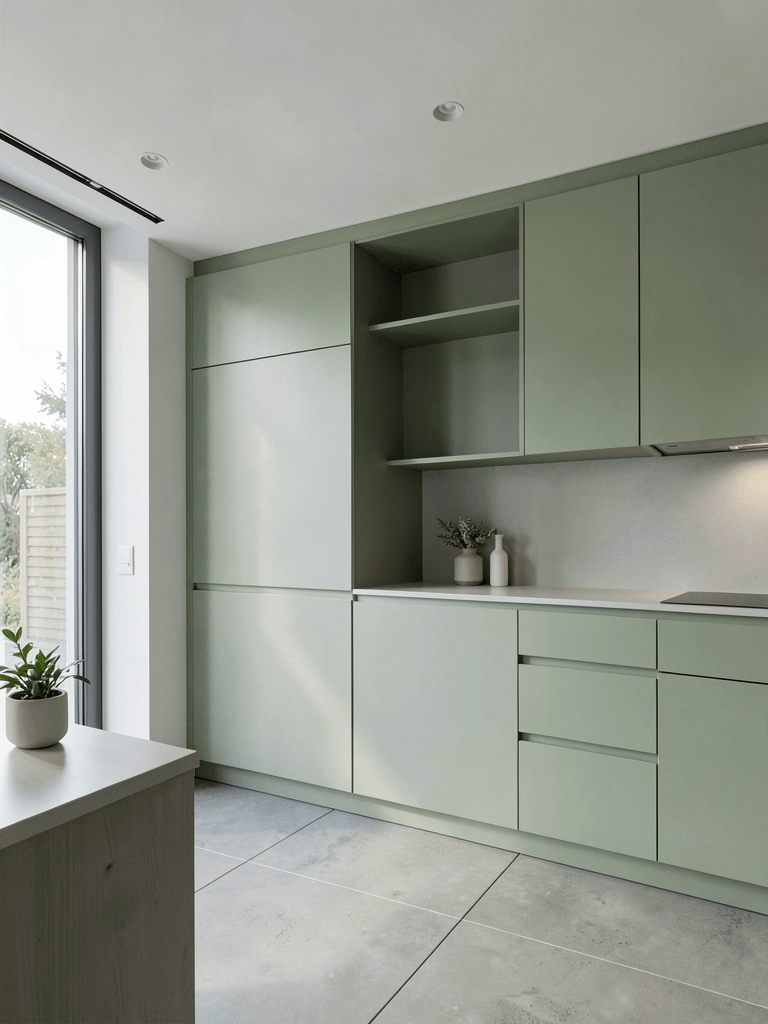
Minimalism and green might not seem like natural partners (isn’t minimalism all white and gray?), but they work together beautifully when executed thoughtfully. Green brings warmth and life to minimalist spaces without adding visual clutter.
The minimalist approach to green kitchens focuses on quality over quantity, intentional choices, and letting the green itself make the statement. You’re not piling on farmhouse accessories or cottage charm—the beauty is in restraint.
Minimalist green kitchen principles:
Cabinet Design:
- Flat-panel or simple shaker doors (no ornate details)
- Integrated handles or push-to-open mechanisms
- Consistent finish throughout (matte or gloss, not mixed)
- Panel-ready appliances that blend seamlessly
Color Palette:
- Green plus one or two neutrals maximum
- White, light gray, or natural wood as supporting players
- Limited to no pattern or busy visuals
- Monochromatic green scheme for sophisticated depth
Material Approach:
- Invest in quality materials rather than decorative elements
- Smooth, seamless surfaces (minimal grout lines, hidden seams)
- Natural materials in their purest forms (wood, stone, concrete)
- Uncluttered countertops with everything stored away
Design Philosophy:
- Every element serves a purpose
- Quality and craftsmanship over quantity and decoration
- Negative space is just as important as filled space
- Beauty emerges from simplicity and restraint
I’ve seen minimalist green kitchens where sage cabinets, white quartz counters, and concrete floors create this serene, sophisticated environment. Not a single decorative object in sight, but the space feels complete and intentional because the materials and colors do all the work.
The key is choosing the right green—too bright or too yellow reads cottage rather than minimalist. Greens with gray or blue undertones maintain that sophisticated, restrained aesthetic.
15. Vintage-Inspired Green Kitchen Ideas Full of Character
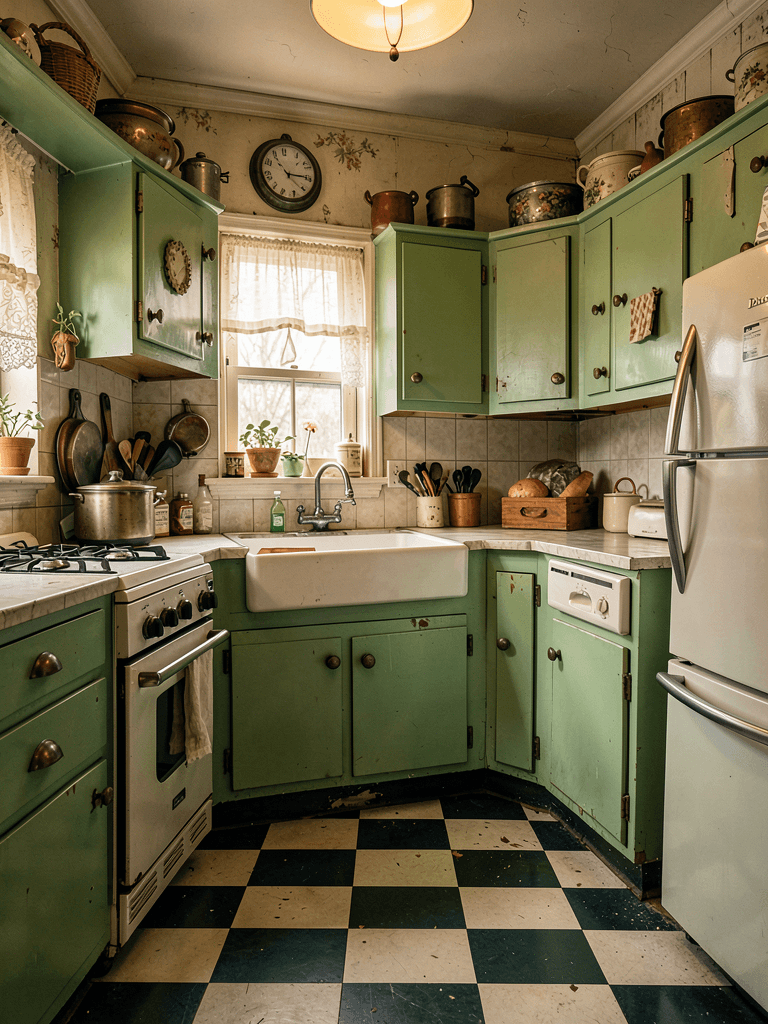
Green and vintage aesthetics are basically soulmates. Green has legitimate historical roots in kitchen design—it appeared in kitchens throughout the early-to-mid 20th century, making it perfect for authentic vintage-inspired spaces.
Creating vintage green kitchens is about capturing bygone charm while incorporating modern function (because we want vintage vibes, not vintage appliance reliability). It’s the best of both worlds when executed properly.
Vintage green kitchen essentials:
Color Choices:
- Mint green for 1950s diner vibes
- Sage or seafoam for 1920s-1940s farmhouse
- Deep jade or hunter for Victorian-inspired elegance
- Pale celadon for subtle vintage sophistication
Period-Appropriate Elements:
- Retro-style appliances (Big Chill, Smeg, or refurbished vintage)
- Vintage or reproduction hardware (Bakelite knobs, bin pulls, cup handles)
- Checkerboard floors (classic black and white, or green and cream)
- Period lighting (schoolhouse pendants, milk glass, ceramic fixtures)
- Apron-front sinks in cast iron or porcelain
Authentic Details:
- Crown molding and traditional trim work
- Glass-front cabinets with vintage dish displays
- Vintage tile patterns (hex, penny round, subway)
- Open shelving displaying genuine vintage finds
- Retro accessories (vintage canisters, old cutting boards, enamelware)
Sourcing Strategy:
- Thrift stores and estate sales for authentic vintage pieces
- Reproduction hardware from specialty suppliers
- Refurbished vintage appliances for authentic look with better function
- Mix genuine vintage with new items for livable authenticity
I’m completely obsessed with mint green cabinets paired with black and white checkerboard floors and chrome accents. It captures that 1950s diner aesthetic without feeling like a theme restaurant (thin line, but crossable with good taste).
The trick with vintage green kitchens is balancing authenticity with livability. Maybe you splurge on a genuine vintage farmhouse sink but pair it with new cabinets built to modern standards. Or you find vintage bar stools and reupholster them in fabric that works with your updated color scheme.
Vintage green kitchens should feel collected and personal rather than catalog-perfect. Layer in genuinely old pieces with your new green elements, and suddenly you’ve created a space with genuine soul and character.
So there you have it—fifteen genuinely inspiring ways to bring green into your kitchen and transform it from ordinary to absolutely extraordinary. Whether you’re drawn to calming sage, dramatic emerald, earthy olive, or fresh mint, there’s a green kitchen approach that’ll work perfectly for your space and style.
What I love most about green kitchens is how they make cooking spaces feel like actual rooms where you want to spend time, not just functional zones for meal prep. Green connects us to nature, brings warmth and life into our homes, and creates kitchens with genuine personality and character.
Whether you’re ready to paint every cabinet in sight, just testing the waters with a green island, or somewhere in between with a statement backsplash, green brings something special that neutrals alone just can’t deliver. It’s fresh without being trendy, bold without being overwhelming, and versatile enough to work in virtually any style from farmhouse to ultra-modern.
Now if you’ll excuse me, I need to go stare at more green kitchen photos and try to convince my partner that yes, we do need to repaint our perfectly fine kitchen. Again. For “research purposes,” obviously. Happy transforming, friends! 🙂