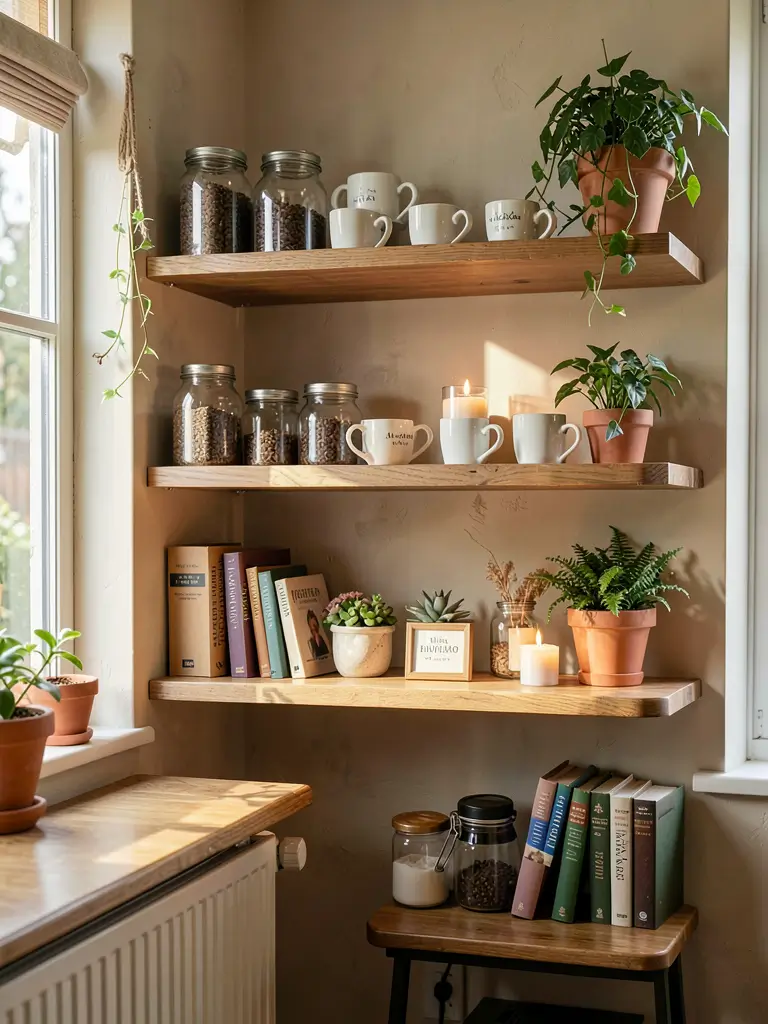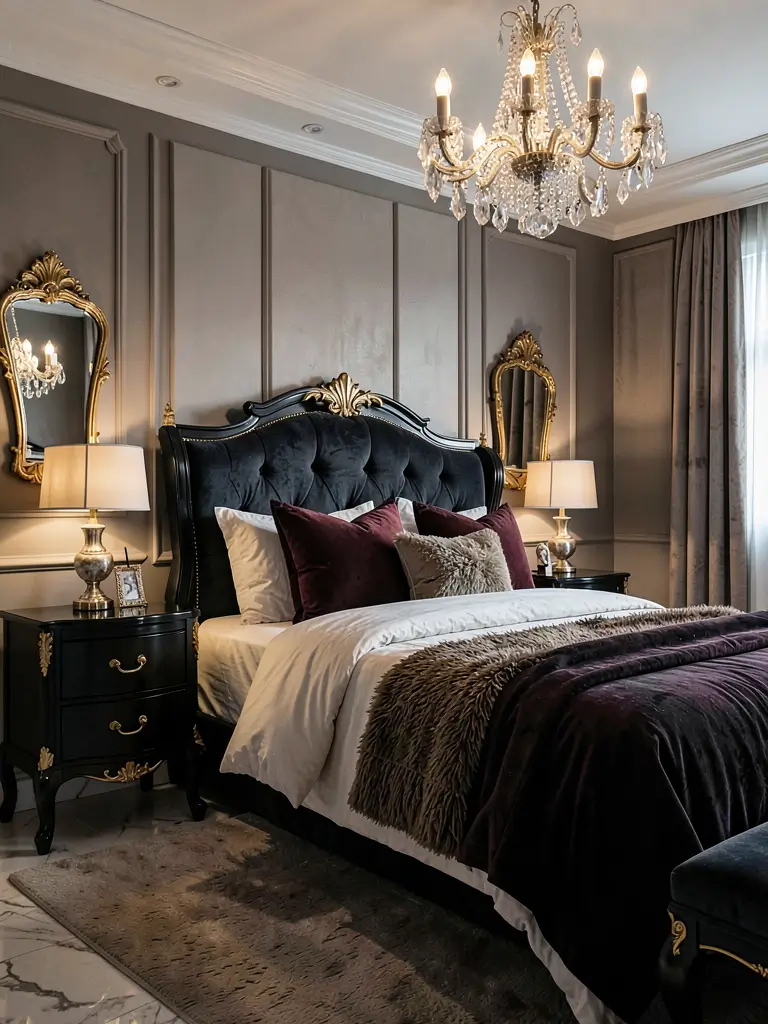
15 Stunning Antique Coffee Bar Ideas for Vintage Charm
You know that specific feeling when you walk into a boutique café and the whole space just wraps around you like a well-worn cardigan? The rich aromas, the clinking ceramic, the way every surface tells a quiet story? You absolutely can recreate that exact magic in your own kitchen. I’ve spent years hunting down forgotten furniture and transforming it into dedicated coffee corners, and I can tell you firsthand: nothing beats the soul of a genuine antique piece anchoring your morning ritual. You don’t need a massive renovation or a designer budget to pull this off. You just need a sharp eye, a little patience, and a willingness to let imperfect wood and chipped paint do the heavy lifting. Grab your favorite oversized mug, pull up a chair, and let’s explore fifteen seriously gorgeous antique coffee bar ideas that will turn your daily caffeine routine into a full-blown vintage experience.
1. Rustic Antique Sideboard Coffee Bar
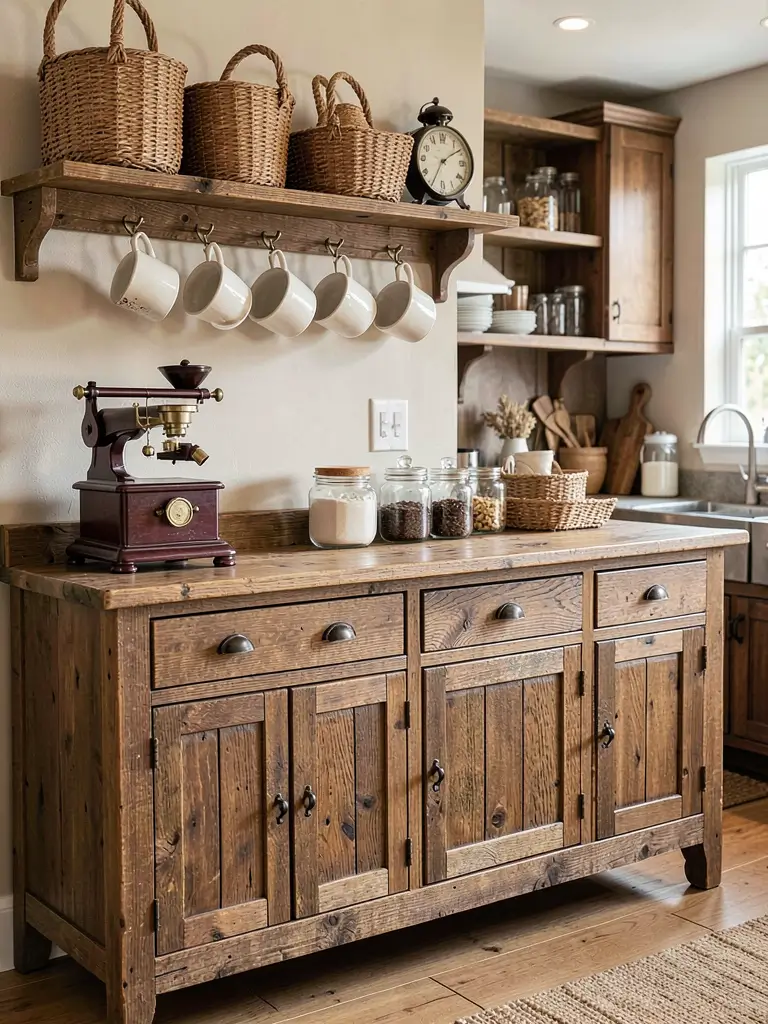
Furniture makers originally designed these sturdy sideboards for dining rooms, but they transition beautifully into dedicated coffee stations. I snagged a scarred oak sideboard at a local estate sale, and the moment I dragged it home, I knew it belonged under my kitchen window. The broad top surface easily accommodates my bulky espresso machine, my favorite ceramic drippers, and that slightly embarrassing collection of flavored syrups I absolutely refuse to part with.
Why do sideboards dominate this category so effectively?
- Generous counter space easily supports multiple brewing methods
- Deep drawers swallow up filters, spoons, and cleaning brushes
- Lower cabinets hide heavy coffee bags and extra water jugs
- Worn finishes naturally mask daily spills and steam rings
You don’t need to sand away every scratch or fill every dent. Those surface marks actually document decades of family dinners and holiday gatherings. I simply wipe mine down with a damp cloth, apply a light wood conditioner, and let the history shine right through. Ever notice how a perfectly polished surface feels cold, while a gently worn piece feels alive?
Pro tip: Look for sideboards featuring a lower display shelf. That open space gives you the perfect stage to stack vintage enamel mugs, arrange old recipe boxes, or showcase a row of glass carafes.
2. Vintage Hutch Coffee Station Makeover
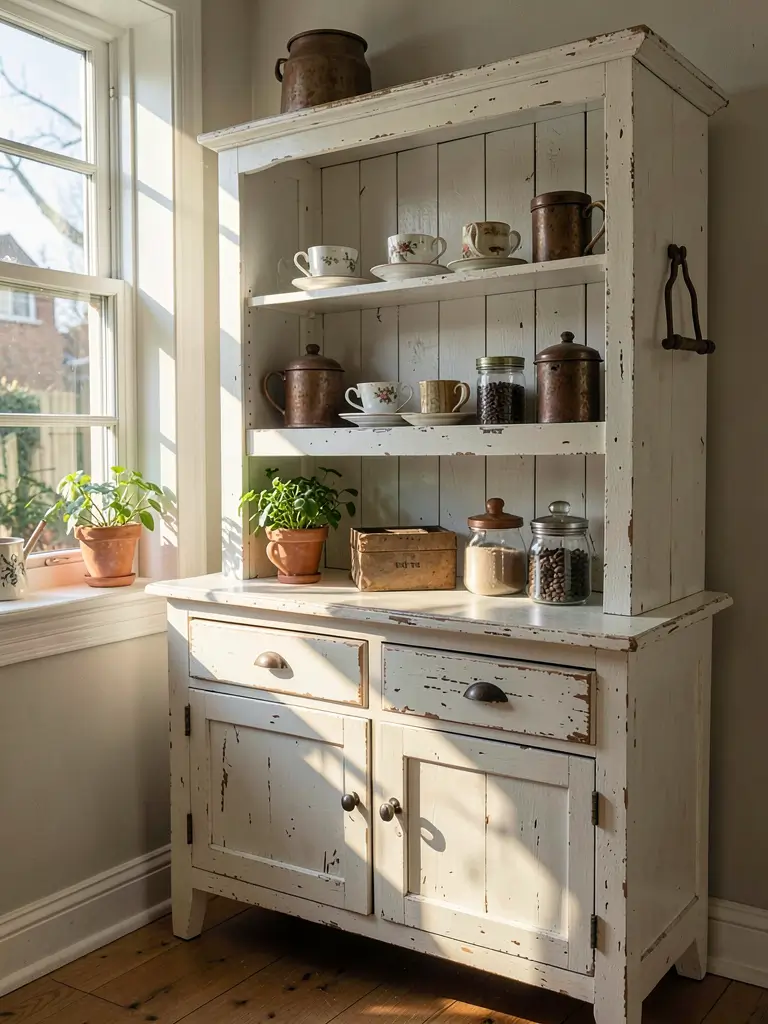
Ever wonder why vintage hutches feel so incredibly inviting? They create a self-contained little world that pulls your eye upward and keeps your essentials neatly organized. I completely transformed a 1940s pine hutch last spring, and it instantly became the undisputed focal point of my breakfast nook. The upper glass doors proudly display my mismatched porcelain cups and antique brass scales, while the solid lower doors safely tuck away my bulk bean stash and spare filters.
Consider these structural advantages:
- Vertical storage maximizes floor space in compact rooms
- Glass-front upper cabinets showcase your prettiest dishware
- Built-in shelving eliminates the need for extra wall brackets
- Heavy construction easily supports commercial-grade grinders
Pay close attention to interior depth when you shop. Some older hutch builders crafted surprisingly shallow shelves that work beautifully for plates but completely choke a standard drip machine. I always bring a tape measure and a mock coffee maker to my hunting trips. If the interior looks dingy, don’t walk away. A quick scrub and a coat of matte chalk paint inside the cabinet instantly brightens the space while preserving that gorgeous exterior character.
3. Small Corner Antique Coffee Bar Setup
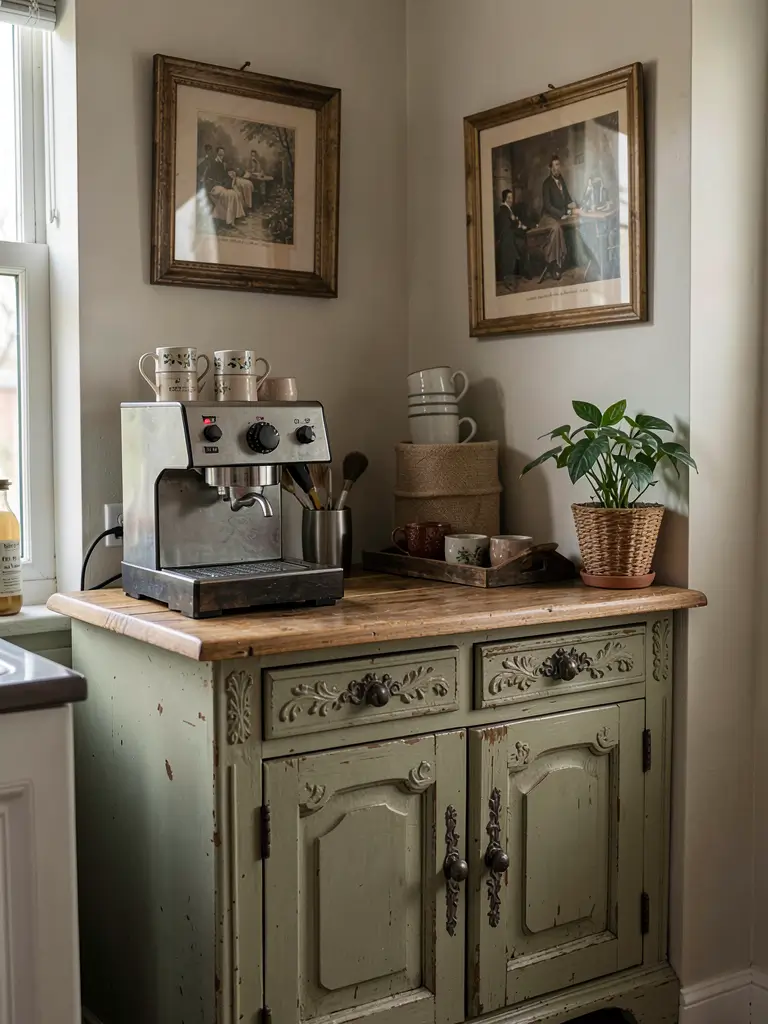
Not everyone enjoys sprawling kitchen layouts with endless counter space. I’ve lived in apartments where the kitchen basically doubled as a hallway, so I completely understand the spatial squeeze. Corner setups actually thrive in tight quarters because they transform dead zones into highly functional hubs. I’ve successfully repurposed everything from narrow corner cabinets to delicate vintage plant stands, and each one carved out a surprisingly efficient brewing zone.
Smart corner solutions include:
- Triangular wall shelves that hug tight angles perfectly
- Compact antique washstands offering just enough surface area
- Rolling vintage carts that tuck away when guests arrive
- Wall-mounted antique brackets paired with a petite side table
IMO, tucked-away corners actually generate a cozier atmosphere than wide-open stations. Everything sits within immediate reach, and the enclosed walls naturally amplify the warmth of your brewing routine. FYI: Measure your corner dimensions carefully before committing to a purchase. Older buildings rarely feature perfectly square angles, and baseboards frequently steal valuable clearance.
4. Farmhouse Antique Coffee Bar with Open Shelving
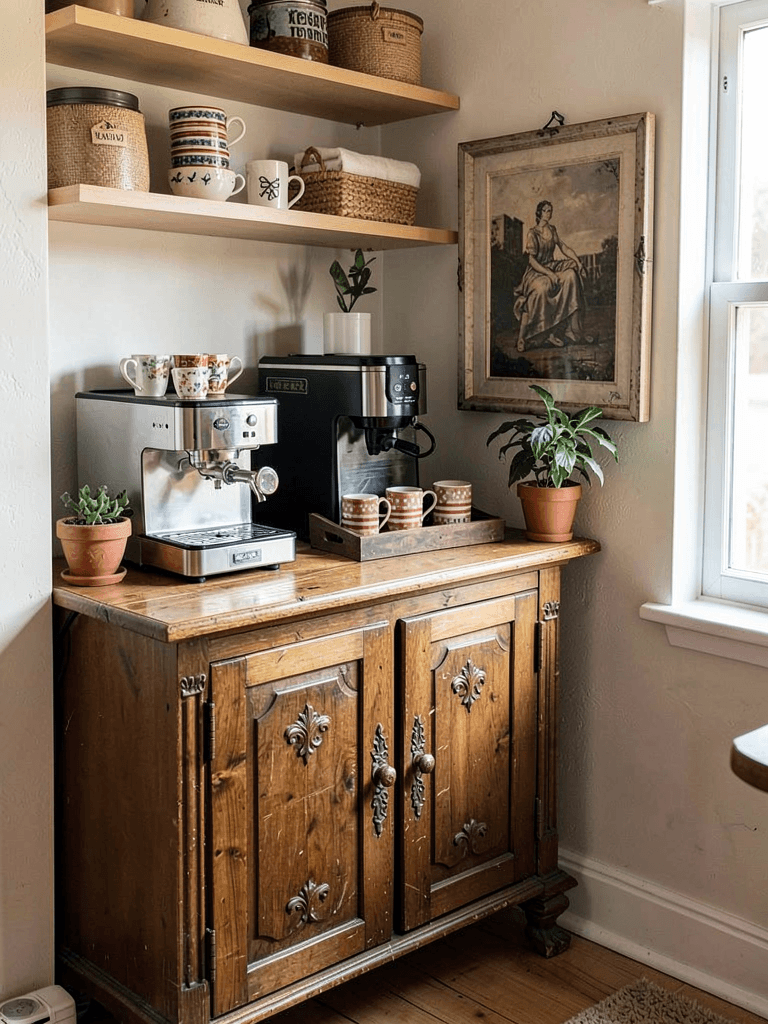
The farmhouse aesthetic refuses to fade away, and antique pieces naturally anchor this style with effortless grace. We’re talking weathered wood, exposed brackets, and that deliberately collected arrangement that somehow looks completely unplanned. I deliberately mixed a chipped white-painted table with modern brewing gear, and the contrast immediately elevated the entire corner. That juxtaposition works because it feels genuine, like you actually live in the space rather than just photographing it for a magazine.
Essential farmhouse components:
- Distressed painted finishes that reveal natural wood grain underneath
- Reclaimed wood shelving supported by wrought-iron brackets
- Textured linen towels that add softness to hard surfaces
- Simple enamelware that brings utilitarian charm
Don’t stress over coffee rings or minor scratches. Those marks actually prove you use your space daily. I actively avoid over-styling my setup. Real life happens around a coffee bar, and a slightly messy countertop always feels more authentic than a sterile display shelf. Skip the mass-produced rooster figurines and let your actual antique pieces carry the visual weight. They already possess decades of built-in personality.
5. Repurposed Antique Dresser Coffee Station
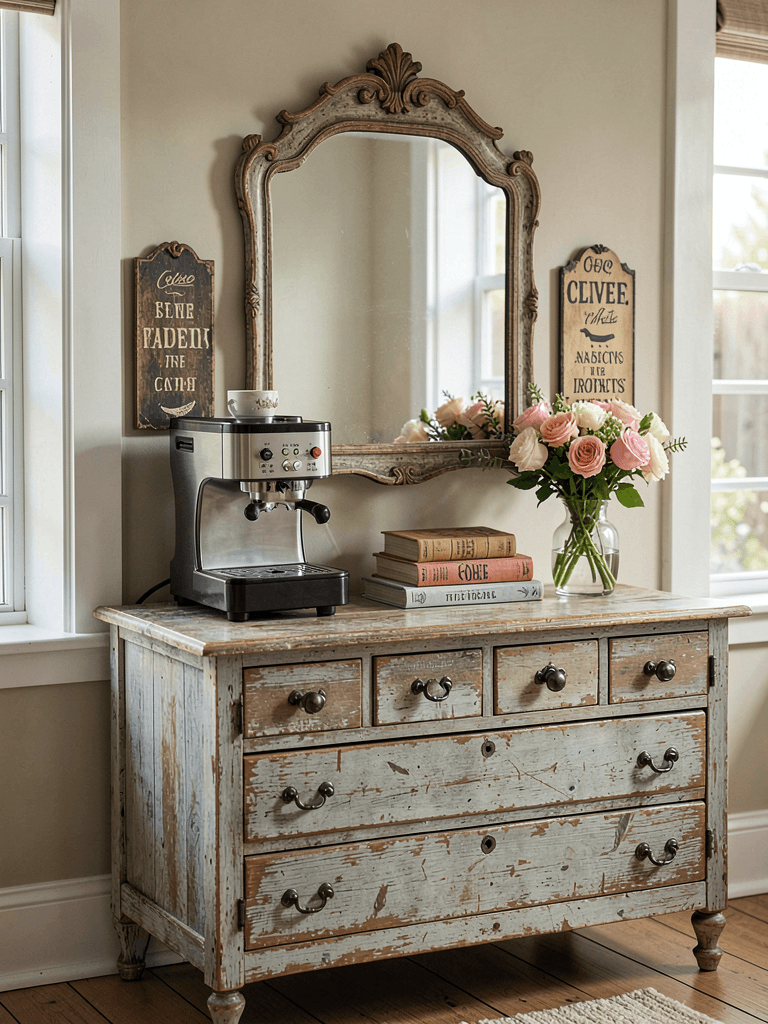
Dressers rank among the most criminally overlooked furniture pieces for coffee stations. Those graduated drawers originally stored socks and sweaters, yet they organize coffee accessories with absolute precision. I tracked down a 1920s walnut dresser featuring a thick marble top, and it instantly became the anchor of my morning routine. The marble surface shrugs off heat, wipes clean in seconds, and adds a touch of quiet luxury that makes even a rushed Tuesday morning feel deliberate.
Why dressers excel in this role:
- Varied drawer heights accommodate everything from tall mugs to tiny spoons
- Solid joinery easily supports heavy commercial equipment
- Statement silhouettes instantly elevate a bland wall
- Flea market pricing keeps your budget firmly in check
Remove the top drawer if you need direct electrical access for your appliances. I carefully cut cord pass-throughs into the back panel, which completely hides cable clutter while maintaining a clean visual line. Keep any original mirrors attached to the piece. Mirrors naturally bounce light around the corner and create an illusion of expanded space.
6. French Country Antique Coffee Bar Design

French country style injects effortless elegance into your daily brewing ritual. You’ll find graceful curves, soft muted palettes, and a relaxed sophistication that feels entirely unforced. I incorporated a handful of French touches after watching too many countryside documentaries, and the resulting corner immediately drew compliments from every visitor. The style thrives on painted antiques, delicate hardware, and accessories that whisper rather than shout.
Core French country elements:
- Cabriole legs that introduce gentle, sweeping lines
- Soft color washes in powder blue, sage green, or warm cream
- Vintage café au lait bowls that double as functional decor
- Ornate brass pulls that catch the morning light
- Delicate floral textiles that soften hard edges
Balance refined aesthetics with actual daily use. Display those beautiful ceramic canisters, but definitely pull them down and refill them regularly. A pristine, untouchable coffee bar defeats the entire purpose of the space. Hunt down authentic French advertising prints or vintage bistro menus. Those paper artifacts instantly ground your design in real history rather than manufactured nostalgia.
7. Cozy Cottage Style Antique Coffee Nook
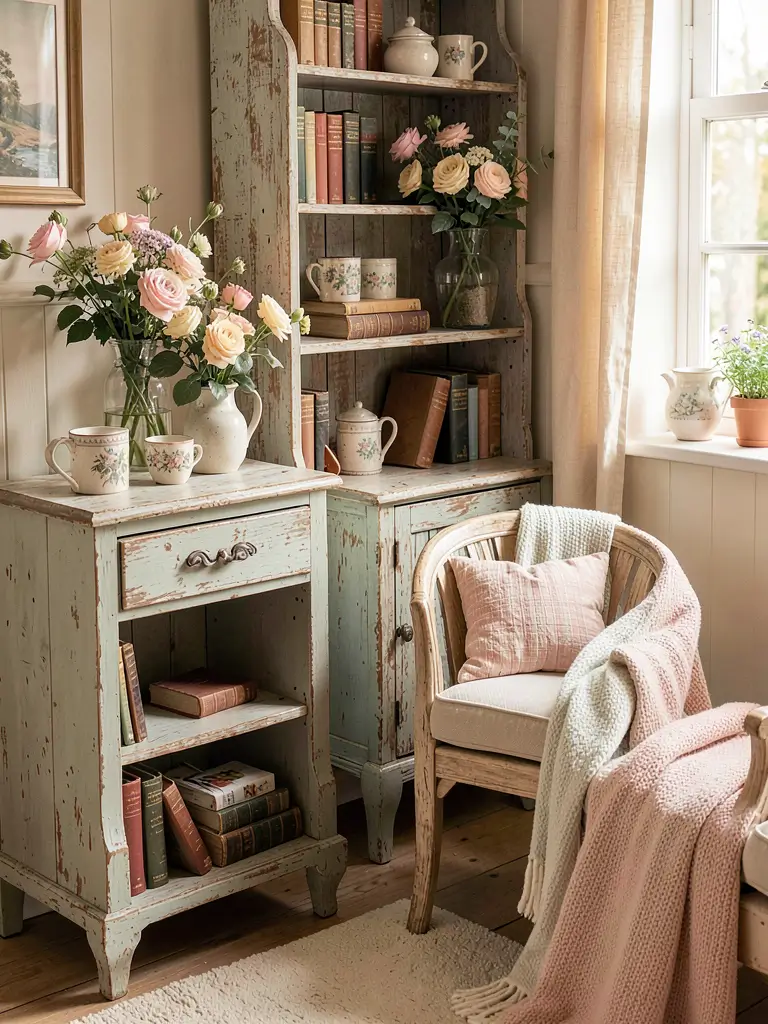
Who doesn’t want their morning brew to feel like a warm embrace? Cottage-style nooks deliver exactly that sensation through smaller-scale antiques, layered textiles, and a deliberately intimate footprint. I arranged a painted pine cabinet in my breakfast area, draped a crocheted runner across the top, and suddenly my entire routine slowed down to match the gentle vibe. This approach embraces imperfection and celebrates the joy of collecting mismatched treasures over time.
Cottage nook essentials:
- Chalk-painted cabinetry that shows subtle brush strokes
- Floral transferware plates stacked for easy access
- Lace-edged linens that introduce delicate texture
- Miniature vintage creamers that serve as charming accents
- Warm brass sconces that cast a soft, inviting glow
Mix patterns freely and ignore traditional matching rules. Cottage design actively thrives on gentle chaos and layered history. I pair gingham napkins with botanical wallpaper and polka-dot mugs, and the combination somehow harmonizes perfectly. Keep the scale intimate and personal. You’re crafting a private retreat, not a commercial showroom.
8. Antique Cabinet Turned Coffee Bar
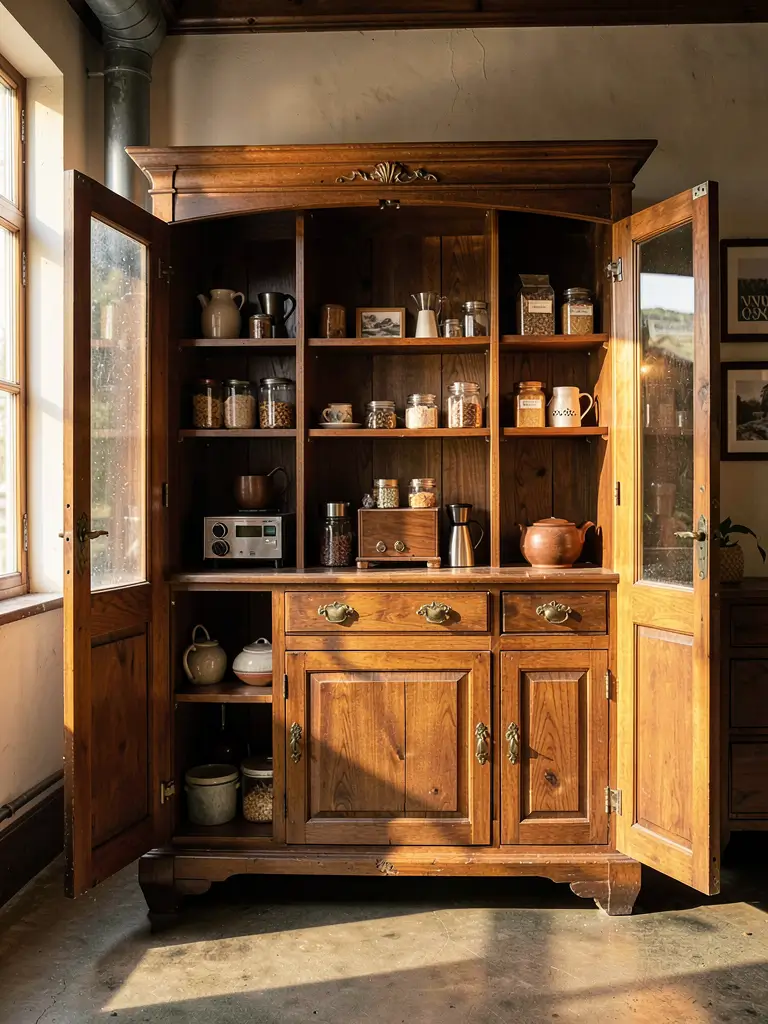
Unexpected furniture pieces frequently deliver the most striking coffee stations. I’m talking about specialized cabinets you discover at flea markets—medical storage units, printer’s cabinets, apothecary chests, and industrial filing systems. Those specialized compartments originally organized pills, metal type, or office supplies, yet they manage coffee accessories with surgical precision. I converted an old dental supply cabinet into a dedicated station, and those shallow pull-out drawers perfectly sorted my entire tea collection.
Benefits of specialized cabinets:
- Compartmentalized storage eliminates visual clutter instantly
- Conversation-starting history gives guests something fascinating to discuss
- Industrial proportions add unexpected edge to traditional kitchens
- Lower price points compared to conventional dining furniture
Don’t stress over preserving the original purpose labels. I keep mine as a fun historical nod, but you can absolutely strip them away and apply your own organization system. Mount a small chalkboard label maker on the side, and you’ll never misplace your favorite roast again.
9. Budget-Friendly Vintage Coffee Bar Ideas
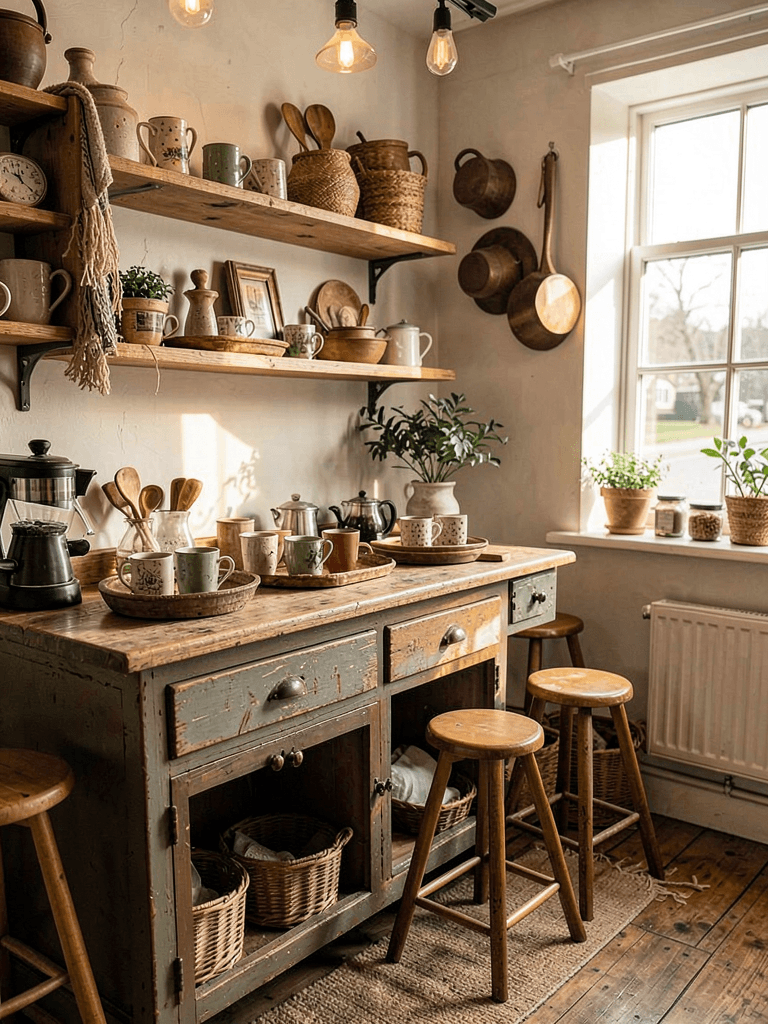
Not everyone wants to drain their savings account for antiques, and honestly? You shouldn’t need to. Some of my most admired pieces cost less than a single week of drive-thru lattes. The secret involves targeting the right hunting grounds and embracing a little weekend elbow grease. I’ve completely furnished multiple coffee corners using thrift store racks, neighborhood yard sales, and local auction lots. My most complimented hutch cost exactly thirty dollars and a Saturday afternoon of scrubbing.
Budget sourcing strategies:
- Estate sale final hours when sellers desperately want inventory gone
- Thrift stores in historic neighborhoods where older residents donate quality pieces
- Online marketplace alerts that notify you the second someone lists “vintage cabinet”
- Curb-side rescues that just need a quick wipe-down
- Auction house bulk lots that sell entire room sets for pennies
Expect to invest time rather than money. You’ll likely need to clean, tighten screws, or replace missing pulls. That hands-on effort creates a deeply personal connection to your furniture. Reproduction hardware works perfectly fine when originals go missing. Modern brass pulls cost mere dollars and restore full functionality without compromising the vintage aesthetic. Your station needs to function beautifully and spark joy, not pass a museum inspection.
10. Dark Wood Antique Coffee Bar Inspiration
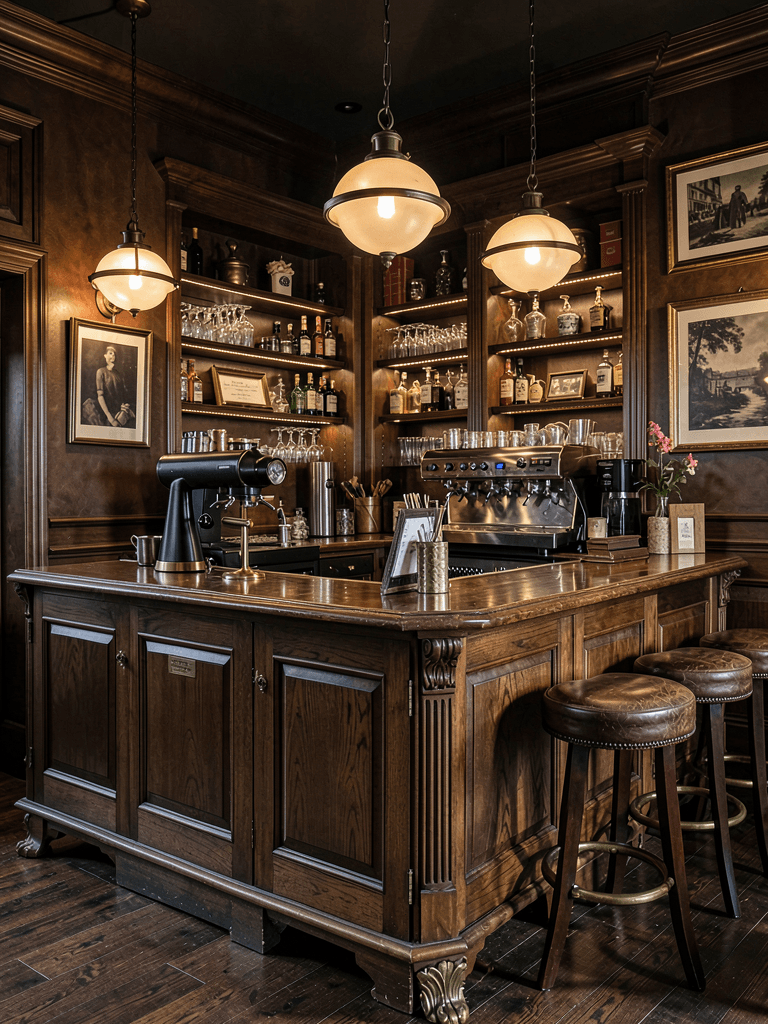
Not every successful coffee station requires painted finishes or distressed edges. Sometimes rich, dark timber commands the room and establishes instant sophistication. I’m talking about walnut, mahogany, and cherry pieces that anchor a space with quiet authority. My current setup features a 1940s mahogany buffet, and the deep wood tone immediately makes every white mug pop and every copper accessory gleam. Dark antiques bring a grounded, classic energy that never chases passing trends.
Why dark timber works so well:
- Timeless presence that outlasts seasonal design fads
- Forgiving surfaces that naturally conceal minor spills
- Dramatic contrast against light walls and bright accessories
- Aging grace that deepens with regular oil treatments
Pay close attention to natural lighting when you choose this route. Heavy wood can overwhelm a dim room, so I always add a dedicated task lamp and keep the surrounding walls bright. Mix wood tones freely instead of chasing perfect matches. A dark buffet paired with a light oak shelf and a contrasting woven stool creates far more visual tension than a monochromatic setup. Condition the wood regularly with a quality beeswax blend to preserve that deep luster.
11. Antique Coffee Bar with Vintage Sign Decor
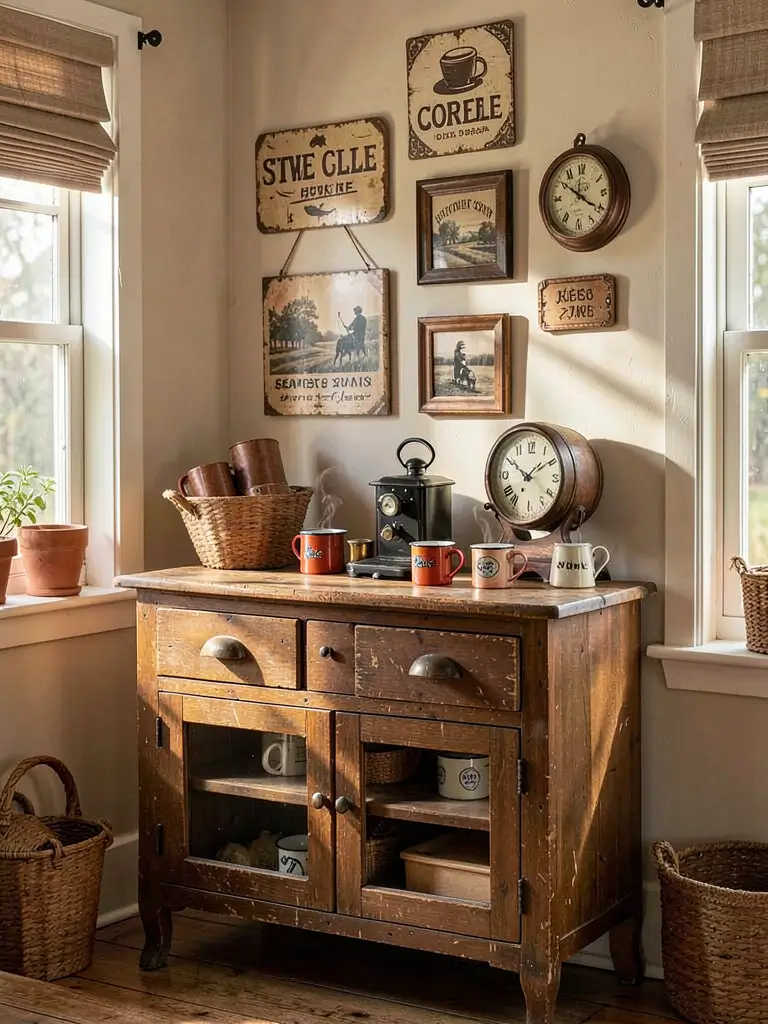
Ever notice how authentic advertising signage instantly elevates a space? Real vintage signs carry actual historical weight, unlike mass-produced reproduction plaques that flood modern craft stores. I’ve spent years collecting old tin advertisements, framed magazine spreads, and enamel brand logos, and each piece immediately grounds my coffee corner in a specific era. My absolute favorite remains a dented 1950s diner menu board that I rescued from a muddy barn sale.
Effective sign placement tactics:
- Lean large metal signs directly against the backsplash for casual charm
- Gallery wall arrangements that cluster smaller prints at varying heights
- Period-accurate chalkboards that mimic old café daily specials
- Three-dimensional vintage tins that function as both storage and decor
Restrain yourself from covering every available inch. One or two carefully chosen signs create a powerful focal point, while a dozen competing graphics just create visual noise. Hunt for pieces that actually relate to coffee, tea, or early twentieth-century dining. Authentic vintage advertising costs more upfront, but a single genuine piece delivers infinitely more character than a wall full of factory reproductions.
12. Elegant Victorian Style Coffee Station
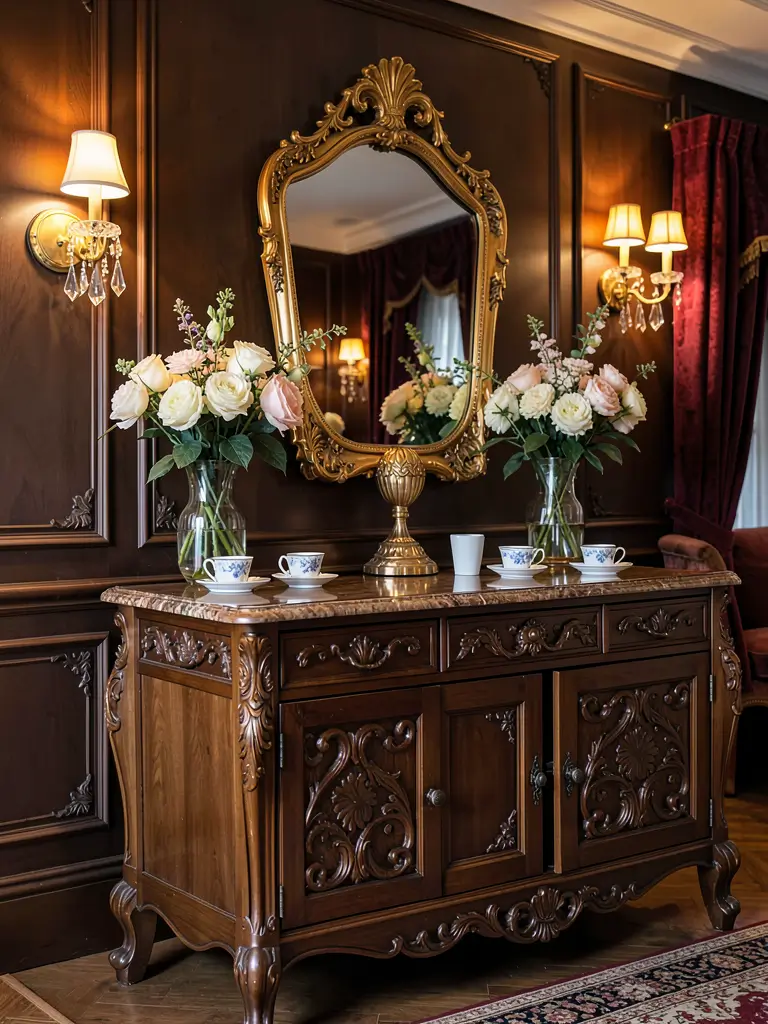
Maximalists, this category belongs entirely to you. Victorian antique coffee stations embrace unapologetic ornamentation, carved details, and rich, saturated accents. I arranged a heavily carved marble-top washstand beneath a dark wood wall shelf, and the resulting corner immediately channels a grand European manor. Every morning feels like a deliberate ceremony rather than a rushed routine.
Defining Victorian characteristics:
- Intricately carved furniture with floral or geometric motifs
- Jewel-toned textiles in burgundy, emerald, or sapphire
- Polished stone surfaces that reflect ambient light
- Heavy brass fixtures that add substantial visual weight
- Silver service pieces that elevate everyday brewing
Commit fully to the aesthetic or pivot entirely. Half-hearted Victorian attempts usually read as confused rather than curated. Balance the formal elements with genuine daily functionality. Display that ornate silver coffee pot proudly, but absolutely keep your modern electric kettle within arm’s reach. Historical elegance and modern convenience absolutely share space without conflict.
13. Antique Coffee Bar with Copper Accents
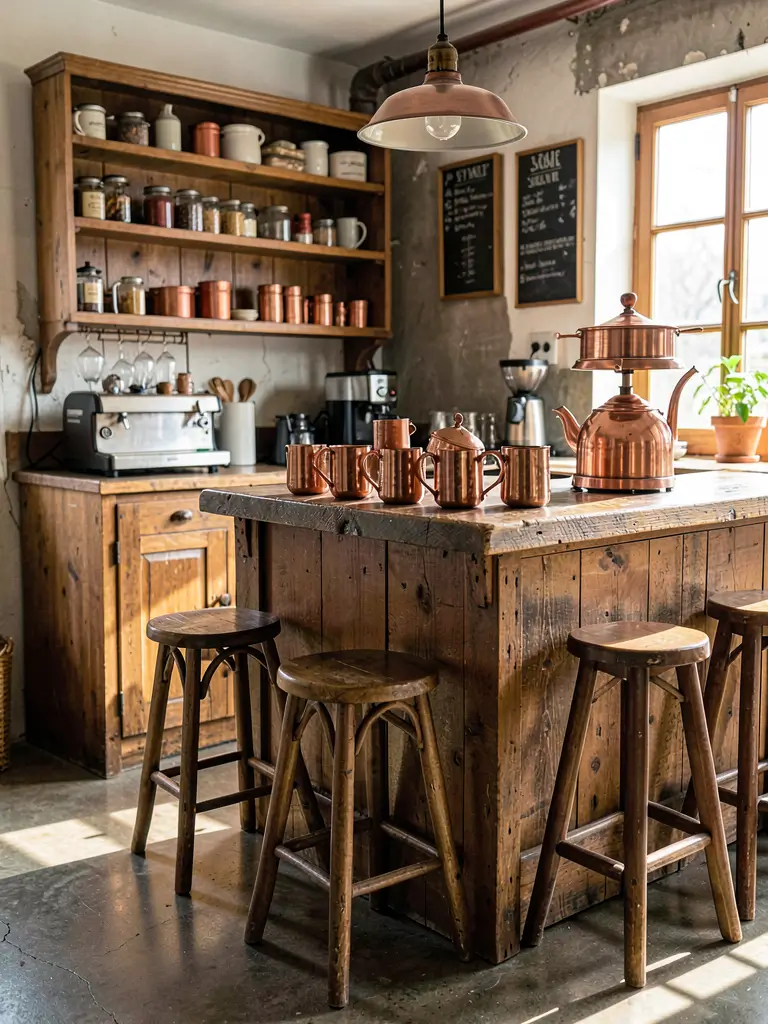
Copper instantly warms any antique arrangement with its unmistakable metallic glow. The metal naturally develops a rich, living patina that shifts and evolves alongside your daily routine. I started introducing copper gradually—a battered kettle here, a set of measuring cups there—and suddenly my entire station achieved a cohesive, sunlit warmth. The metal harmonizes beautifully with every wood tone and paint finish I’ve tested.
Copper integration ideas:
- Vintage copper pots that serve as both decor and functional kettles
- Patinaed canisters that store beans while adding visual texture
- Antique measuring tools that hang beautifully on wall hooks
- Copper pendant fixtures that cast warm, focused light downward
- Mixed metal arrangements that blend brass and bronze seamlessly
Resist the urge to polish everything to a mirror finish. The aged oxidation tells the story of decades of use. I deliberately leave mine with gentle darkening in the crevices, which instantly separates authentic vintage from shiny new reproductions. Copper absolutely plays well with other metals, so feel free to layer brass, iron, and bronze together for a rich, collected look.
14. Seasonal Antique Coffee Bar Decorating Ideas
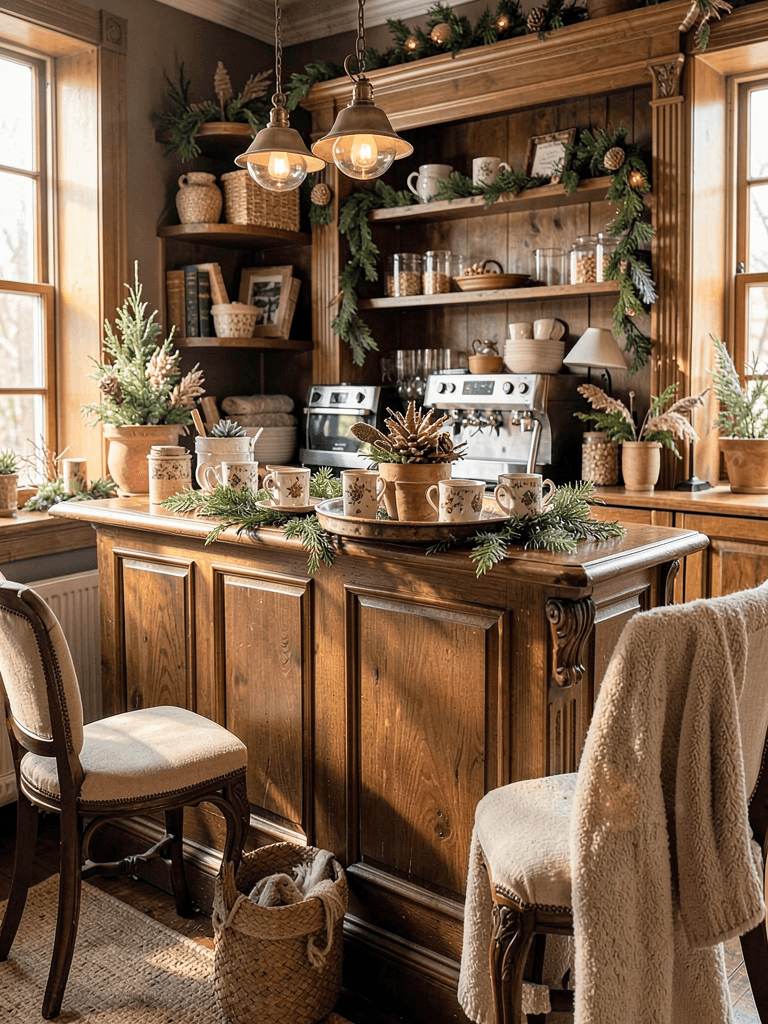
Coffee bars offer the perfect canvas for seasonal rotation without overwhelming your entire home. Unlike scattered holiday decorations that clutter every room, seasonal coffee touches feel completely intentional because you actually interact with the space daily. I swap out textiles, rotate display pieces, and shift color palettes with each changing season, and the corner constantly feels fresh without requiring a complete overhaul.
Seasonal rotation guide:
Spring:
- Vintage floral china that echoes blooming gardens
- Antique botanical creamers that add delicate detail
- Fresh cut branches arranged in clear glass bottles
Summer:
- Bright picnicware that invites outdoor gatherings
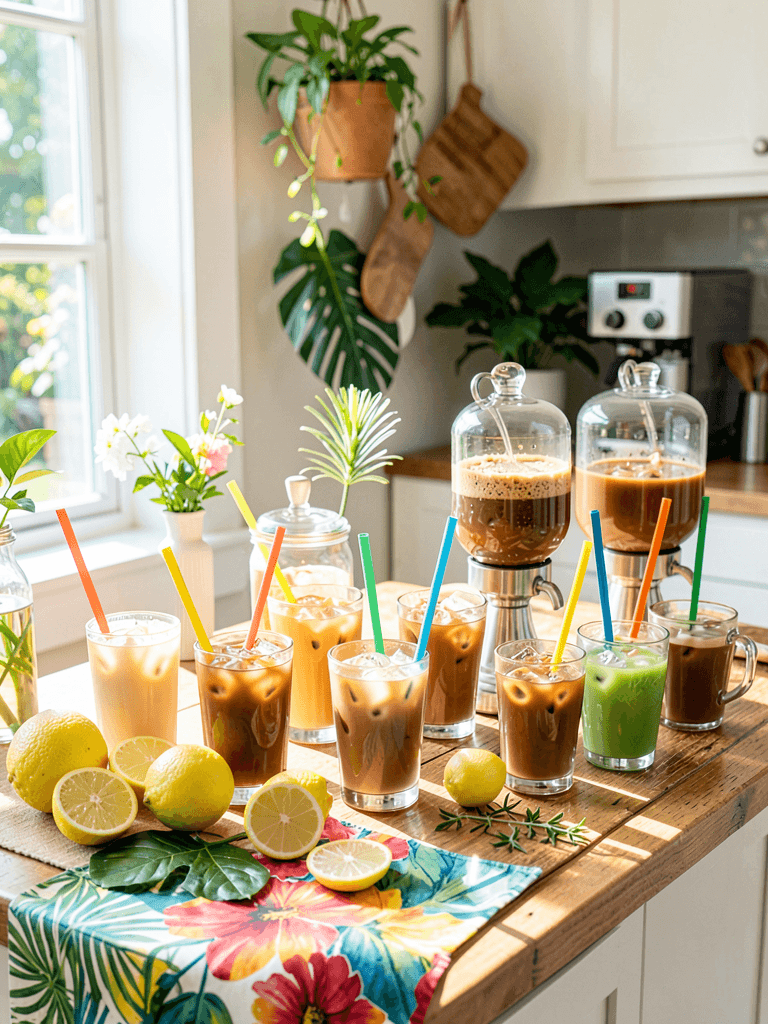
- Vintage glass beverage dispensers perfect for cold brew
- Lightweight linen runners that keep the surface cool
Fall:
- Heavy stoneware mugs in earthy, warm tones
- Antique copper pieces that reflect autumn light
- Plaid wool throws draped casually over nearby chairs
Winter:
- Ornate silver service for holiday entertaining
- Thick ceramic tumblers that retain heat longer
- Evergreen sprigs tucked into antique brass vessels
Shift your existing collection rather than purchasing new items. Simply move pieces around, highlight different textures, and let the season dictate your color story. Sometimes the most effective decorating involves grabbing a handful of pinecones or dried citrus slices from your kitchen counter. Keep it simple, keep it personal, and let nature guide your arrangement.
15. Antique Coffee Bar with Collected Thrifted Finds
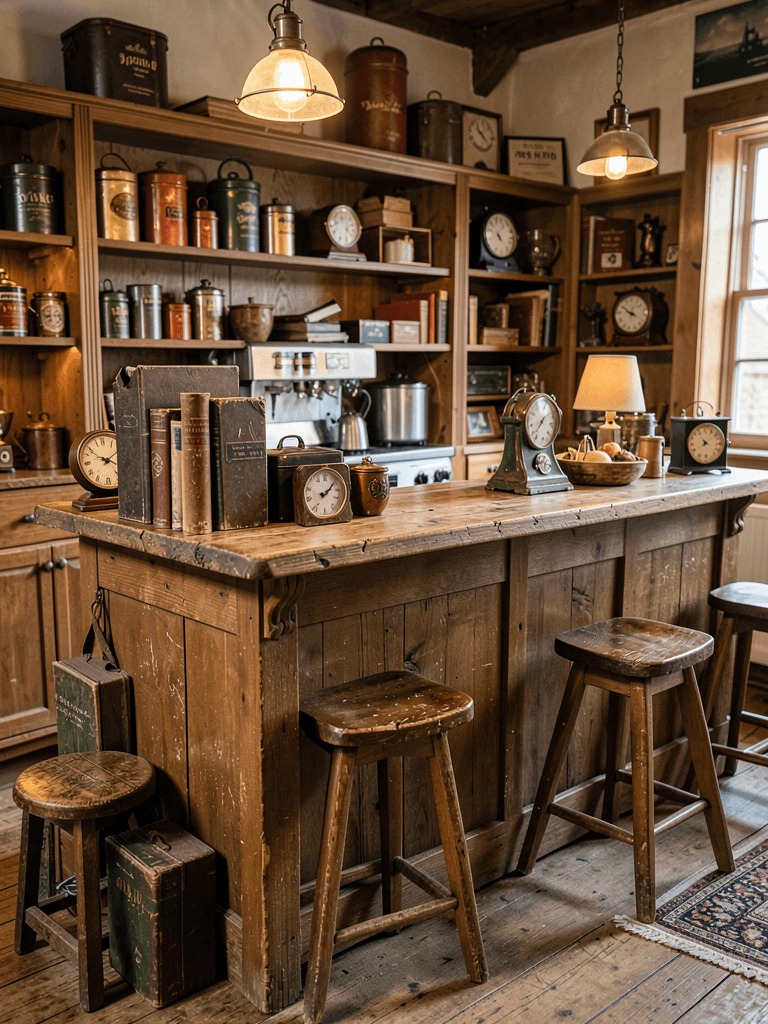
This approach represents my absolute favorite method: a gloriously mismatched, deeply personal arrangement that refuses to follow rigid design rules. My entire coffee corner consists entirely of thrifted, yard-saled, and rescued pieces that I’ve gathered slowly over nearly a decade. That hand-cranked grinder cost four dollars. The scalloped shelf cost twelve. The mugs arrived individually over six years from completely unrelated shops. Nothing matches perfectly, yet everything works harmoniously because each piece carries genuine history.
Building a collected station:
- Shop without strict checklists and let unexpected finds guide you
- Blend decades freely and ignore chronological purity rules
- Embrace mismatched dishware as a celebration of individuality
- Showcase personal hobbies alongside coffee equipment
- Add pieces gradually rather than forcing instant completion
Patience drives this aesthetic, and waiting for the perfect piece can absolutely test your resolve. But honestly? The thrill of the hunt fuels the entire hobby. I still remember spotting a pristine 1930s porcelain server at a random driveway sale, knowing instantly it would anchor my top shelf, and walking away with it for three bucks. Collected spaces always feel more authentic than showroom setups because they document a real person’s journey, tastes, and discoveries.
You now hold fifteen distinct blueprints for transforming your daily coffee routine into a genuinely vintage experience. Whether you lean toward heavy Victorian carving, budget-friendly thrifted eclecticism, or something entirely your own, the entire project hinges on personal connection. Your antique coffee bar should genuinely make you smile before the caffeine even hits your bloodstream. It should anchor your kitchen with quiet history and offer a deliberate pause in an otherwise frantic schedule.
Start with a single piece that genuinely speaks to you. Maybe it’s a chipped sideboard, a narrow cabinet, or just a stack of mismatched mugs. Build outward from that anchor, trust your instincts, and let the space evolve naturally alongside your collection. The most compelling coffee corners never finish; they simply grow richer with every new treasure you bring home. Now if you’ll excuse me, all this planning has me craving a freshly pulled espresso. My antique mahogany station is definitely calling my name. 🙂