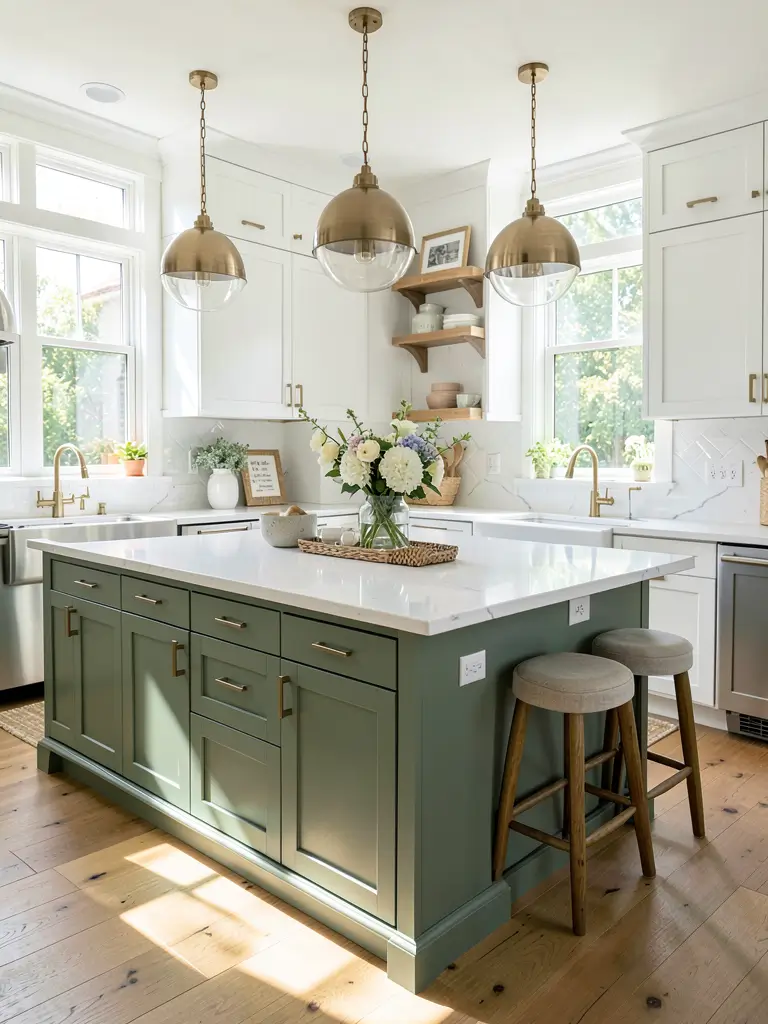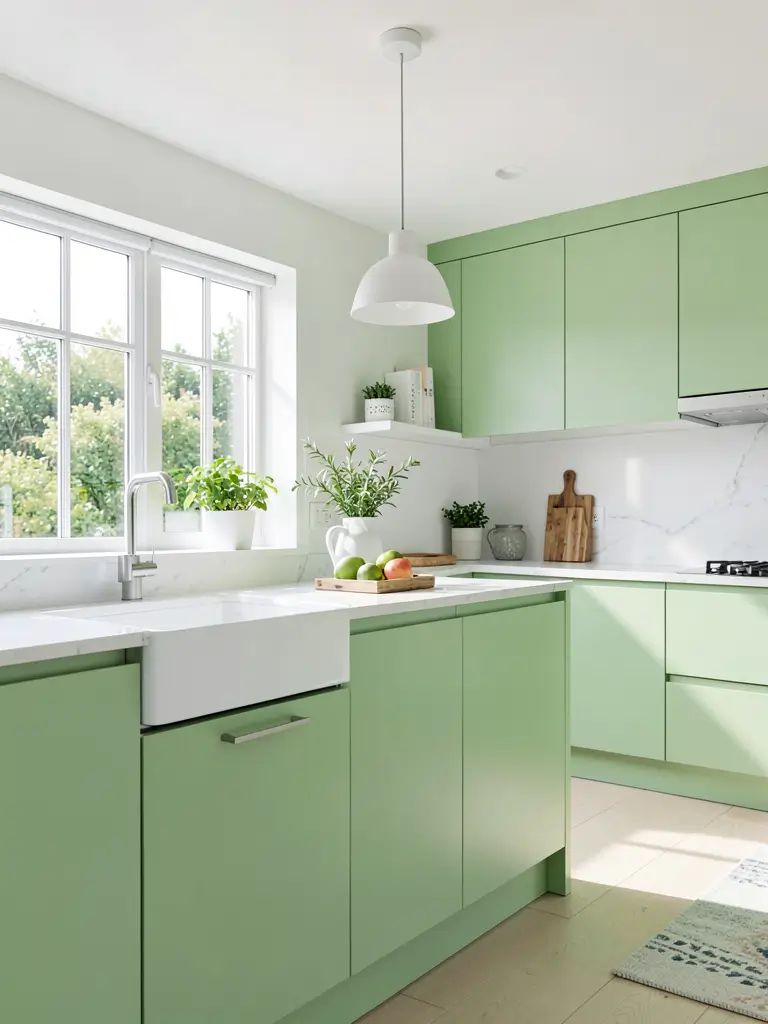
15 Beautiful Farmhouse Kitchen Backsplash Ideas You’ll Love
Look, your kitchen probably works perfectly fine, but let’s be honest: that blank wall between your cabinets and your countertop is currently a tragedy. It’s like wearing a tuxedo with a pair of muddy hiking boots. You have the cabinets and the fancy stove, but without the right backsplash, the whole room feels unfinished. If you want that “dream kitchen” feeling every time you walk in to pour your morning coffee, you need a farmhouse backsplash that actually has some personality.
I’ve spent years renovating spaces and helping friends pick out materials, and I’ve seen some absolute disasters. I’ve also seen some triumphs that make me want to move into their kitchens permanently. Farmhouse style isn’t just one thing anymore; it ranges from the “Joanna Gaines” rustic look to sleek, modern interpretations that would look at home in a city loft.
Let’s walk through these 15 beautiful farmhouse kitchen backsplash ideas together. I’m going to tell you exactly why they work, which ones will make you regret your life choices when it comes time to clean, and how to pick the one that fits your specific vibe.
1. Classic White Subway Tile Farmhouse Backsplash
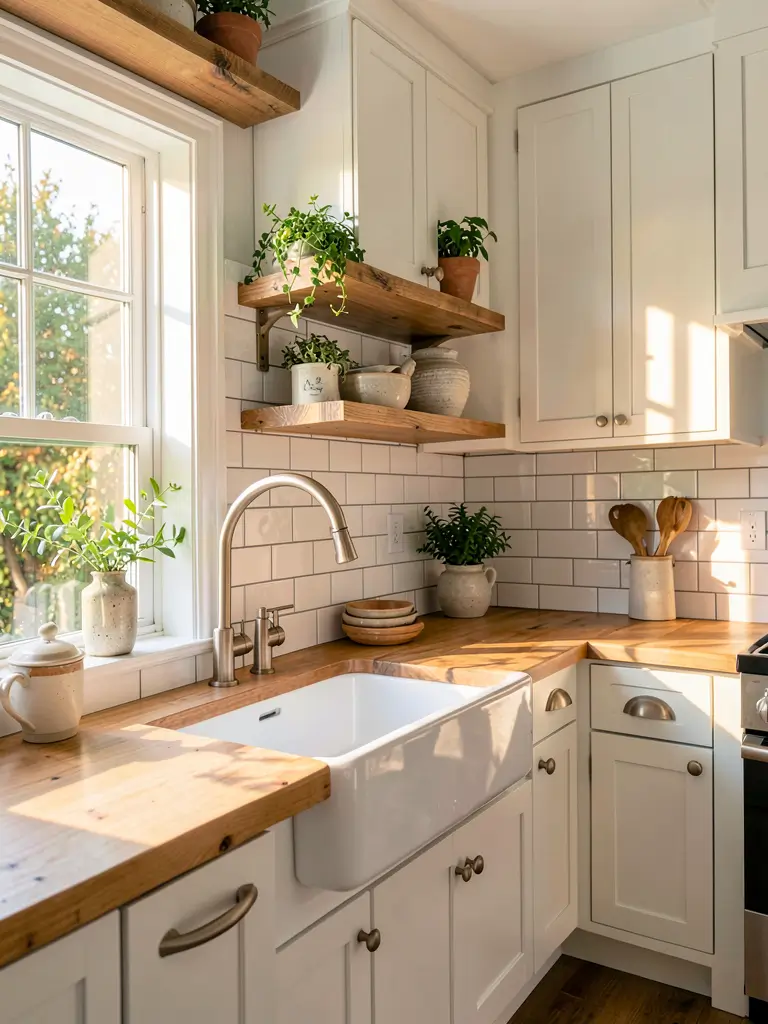
I know what you’re thinking. “Subway tile? Groundbreaking.” I hear the sarcasm, but listen—there is a reason every single design show on TV uses this stuff. It’s the “little black dress” of backsplashes. It goes with everything, it’s cheap, and it never looks dated.
I used a classic 3×6 white subway tile in my first fixer-upper because I was broke and wanted something safe. Ten years later, I still love it. The key to making it “farmhouse” rather than “hospital” lies in the grout and the finish. If you use a crisp white grout, it looks clean and modern. If you use a soft gray or charcoal grout, you suddenly have a vintage, industrial look that highlights the pattern.
Why people love this feature:
- It fits any budget, which leaves more money for that fancy espresso machine you’ve been eyeing.
- The glossy finish reflects light, making small farmhouse kitchens feel twice as big.
- You can find it at literally any hardware store on the planet.
Pro-tip: If you want a more artisanal look, buy tiles with slightly uneven edges. These “handmade” lookalikes add a layer of texture that standard, perfectly straight tiles just can’t provide.
2. Rustic Exposed Brick Farmhouse Backsplash
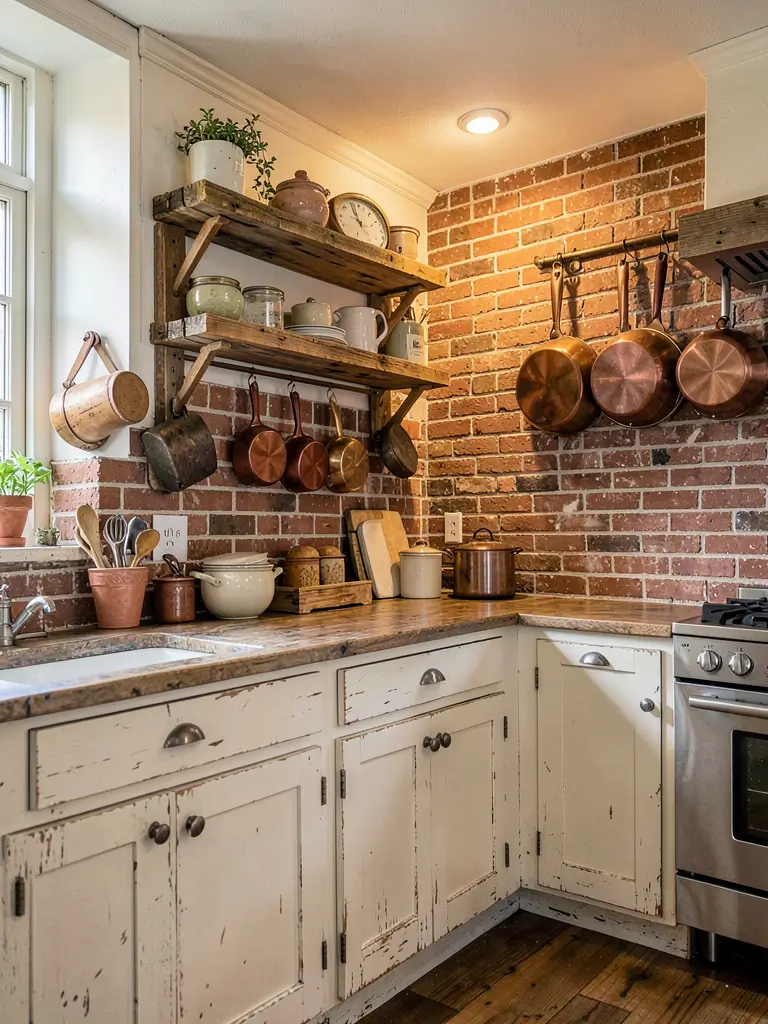
If you want your kitchen to feel like it has a soul, rustic exposed brick is the way to go. It adds an immediate sense of history and warmth. It says, “I bake bread and listen to vinyl records,” even if you actually just microwave pizza and use Spotify.
I once helped a friend install a “thin brick” veneer in her kitchen. We didn’t use real, heavy bricks (because who wants to reinforce their floor for a wall?). We used slices of real brick that go up just like tile. The result was stunning. It anchored the whole room and made her new, white cabinets look like they had been there for a century.
Is it hard to clean?
Ever wondered why people hesitate with brick? It’s porous. If you splash tomato sauce on raw brick, that brick now owns that sauce forever. However, you can easily solve this. I always tell people to use a high-quality matte sealer. It protects the brick from grease and stains without making it look shiny or fake.
Perfect pairings:
- Natural wood open shelving.
- Matte black faucets.
- Deep, farmhouse-style apron sinks.
3. Shiplap Farmhouse Kitchen Backsplash Design
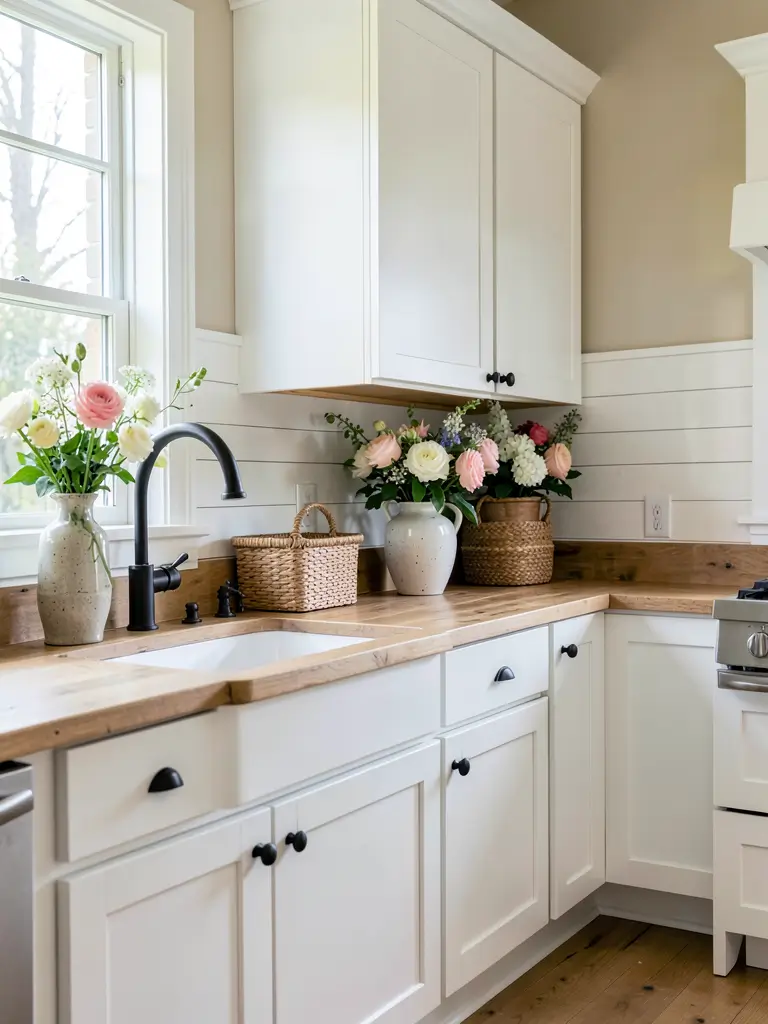
We can’t talk about farmhouse style without mentioning shiplap. It’s basically the law. While most people put shiplap on their living room walls, it makes an incredibly cozy and unexpected backsplash. It creates long, horizontal lines that make a kitchen feel wider and more relaxed.
I’ll be the first to admit that wood near a stove sounds like a fire hazard or a cleaning nightmare. But hear me out. If you use actual wood, you need to paint it with a durable, wipeable “cabinet-grade” paint. Many people now use “tile shiplap” or ceramic planks that look like wood but clean like glass.
Why this works so well:
- It’s a great DIY project for a long weekend.
- It adds a “cottage” vibe that feels very approachable.
- You can paint it any color—sage green shiplap is currently having a huge moment.
Does it look too trendy? Maybe. But IMO, if you like the look of clean lines and wood textures, you won’t care what the “design police” say in five years. 🙂
Also Read: 15 Cozy Italian Farmhouse Kitchen Ideas with Tuscan Flair
4. Handmade Zellige Tile Farmhouse Backsplash
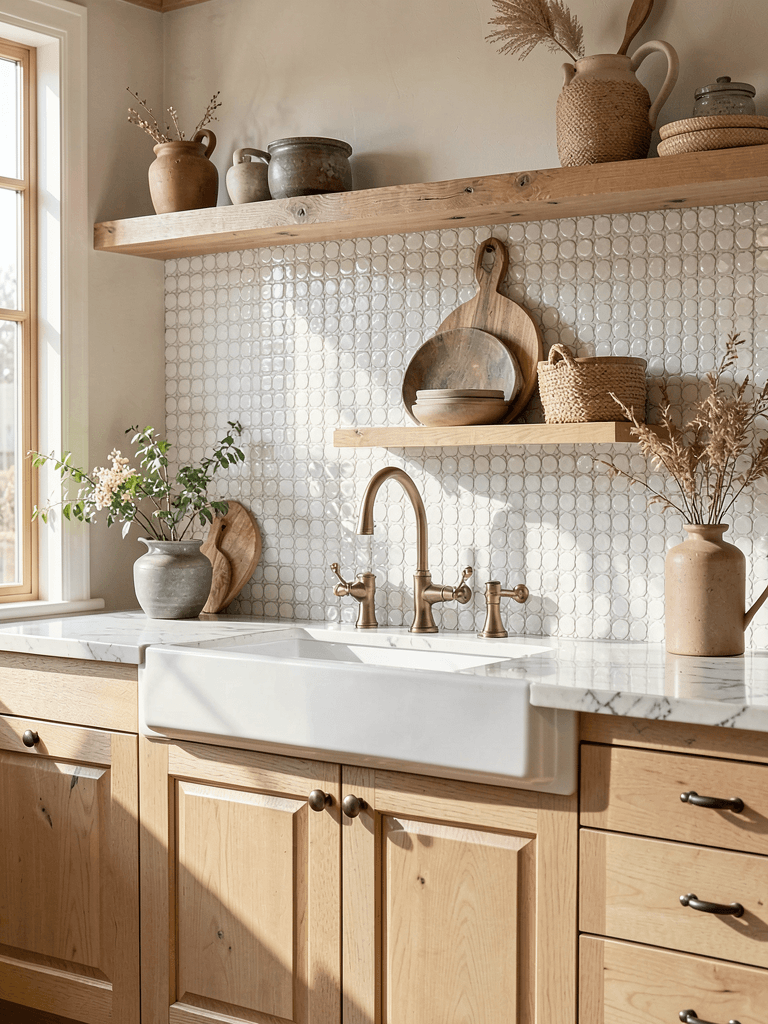
If you have a bit more room in your budget and you want something that looks truly high-end, you need to look at Zellige tiles. These are handmade Moroccan clay tiles, and no two are exactly the same size, shape, or color. They are perfectly imperfect.
When you install them, they don’t sit perfectly flat. They have these little “chips” and variations in the glaze that catch the light in a way that regular subway tile never could. I saw a kitchen recently that used a “pearlescent” white Zellige, and it looked like the wall was glowing.
Technical details to keep in mind:
- No grout lines: Usually, these are “butt-jointed,” meaning they sit right against each other.
- Artisanal quality: Each tile is a piece of art.
- Texture: The surface is wavy and organic.
I love this feature because it adds a “collected” feel to the kitchen. It doesn’t look like it came out of a box from a big-box retailer. It looks like you traveled to an exotic market to find it.
5. Vintage Checkerboard Tile Farmhouse Backsplash
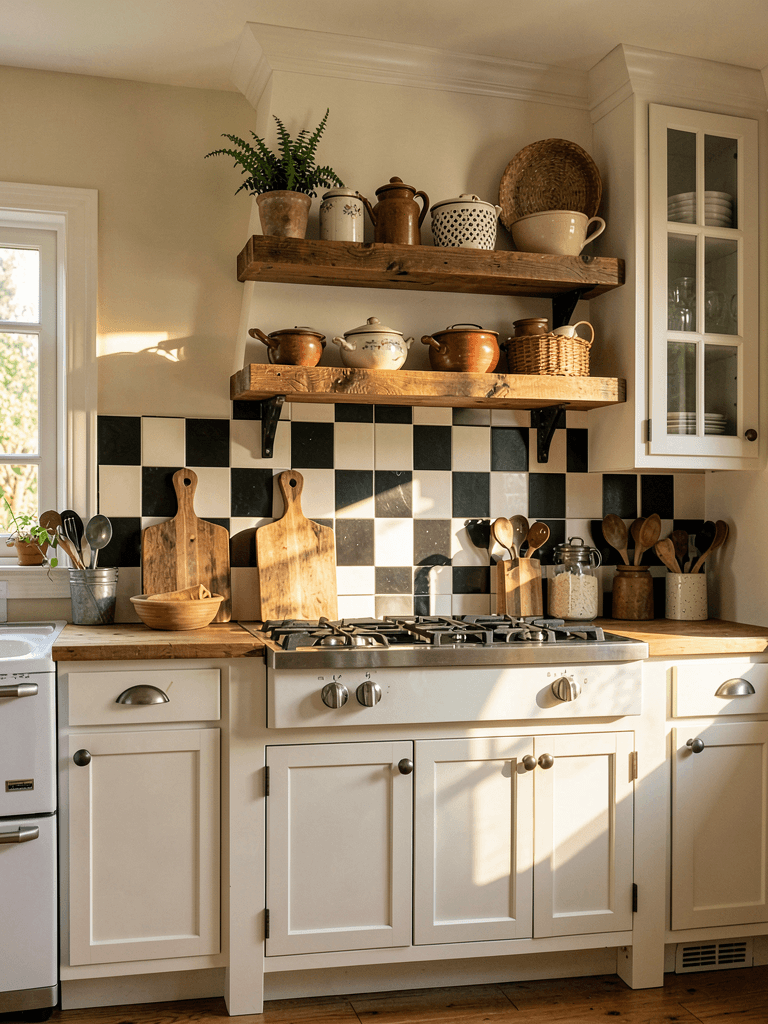
Checkerboard isn’t just for 1950s diners. In a farmhouse setting, a small-scale checkerboard backsplash adds a playful, nostalgic energy. It reminds me of old European farmhouses where the floors were stone and the walls were decorated with simple, geometric patterns.
I usually suggest doing this in muted tones. Instead of high-contrast black and white, try a creamy white and a soft “mushroom” gray. This keeps the look sophisticated and prevents the room from feeling like a giant chess board.
What to consider:
- Scale: Use 2-inch or 4-inch squares for the best effect.
- Finish: A matte finish looks more “antique” and expensive than a high-gloss finish.
- Color: Deep navy and white is a stunning choice if you have a white kitchen.
Who actually wants a boring kitchen? Not me. A checkerboard pattern tells people you have a sense of humor and a love for classic design.
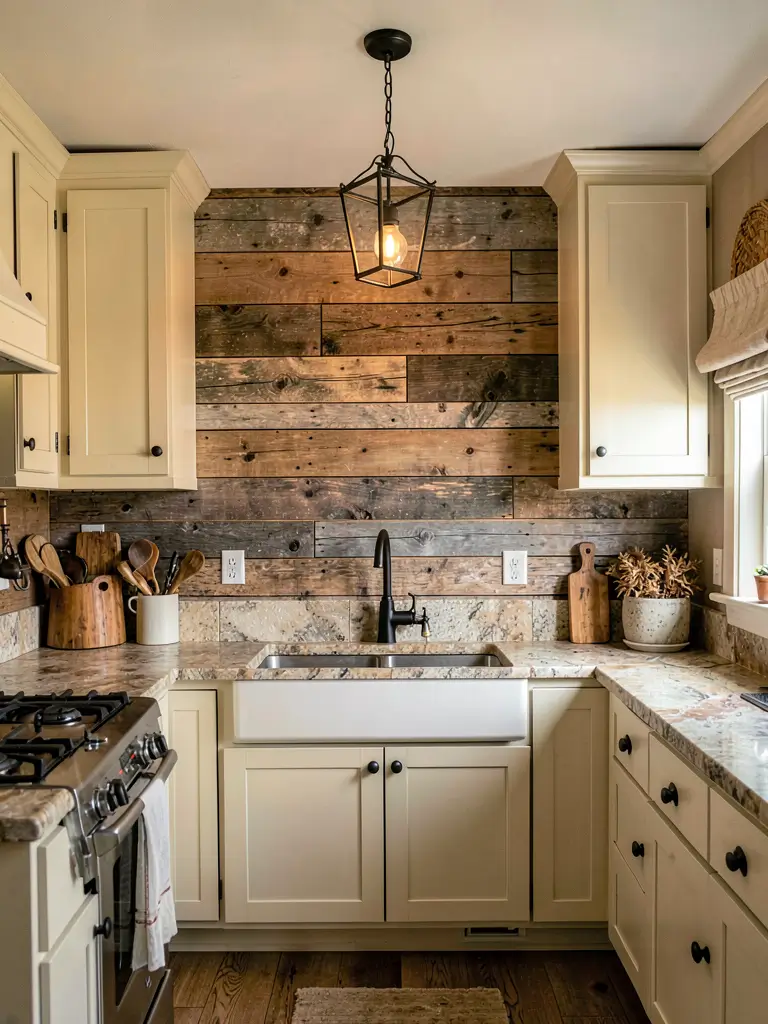
6. Reclaimed Wood Accent Farmhouse Backsplash
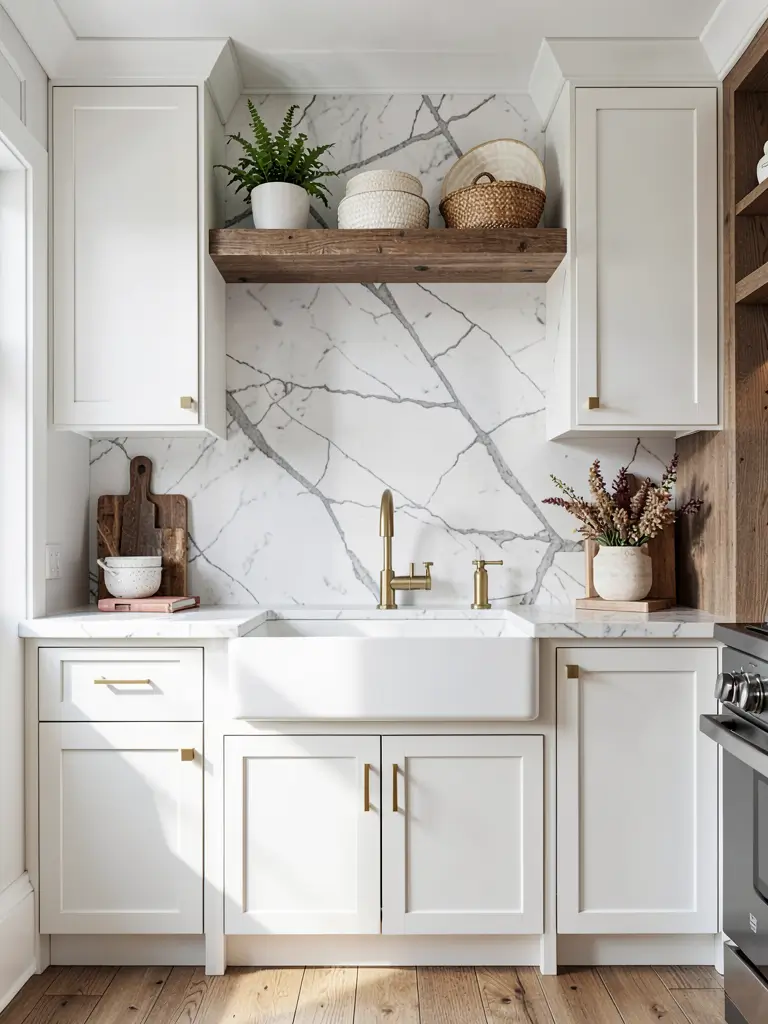
This one is for the true rustic enthusiasts. Using reclaimed wood as a backsplash brings an incredible amount of texture and warmth into the room. I’m talking about wood with knots, nail holes, and a story to tell.
I’ve seen this done effectively when the wood is used as an “accent” behind a coffee bar or on a specific wall away from the high-heat stove area. If you decide to go this route, you have to be smart. You cannot just slap old barn wood on the wall and hope for the best.
How to do it right:
- Sanitize the wood: Make sure there are no little critters living in your “rustic” planks.
- Sand it down: You don’t want a splinter every time you reach for the salt.
- Seal it: Use a water-based polyurethane to protect it from moisture.
Ever wondered why this works so well? It breaks up the “hardness” of a kitchen. Kitchens are full of stone, metal, and glass. Wood softens the space and makes it feel like an actual living area.
Also Read: 15 Trendy Simple Vanity Ideas Bedroom Aesthetic Goals
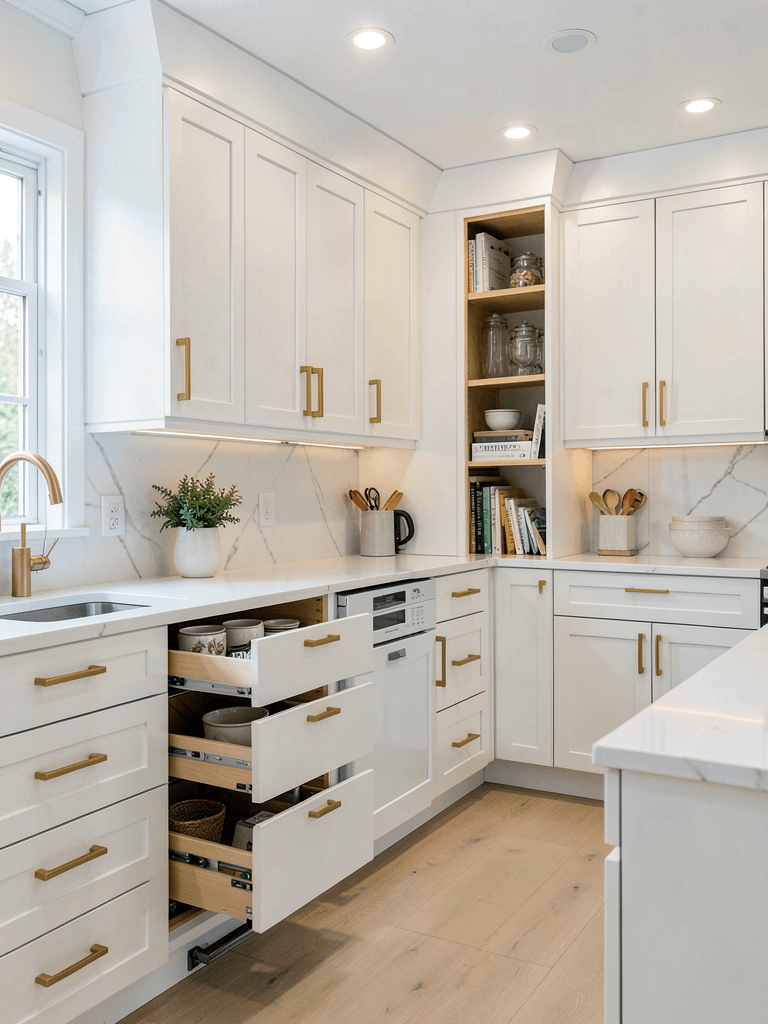
7. Marble and Farmhouse Charm Backsplash
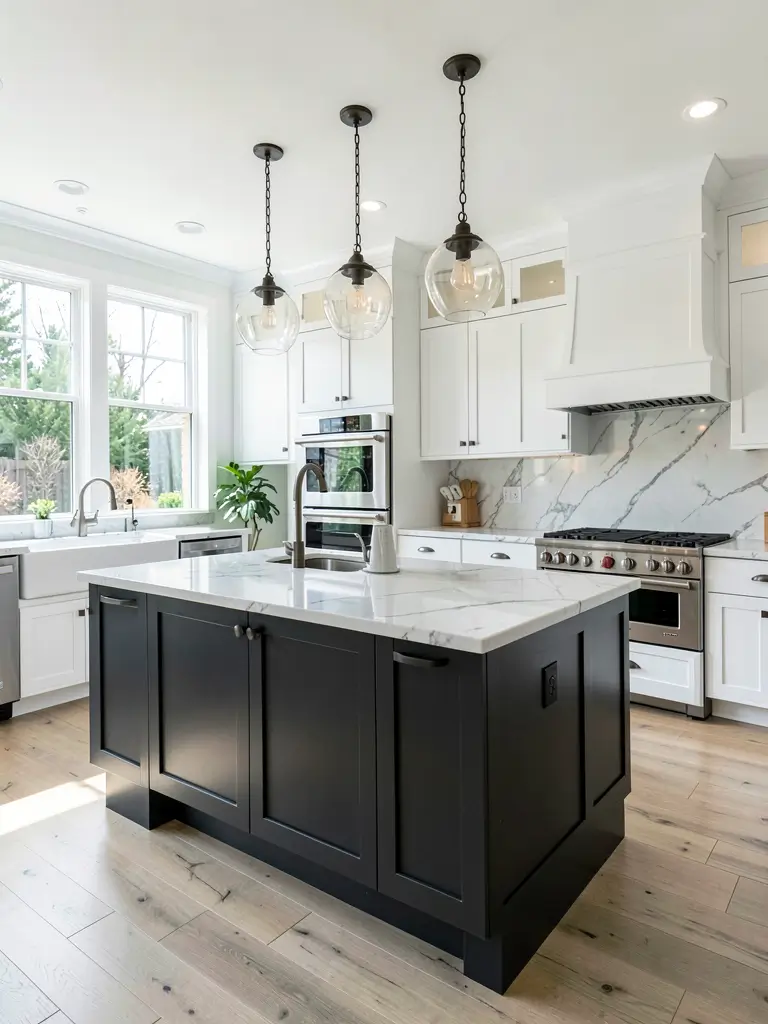
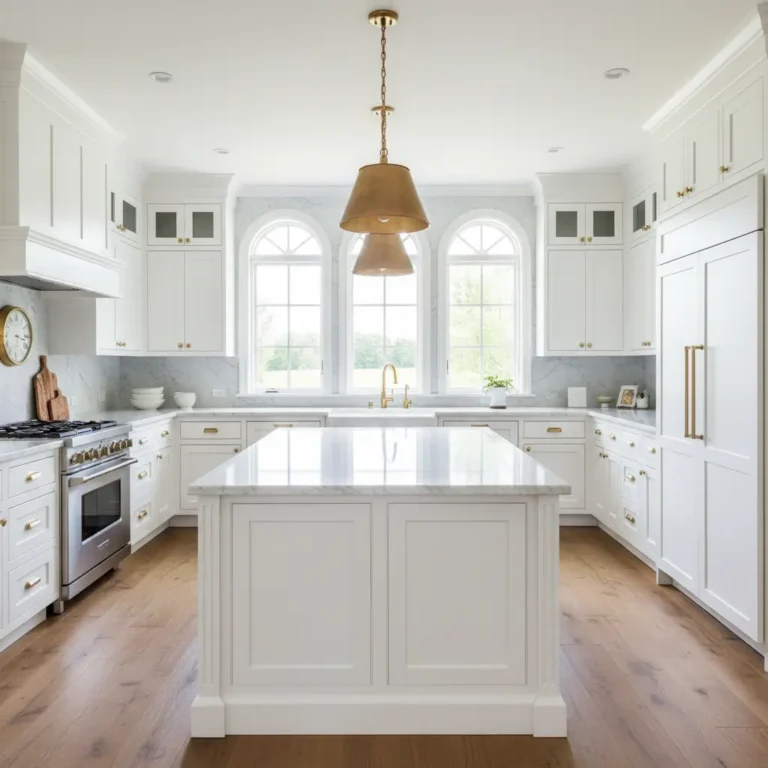
Can you mix “fancy” marble with “rustic” farmhouse? Absolutely. In fact, it’s one of my favorite ways to design a space. A honed Carrara marble backsplash adds a touch of luxury that balances out the ruggedness of a farmhouse table or reclaimed wood floors.
I recommend using a “slab” backsplash rather than tiles if you want a truly seamless look. Having one continuous piece of marble running up the wall creates a very high-end, designer feel. It also means you have zero grout lines to scrub, which is a win in my book.
Marble pros and cons:
- Pro: It’s timeless and increases the value of your home.
- Con: It’s expensive and can etch if you’re messy with lemon juice.
IMO, the “imperfections” that happen to marble over time—the little scratches and marks—actually fit the farmhouse aesthetic perfectly. It’s called “patina,” and it tells a story of a kitchen that is actually used.
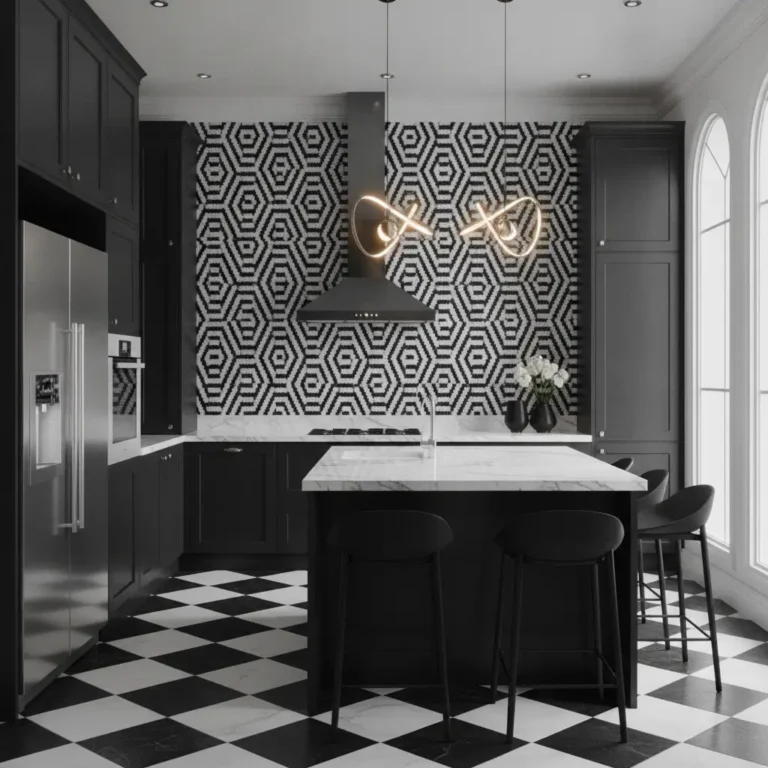
8. Black and White Modern Farmhouse Backsplash
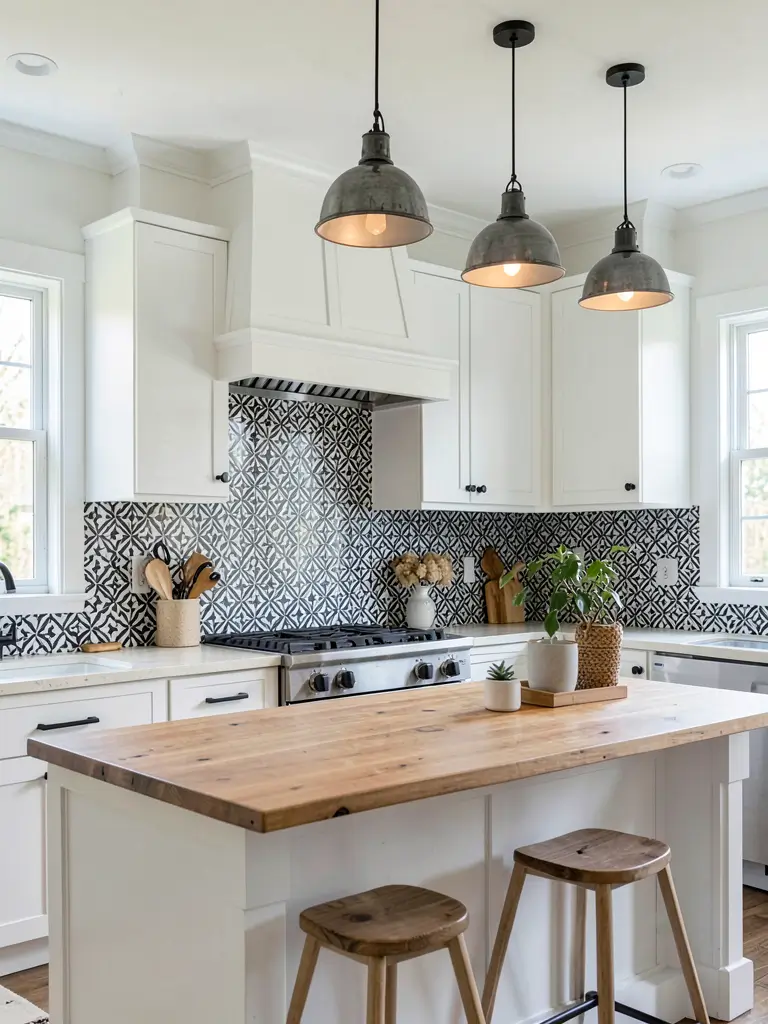
If you prefer a sharper, more defined look, the black and white modern farmhouse style is your best bet. Think white cabinets, black hardware, and a backsplash that ties it all together. You can achieve this with a patterned cement tile or even a simple black tile with white grout.
I love how a black-and-white pattern anchors a kitchen. It provides a visual weight that prevents the room from feeling too “floaty” or all-white. I recently saw a kitchen with a white-on-black floral cement tile backsplash, and it was the only thing people talked about when they walked in.
Design elements to look for:
- Geometric patterns: Hexagons or diamonds.
- Encaustic tiles: These have beautiful, matte, chalky finishes.
- Contrast: Ensure the black is a true, deep black and the white is a crisp white.
Does this look too bold for you? If you’re worried, just use the pattern in a small area, like behind the stove, and use a plain white tile everywhere else. It’s a great way to “dip your toe” into bold design without drowning.
9. Herringbone Subway Tile Farmhouse Backsplash
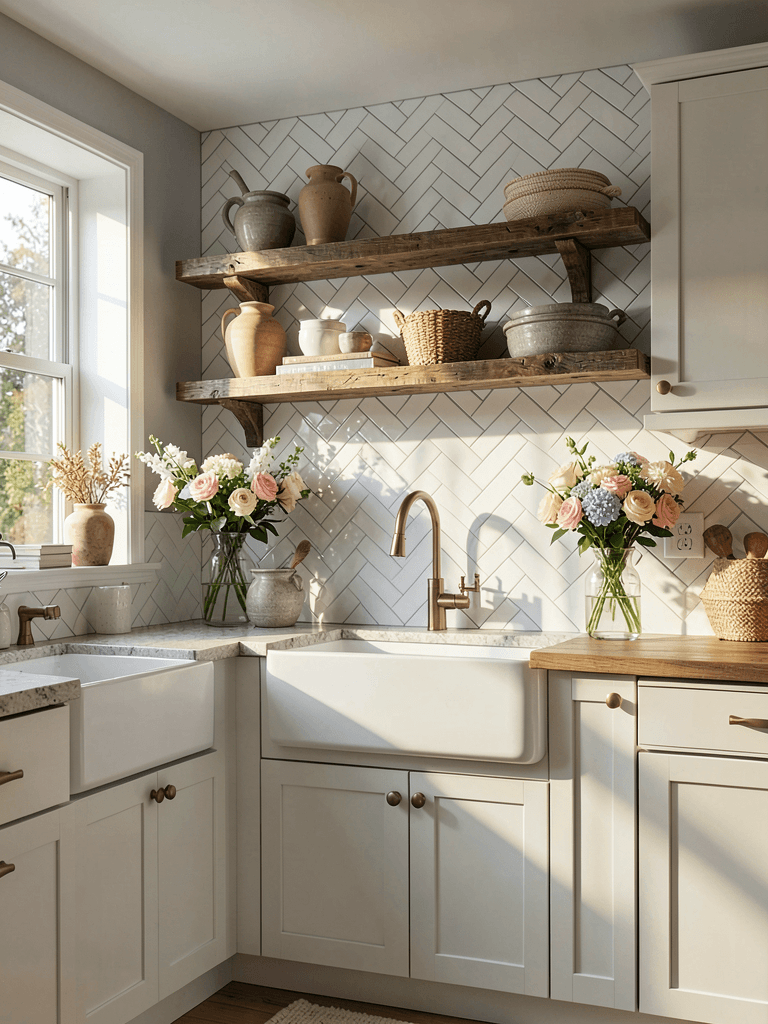
If you love the price of subway tile but hate the “brick-lay” look, just flip the tiles! A herringbone pattern uses the same inexpensive rectangles but arranges them in a V-shape. This small change adds a huge amount of movement and sophistication to your kitchen.
I’ve spent way too much time convincing people to try this. They always worry it will be too busy. Trust me, once it’s up on the wall, it looks like a custom architectural feature. It’s especially effective if you run the tiles all the way to the ceiling.
Why this pattern works:
- It draws the eye upward, making your ceilings look taller.
- It feels more “custom” than a standard layout.
- It works with both modern and traditional farmhouse styles.
Grout choice is vital here. If you use a contrasting grout, the “V” pattern will pop. If you use a matching grout, the pattern becomes a subtle texture that you only notice when the light hits it just right.
Also Read: 15 Brilliant Vanity Wall Ideas Bedroom Ideas to Transform Rooms
10. Natural Stone Farmhouse Kitchen Backsplash
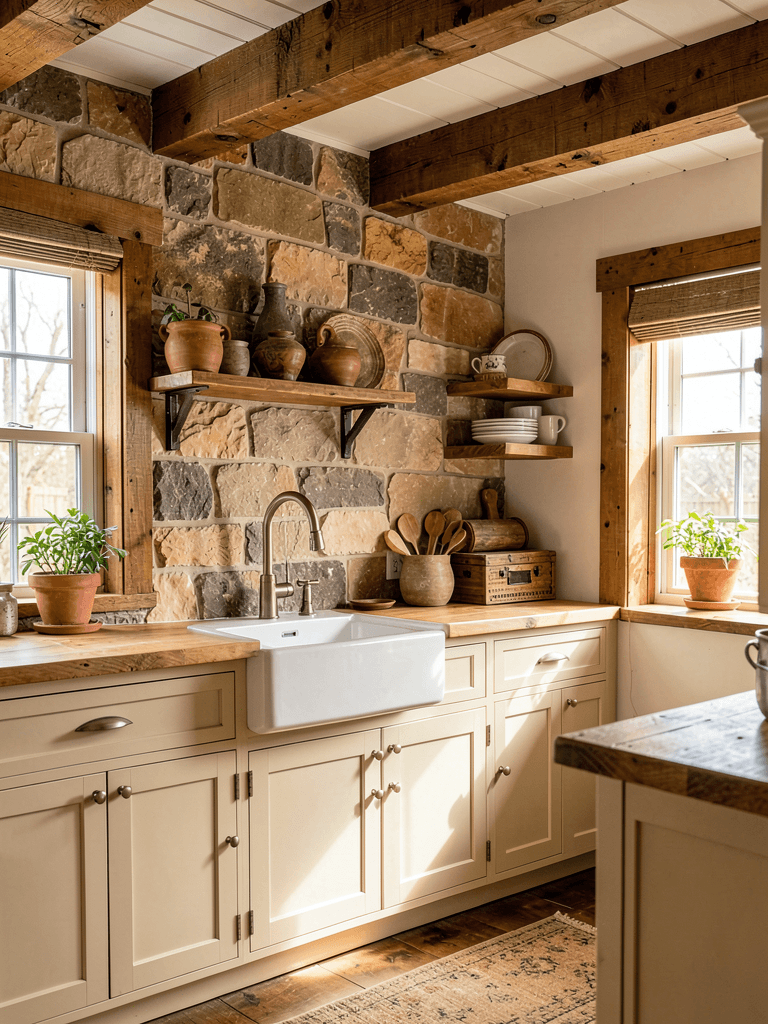
For a look that feels grounded and earthy, you can’t beat natural stone. I’m talking about slate, travertine, or even fieldstone. This isn’t about being polished and shiny; it’s about the raw beauty of the earth.
I once worked on a project where the homeowner used “stacked stone” for the backsplash. It looked like the kitchen was built into the side of a mountain. While it looked incredible, I did have to warn them: cleaning flour or grease off of rough stone is a special kind of torment.
Best stone options for farmhouse kitchens:
- Slate: Deep, moody, and very durable.
- Travertine: Warm, beige, and full of natural “pits” that add character.
- Soapstone: Silky smooth and naturally resistant to heat and bacteria.
If you go with a very rough stone, just make sure you have a really good vacuum with a brush attachment to get the dust out of the crevices. But for the vibe? It’s unbeatable.
11. Beadboard Farmhouse Backsplash Inspiration
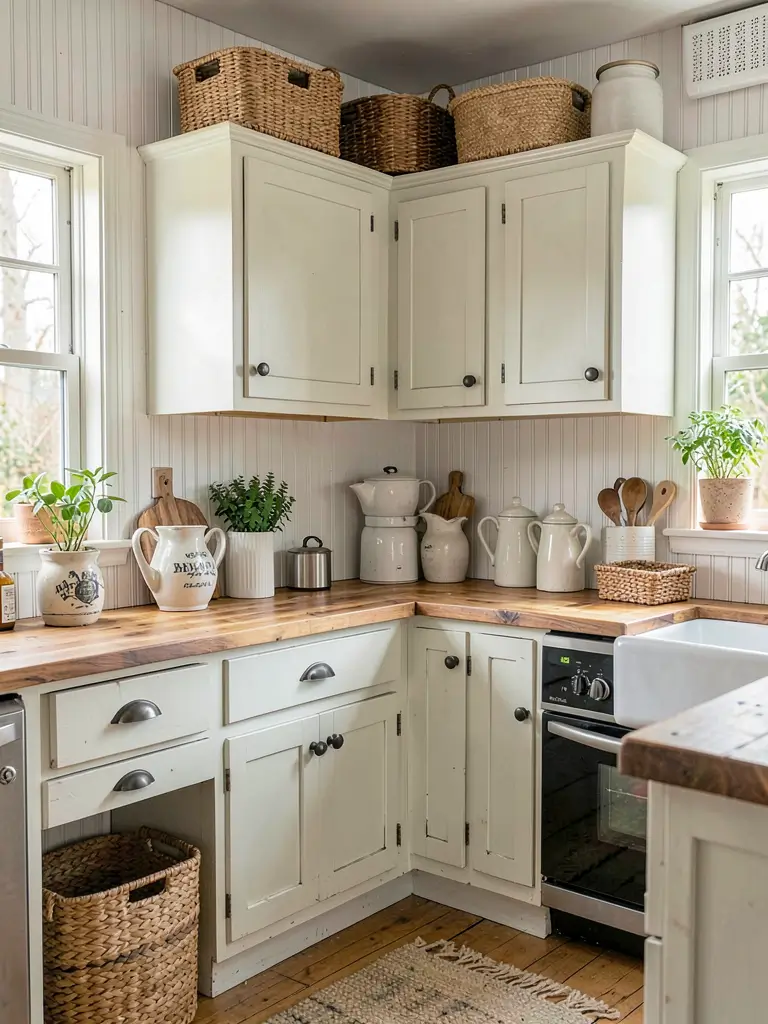
If you’re on a tight budget or living in a rental where you can’t install heavy tile, beadboard is your secret weapon. It’s a type of wood paneling with thin, vertical grooves. It screams “cozy farmhouse cottage” and is incredibly easy to install.
I love beadboard because it’s a blank canvas. You can paint it a crisp white to match your cabinets, or you can go bold with a navy blue or charcoal gray. It adds a layer of “texture” without the “weight” of stone or tile.
FYI, here is the trick to making beadboard last:
You must use a semi-gloss or high-gloss paint. Why? Because you’re going to be splashing water and oil on it. A flat paint will soak that up and look terrible within a week. A glossy paint lets you wipe it down with a damp cloth and go about your day. 🙂
Comparisons:
- Cost: Much cheaper than tile.
- Installation: Can be done with a nail gun and some glue.
- Vibe: Very traditional and sweet.
12. Warm Neutral Farmhouse Backsplash Ideas
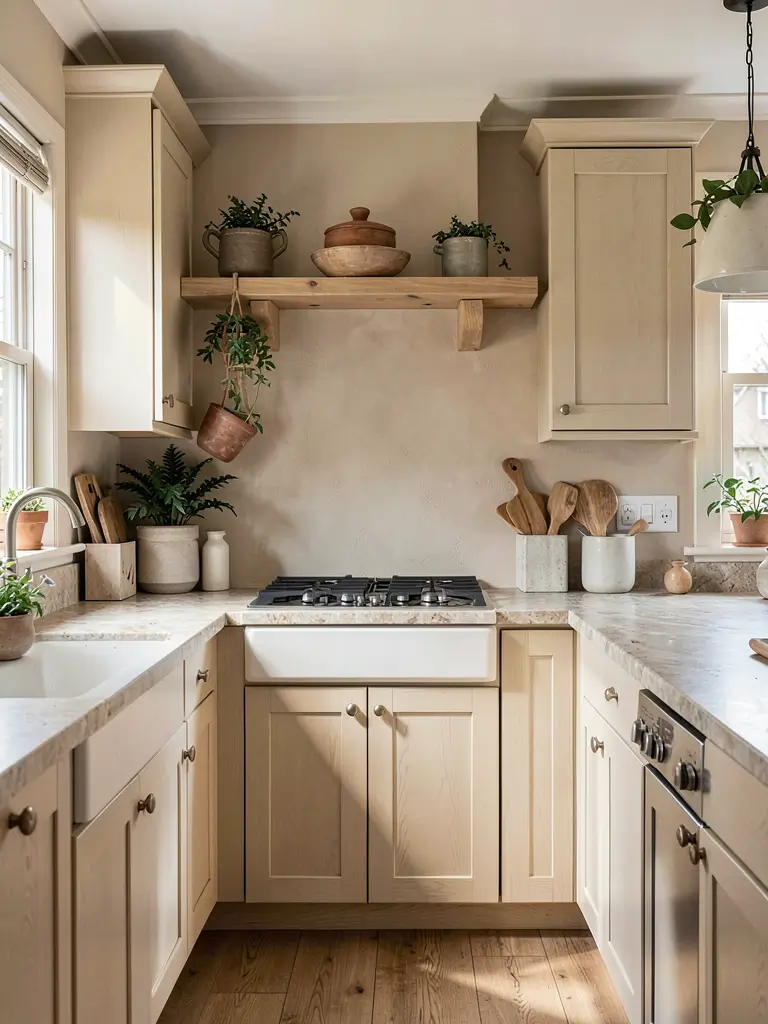
We are seeing a huge shift away from cold, blue-toned whites toward warm neutrals. Think “mushroom,” “taupe,” and “oatmeal.” A warm neutral backsplash makes a kitchen feel much more inviting and “hygge.”
I recently helped a client pick out a “greige” (gray-beige) subway tile. At first, she thought it might look dirty, but once it was paired with her warm wood floors and cream cabinets, the whole room felt like a warm hug. It took the “edge” off the room and made it feel lived-in.
Why this works so well:
- It hides dirt and smudges better than bright white.
- It pairs beautifully with “unlacquered brass” hardware.
- It feels more modern than the “all-white” trend of 2015.
Ever wondered why some kitchens feel “stark”? It’s usually a lack of warm tones. Adding a warm neutral backsplash is the easiest way to fix that without painting your whole house.
13. Cottage-Style Farmhouse Mosaic Backsplash
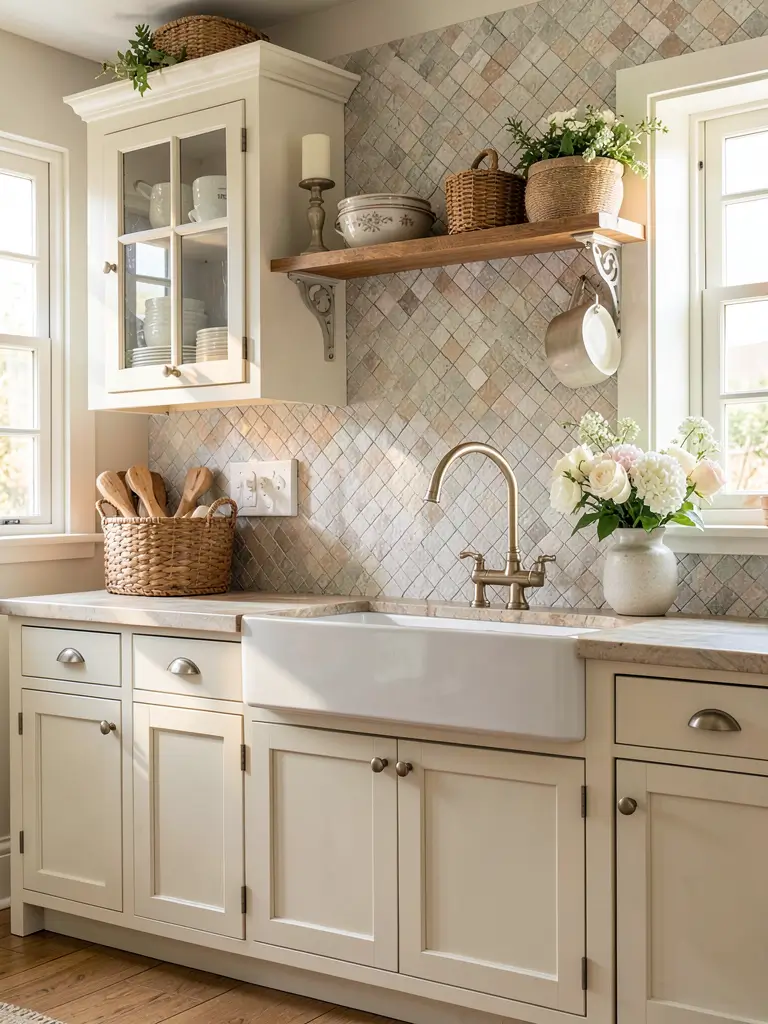
Mosaics aren’t just for bathrooms. A small-scale marble or ceramic mosaic in a farmhouse kitchen adds a delicate, intricate detail that feels very vintage. I love using “penny rounds” or “hexagons” for this look.
I saw a farmhouse kitchen that used a white-and-gray marble hexagon mosaic with a slightly wider grout line. It looked like a floor you’d find in a 1920s hotel. It added a “history” to the room that was missing before.
Key benefits:
- Versatility: Mosaics can wrap around corners and into window sills easily.
- Visual interest: The “grid” of small tiles creates a beautiful texture.
- Non-slip: If you decide to carry the look to the floor, it’s very safe.
The only downside is the grout. More tiles mean more grout lines. If you hate cleaning grout, this might not be the one for you. But if you don’t mind a little scrubbing in exchange for a beautiful wall, go for it!
14. Industrial Farmhouse Metal Tile Backsplash
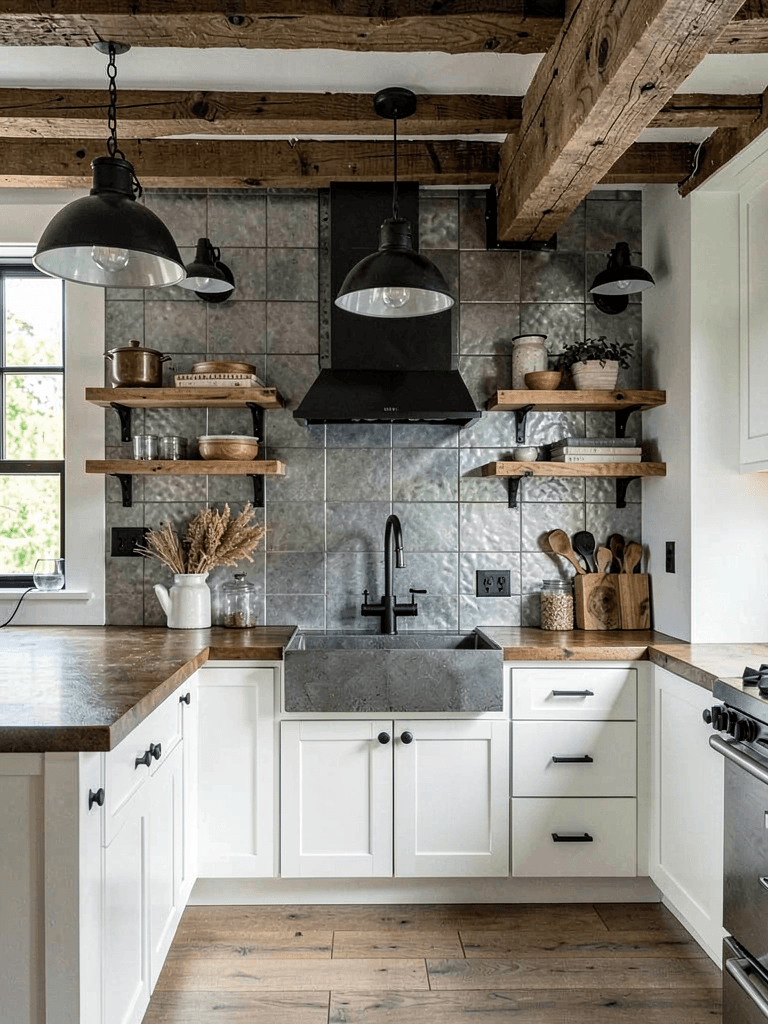
Sometimes, “farmhouse” needs a little “factory.” An industrial farmhouse backsplash often uses metal elements like hammered copper, tin, or even stainless steel. This looks incredible when paired with heavy wooden beams and brick.
I’m a huge fan of “tin ceiling tiles” used as a backsplash. You can buy them in large sheets, and they come in amazing patterns. They reflect light in a very moody, sophisticated way. Plus, they are heat-resistant, so putting them behind a big industrial stove is a smart move.
Metal types to consider:
- Copper: Warm, glowing, and develops a beautiful green “patina” over time.
- Antique Tin: Provides a vintage, “found” look.
- Stainless Steel: Sleek and modern but still works in a “modern farmhouse.”
Does metal feel too cold? Balance it out with a big wooden cutting board or some woven baskets on the counter. The mix of “cold” metal and “warm” wood is a classic design trick.
15. Ceiling-to-Counter Farmhouse Statement Backsplash
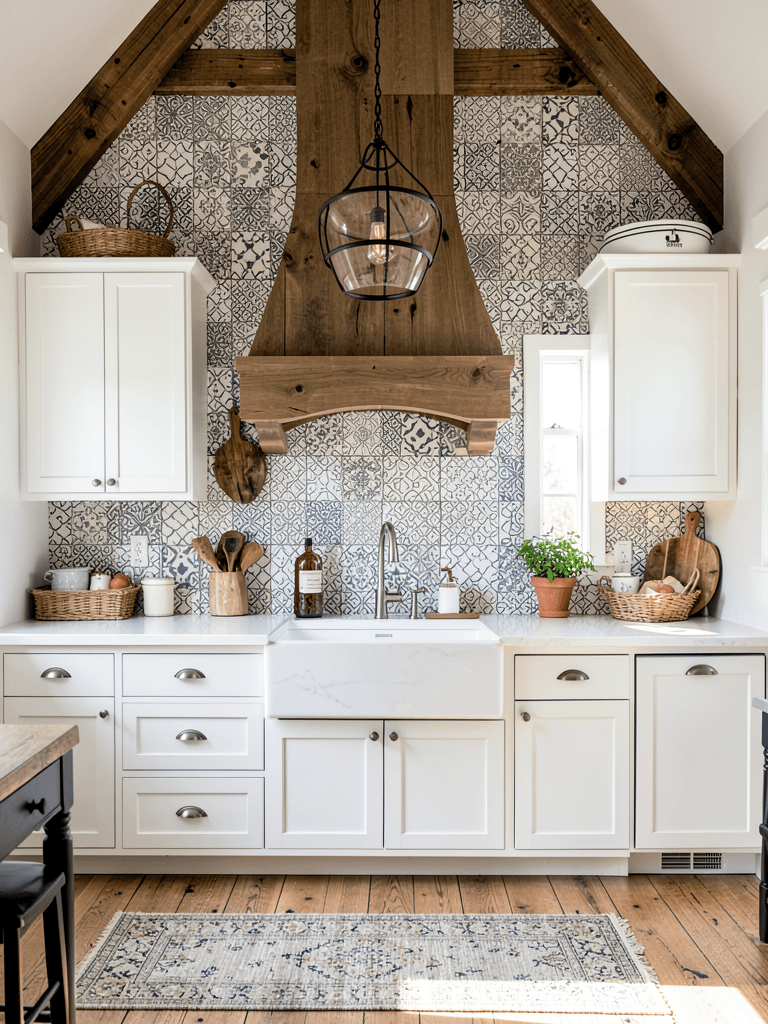
If you really want to “wow” people, don’t stop your backsplash at the bottom of your cabinets. Take that tile all the way to the ceiling. This is a major design trend right now, and it makes any kitchen look like it belongs in a luxury magazine.
I did this in a kitchen that didn’t have many upper cabinets. Instead of having a bunch of empty drywall, we tiled the entire wall in a white zellige tile. It made the room feel massive and architectural. It also turned the vent hood into a focal point rather than just a functional appliance.
Why you should go big:
- It eliminates the “choppy” look of having tile stop halfway up a wall.
- It makes the kitchen feel more expensive and custom.
- It’s easier to clean a tiled wall than a painted one!
Who actually wants to stop halfway? If you love your tile choice, why not use more of it? It’s a bold move that always pays off.
How to Choose the Right Farmhouse Backsplash for Your Life
Alright, we’ve looked at the ideas, but how do you actually pick one? You have to be honest with yourself about two things: How you cook and how you clean.
The “Messy Cook” Test
If you are the type of person who has flour on the ceiling and sauce on the walls by the time dinner is served, avoid rough stone or raw brick. You need something smooth. Glossy subway tile or a marble slab will be your best friend. You can just wipe the carnage away with a sponge and move on with your life.
The “I Hate Grout” Test
If the thought of scrubbing grout lines with a toothbrush makes you want to cry, avoid mosaics. Go for large-format tiles or shiplap. Fewer lines mean less work. Or, as I mentioned before, go for a slab of stone. It’s a bigger investment upfront, but it saves you hours of labor over the years.
The “Resale Value” Consideration
If you plan on moving in the next couple of years, stick to the classics. White subway tile or warm neutrals are safe bets. Everyone likes them. If you go for “Industrial Hammered Copper,” you might find that potential buyers find it a bit too specific for their tastes.
Grout: The Secret Ingredient You’re Ignoring
I have seen beautiful tile ruined by bad grout. Don’t let this happen to you. Grout isn’t just the stuff that holds the tiles together; it’s a design choice.
- Contrasting Grout: (e.g., white tile with dark gray grout). This makes the pattern the star. It feels more industrial and rustic.
- Matching Grout: (e.g., white tile with white grout). This makes the wall look like a solid surface. It feels more modern and airy.
- Warm Grout: (e.g., cream tile with tan grout). This makes the kitchen feel cozy and old-fashioned.
Pro-tip: Always buy “high-performance” or “epoxy” grout for a kitchen. It costs more, but it is stain-resistant. Regular grout acts like a sponge for grease. Spend the extra $20 and save yourself the headache later.
Mixing Metals and Textures
The best farmhouse kitchens aren’t just one material. They are a mix. When you’re picking your backsplash, think about your hardware.
If you have matte black pulls, a white tile with gray grout looks amazing. If you have brass fixtures, a warm neutral or marble backsplash will look like a million bucks. Don’t be afraid to mix! I love seeing a kitchen with stainless appliances, brass lights, and a brick backsplash. It feels “collected” and real.
Final Thoughts: Why the Backsplash is Your Kitchen’s Soul
At the end of the day, your backsplash is the part of the kitchen you look at the most. You see it while you’re flipping pancakes, while you’re washing dishes, and while you’re staring into space waiting for the microwave to beep. It should be something you actually enjoy looking at.
Whether you go for the classic white subway tile, the rugged beauty of exposed brick, or the playful checkerboard, make sure it reflects your personality. A kitchen should be a place of joy, not just a place of utility.
So, grab some samples, tape them to your wall, and see how the light hits them at different times of the day. You’ll know the right one when you see it. Your dream farmhouse kitchen is just a few tiles away.
Now, if you’ll excuse me, I think I just talked myself into retiling my own kitchen… again. :/
Quick Summary of Farmhouse Backsplash Styles
| Style | Best Material | Vibe |
|---|---|---|
| Classic Farmhouse | White Subway Tile | Clean, Timeless |
| Rustic Farmhouse | Exposed Brick | Historic, Warm |
| Modern Farmhouse | Black and White Pattern | Graphic, Bold |
| Cottage Farmhouse | Beadboard or Shiplap | Cozy, Sweet |
| Luxury Farmhouse | Marble Slab | Elegant, Sophisticated |
Go forth and create something beautiful! You’ve got the ideas, now you just need the courage to start. 🙂