15 Trendy Industrial Interior Design Ideas for Modern Living
Look, I get it. You walked past an exposed brick wall somewhere, saw those gorgeous metal beams overhead, and suddenly thought, “Why does my home look so… boring?” Welcome to the club! Industrial interior design has stolen our hearts (and our wallets), and honestly, I’m not even mad about it.
Here’s the thing about industrial design—it’s got this raw, unapologetic vibe that somehow makes spaces feel both edgy and incredibly inviting. You know what I’m talking about: those factory-turned-loft vibes, the perfect marriage of wood and metal, and that beautiful balance between rough and refined. I’ve spent way too much time obsessing over this style, and I’m about to share everything I’ve learned. Let’s get into these 15 game-changing industrial interior design ideas that’ll transform your space from “meh” to “wow, did you hire a designer?”
Industrial Living Room Ideas That Feel Warm and Inviting
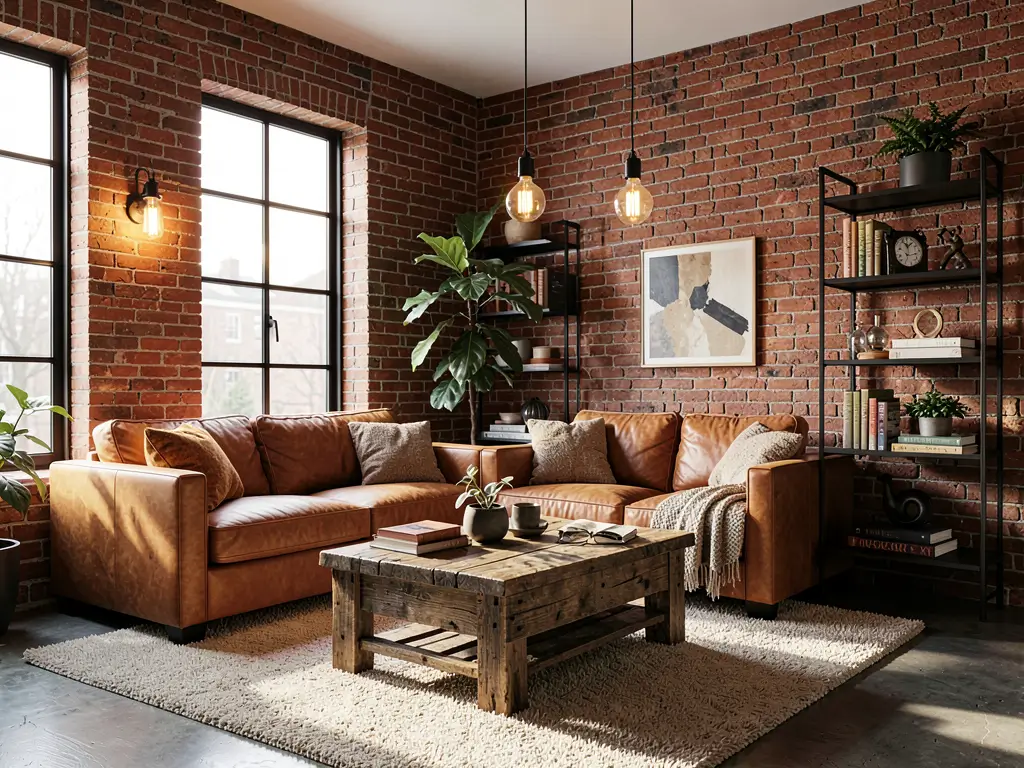
So you want the industrial look but don’t want your living room to feel like an actual factory? Smart thinking. The biggest mistake people make with industrial living rooms is forgetting that humans actually need to live there comfortably.
Start with a leather sofa in cognac or chocolate brown. I’m telling you, this one piece changes everything. It brings warmth while staying true to that industrial aesthetic. Pair it with a reclaimed wood coffee table—preferably one with metal legs or industrial wheels. The texture contrast here is chef’s kiss.
Now, here’s where most people chicken out: exposed ductwork and pipes. Don’t hide them! Paint them matte black or leave them raw. I did this in my own space, and visitors always ask about it first. The key is balancing these hard elements with soft textiles.
Add these elements to warm things up:
- Chunky knit throws in neutral colors
- Vintage Persian or Turkish rugs (the worn look works perfectly here)
- Industrial-style floor lamps with Edison bulbs
- Metal-framed windows or room dividers
- Plenty of greenery in concrete planters
The magic formula? 60% hard industrial elements, 40% soft, cozy touches. Trust me on this one.
Small Industrial Apartment Design Ideas for Maximum Style
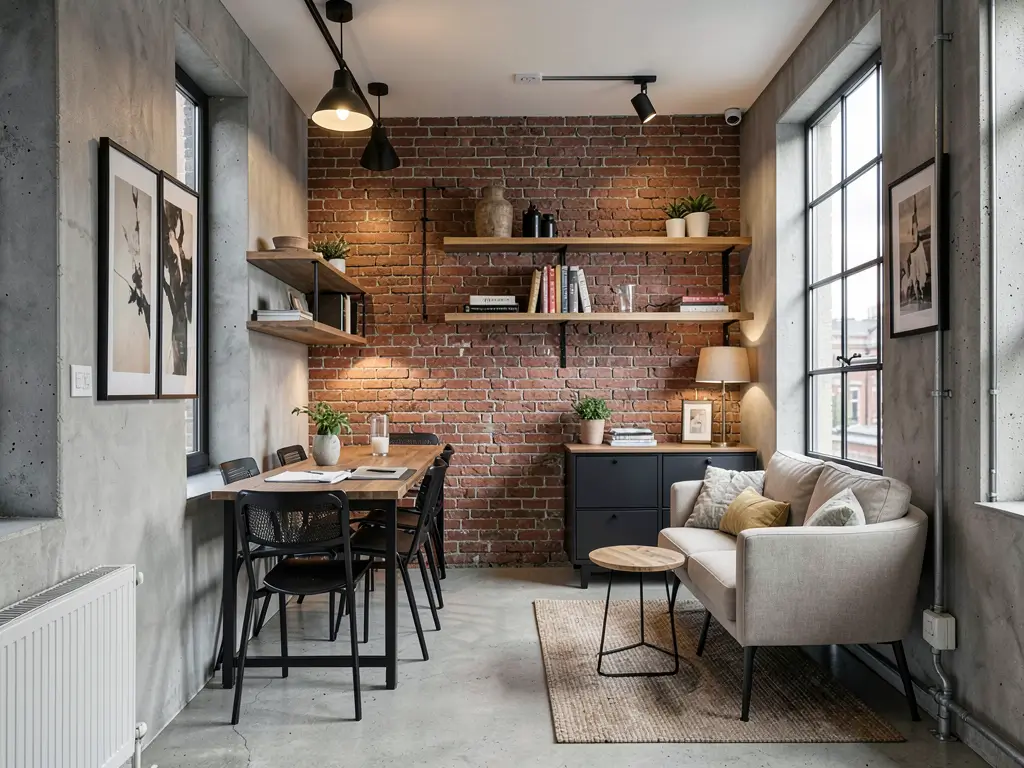
Living in a shoebox apartment doesn’t mean you have to sacrifice style. Actually, industrial design works brilliantly in small spaces because it emphasizes function and minimalism—both things tiny apartments desperately need.
Open shelving is your best friend here. Forget bulky cabinets that eat up visual space. Install metal pipe shelving or wall-mounted industrial brackets with reclaimed wood planks. Not only does this look incredible, but it also makes your space feel bigger by creating vertical interest.
Want to know a secret? Mirrors with industrial metal frames absolutely transform small spaces. Position one opposite a window, and boom—you’ve essentially doubled your natural light. I picked up a massive one from a salvage yard for next to nothing, and it’s become my favorite piece.
Keep your furniture multi-functional and minimal. A metal bed frame with built-in storage, a dining table that doubles as a workspace, or a storage ottoman with an industrial metal base. Every piece needs to earn its place in a small apartment.
Color-wise, stick with a neutral palette but don’t be afraid of black metal accents everywhere. They define spaces without overwhelming them. FYI, painting one wall in dark charcoal or slate can actually make a small room feel more intentional and designed rather than just… small.
Modern Industrial Kitchen Designs with Bold Character
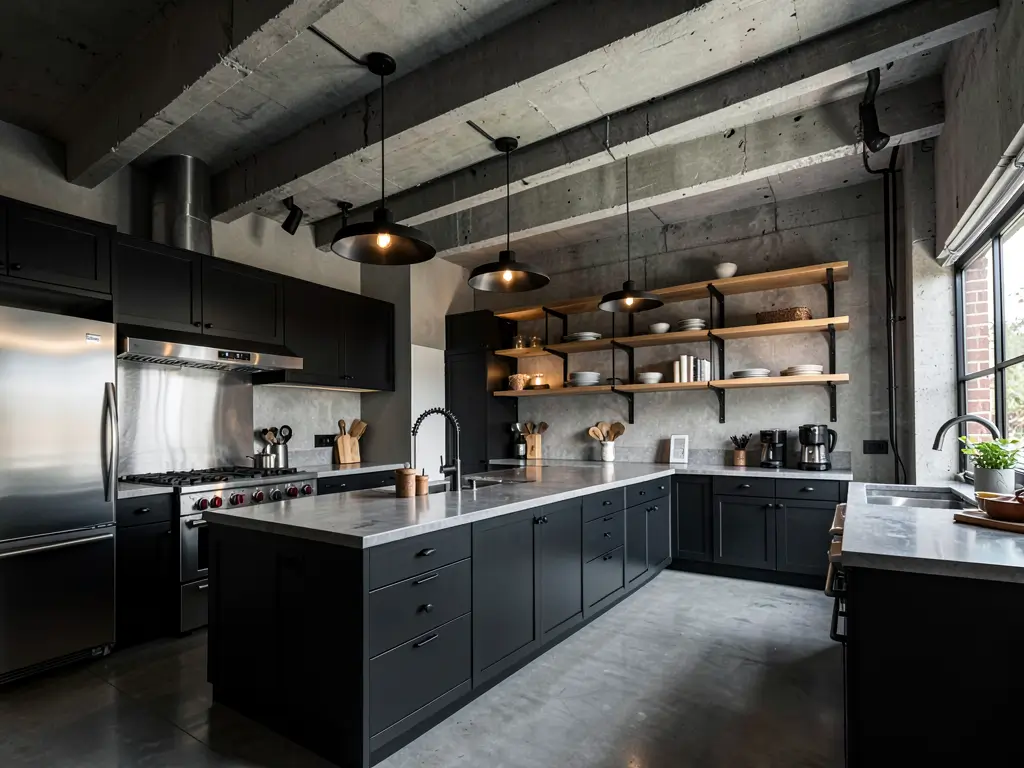
Kitchens are where industrial design really gets to flex. You’ve got all these functional elements—appliances, storage, plumbing—that you can turn into design features instead of hiding them away.
I’m obsessed with open shelving made from reclaimed wood and black metal brackets. Yeah, some people worry about dust, but honestly? The aesthetic payoff is worth occasionally wiping down your dishes. Plus, it forces you to be intentional about what you display.
Here’s what works in an industrial kitchen:
- Concrete countertops (sealed properly, they’re actually super durable)
- Stainless steel appliances that look professional-grade
- Subway tiles with dark grout for that factory feel
- Exposed brick walls if you’re lucky enough to have them
- Industrial pendant lights hanging over an island or dining area
- Metal bar stools with wooden seats
The kitchen island deserves special attention. Go for something with a butcher block top and a metal base, or better yet, repurpose an old factory cart or workbench. I’ve seen people use old industrial tables, and they look absolutely incredible.
Don’t shy away from showing off your pipes under the sink. Remove those cabinet doors, add some open shelving, and suddenly your plumbing becomes a design element. Who would’ve thought? 🙂
Also Read: 15 Amazing Vanity Table Ideas Bedroom for Modern Homes
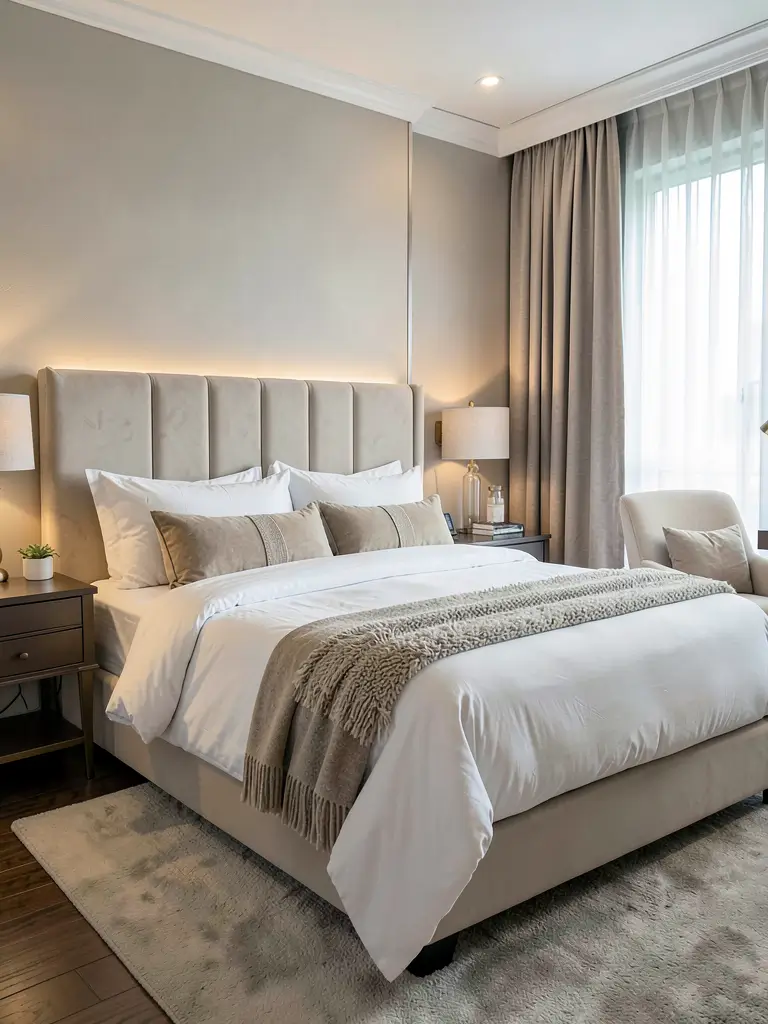
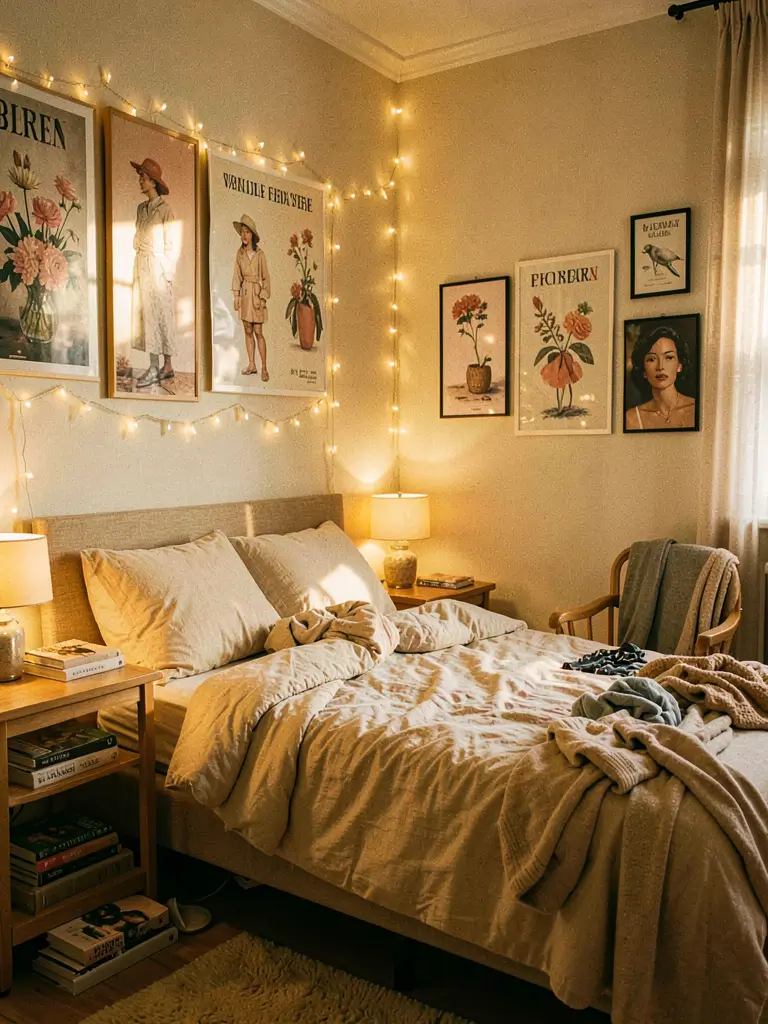
Industrial Bedroom Decor Ideas for a Cozy Urban Retreat
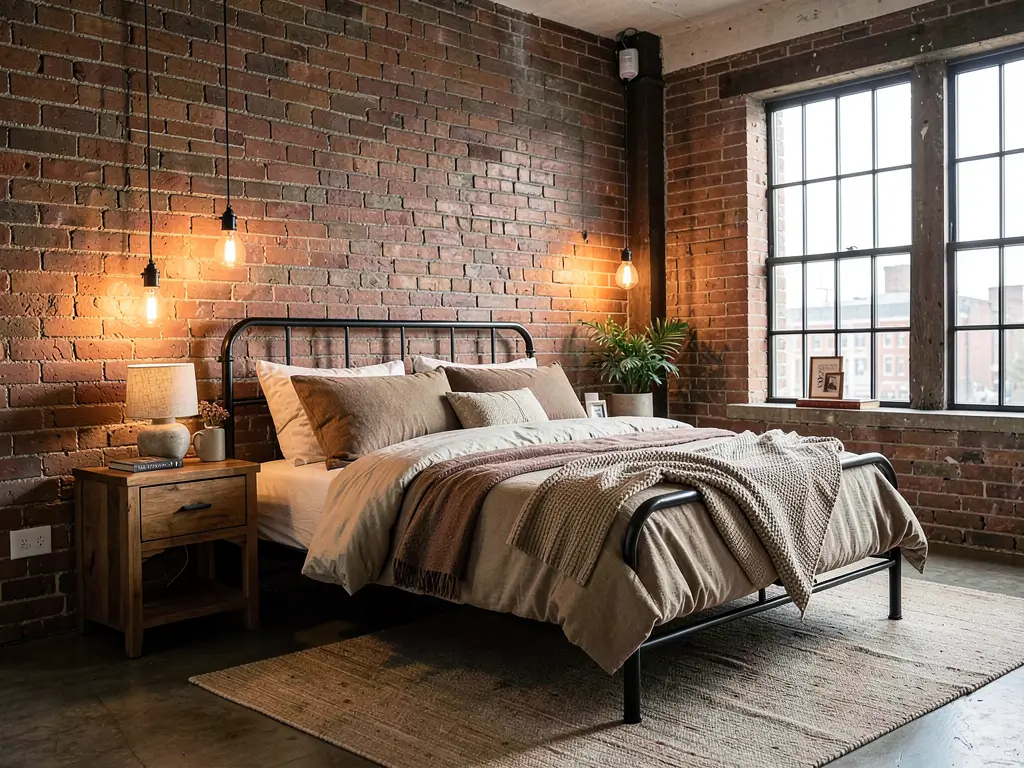
Creating a cozy bedroom with industrial design is totally possible, and honestly, it might be my favorite application of this style. The contrast between rough textures and soft bedding creates this sanctuary vibe that I absolutely love.
Start with the bed frame. A metal frame in black or raw steel sets the tone immediately. Platform beds with simple lines work great here. I’ve got one with an upholstered headboard in charcoal linen, and it perfectly bridges industrial and cozy.
Lighting matters enormously in bedrooms. Forget those basic nightstand lamps—go for industrial wall sconces with adjustable arms. They save nightstand space and look ridiculously cool. Add a statement cage pendant light or an exposed Edison bulb fixture overhead.
Layer your textiles like your life depends on it:
- Crisp white or gray linen sheets
- Chunky knit blankets at the foot of the bed
- Faux fur or sheepskin throws for texture
- Plenty of pillows in varying textures
- Heavy curtains in canvas or linen
Your walls deserve some love too. Large-scale black and white photography in simple metal frames works beautifully. Or try a statement wall with reclaimed wood planks behind the bed. I went with painted brick (actual brick wasn’t an option in my rental), and the textured wallpaper fooled literally everyone.
Budget-Friendly Industrial Interior Design Ideas
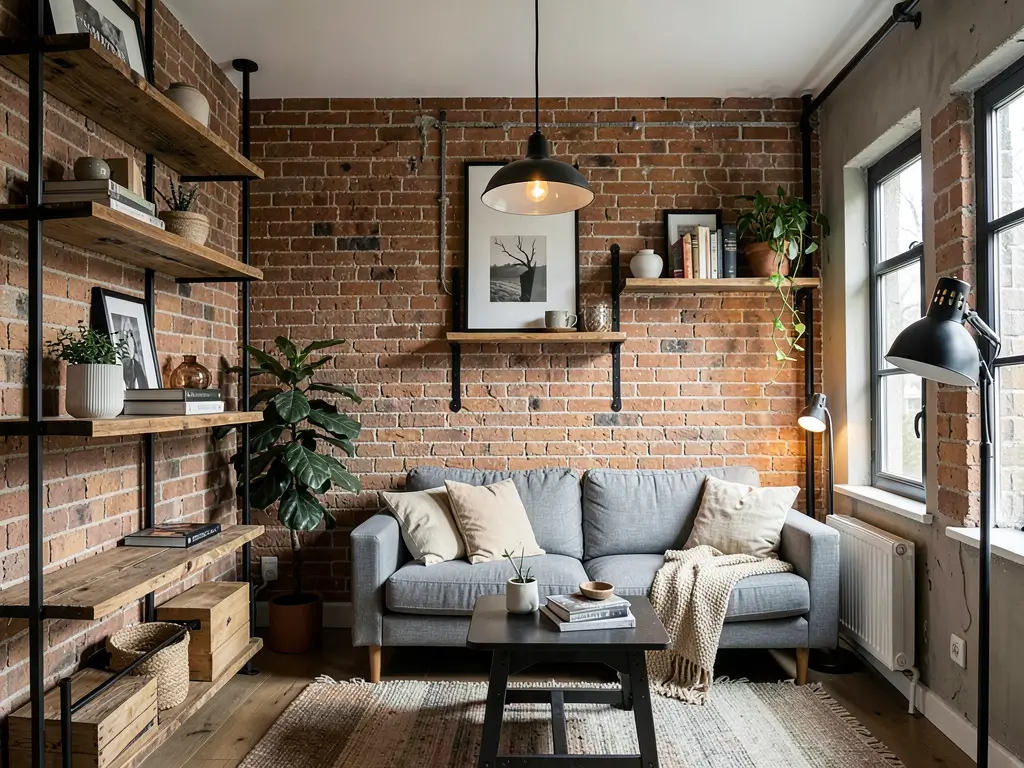
Let’s talk money because not everyone can drop thousands on reclaimed wood from a 19th-century barn. The beautiful thing about industrial design? You can totally fake it till you make it, and nobody will know the difference.
Thrift stores and salvage yards are goldmines. I’m talking old factory carts, metal stools, vintage lockers, industrial lighting fixtures—all for a fraction of retail prices. You’ll need patience and probably some elbow grease, but the hunt is half the fun.
DIY projects save you ridiculous amounts of money. Black spray paint becomes your best friend. Seriously, you can transform basic IKEA pieces, old furniture, or hardware store finds into industrial chic with a few coats of matte black paint.
Budget-friendly industrial winners:
- Concrete blocks and wood planks for shelving (costs maybe $50 for a whole wall)
- Industrial pipe curtain rods (make them yourself for under $30)
- Edison bulbs in basic pendant cords ($20-40 per fixture)
- Peel-and-stick brick wallpaper for accent walls ($30-50)
- Metal baskets from discount stores for storage
- Black metal plant stands (IKEA has great options)
IMO, the biggest money-saver is shopping your own home first. That old wooden ladder in the garage? Lean it against a wall for blanket storage. Those metal filing cabinets you were going to toss? They’re trendy now. Sometimes you’re sitting on industrial gold and don’t even realize it.
Industrial Home Office Setups That Boost Productivity
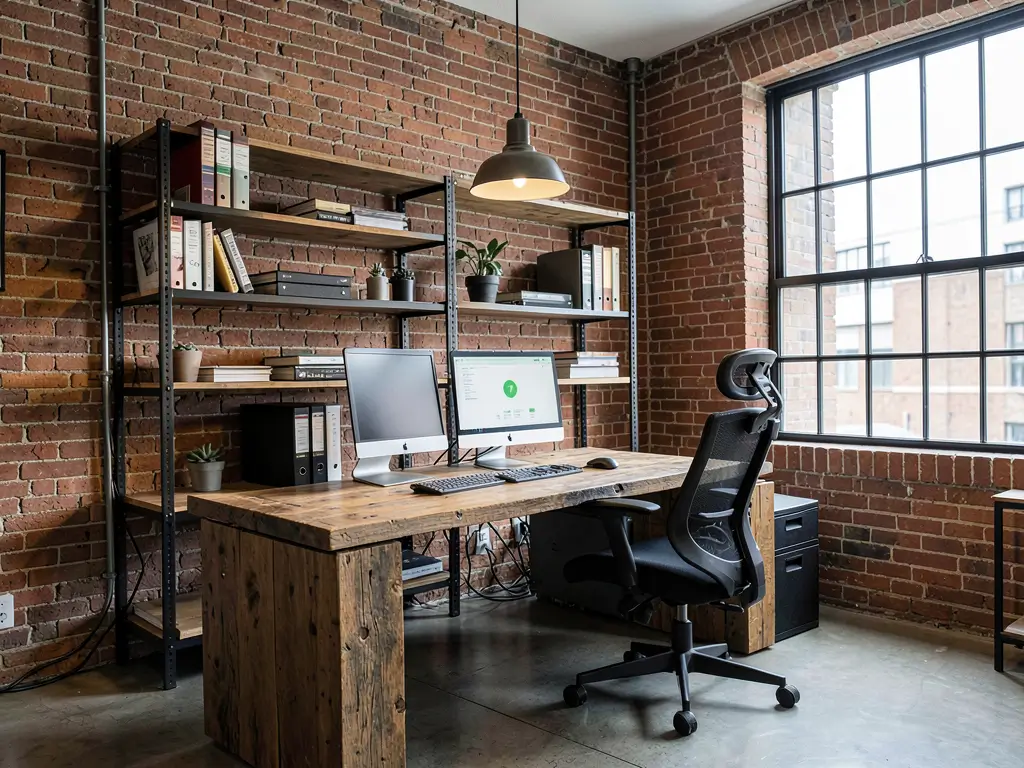
Working from home became everyone’s reality recently, and let me tell you—an industrial home office just hits different. There’s something about that structured, no-nonsense aesthetic that actually helps you focus.
The desk is everything here. Look for something with a thick wood top and metal legs, or go full industrial with a metal workbench-style desk. I built mine using iron pipes for the base and a butcher block countertop from a home improvement store. Total cost? About $150, and it’s the sturdiest desk I’ve ever owned.
Storage needs to be both functional and visual. Metal filing cabinets, industrial shelving units, and pegboards keep everything organized while looking intentional. I added a massive pegboard behind my desk for tools, supplies, and inspiration, and it’s become a conversation starter on every video call.
Productivity-boosting industrial office elements:
- Adjustable industrial task lighting (your eyes will thank you)
- Metal desk organizers and pen holders
- Cork boards with industrial metal frames
- Rolling metal carts for flexible storage
- A statement industrial clock (helps with time management)
- Vintage industrial seating that’s actually comfortable
Quick tip? Cable management matters even more in industrial spaces because everything is exposed. Use metal clips or black cable sleeves to keep cords organized and out of sight. Messy cables completely destroy the clean industrial vibe you’re working so hard to create.
Industrial Bathroom Design Ideas with Luxury Appeal
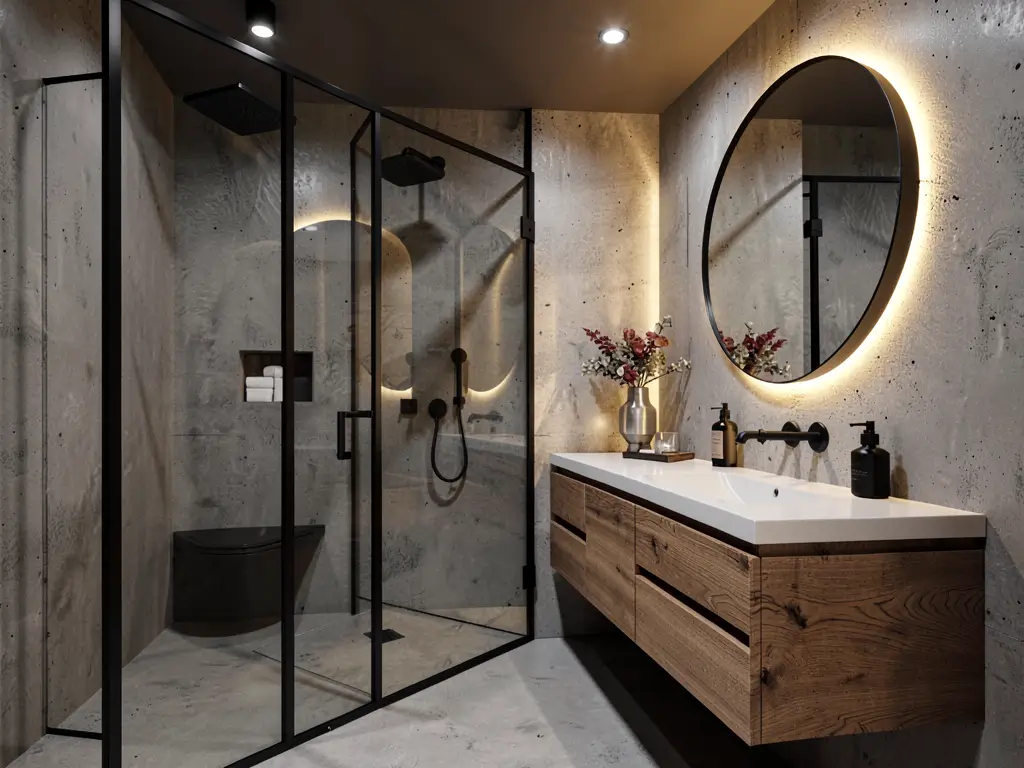
Bathrooms might seem tricky for industrial design, but hear me out—some of the most stunning bathrooms I’ve seen embrace this aesthetic fully. The combination of industrial elements with luxury fixtures creates this high-end spa situation that I’m absolutely here for.
Concrete or concrete-look tiles immediately set an industrial foundation. Pair them with matte black fixtures and hardware, and suddenly your bathroom looks like it belongs in a luxury hotel. I replaced all my chrome fixtures with matte black versions, and the transformation was instantaneous.
The vanity deserves special attention. A reclaimed wood vanity with a concrete or stone top and exposed plumbing checks all the industrial boxes. Or go completely custom with a repurposed factory cart or metal table. Just make sure you seal everything properly—bathrooms get wet, obviously.
Industrial bathroom must-haves:
- Large-format concrete or stone-look tiles
- Metal-framed mirrors (bigger is better)
- Industrial pendant lights or metal sconces
- Exposed copper or black pipes
- Subway tiles with dark grout
- Metal shelving for towel storage
- Vintage industrial stools or ladders for towel racks
Want luxury? Add a freestanding tub (preferably with exposed pipes and industrial-style fixtures) and suddenly you’re living your best life. Throw in some high-end toiletries in glass bottles, fluffy white towels, and maybe a plant or two, and you’ve got yourself an industrial spa retreat.
Also Read: 15 Gorgeous Vanity Ideas Bedroom Aesthetic Dream Setup
Creative Industrial Wall Decor Ideas for Blank Spaces
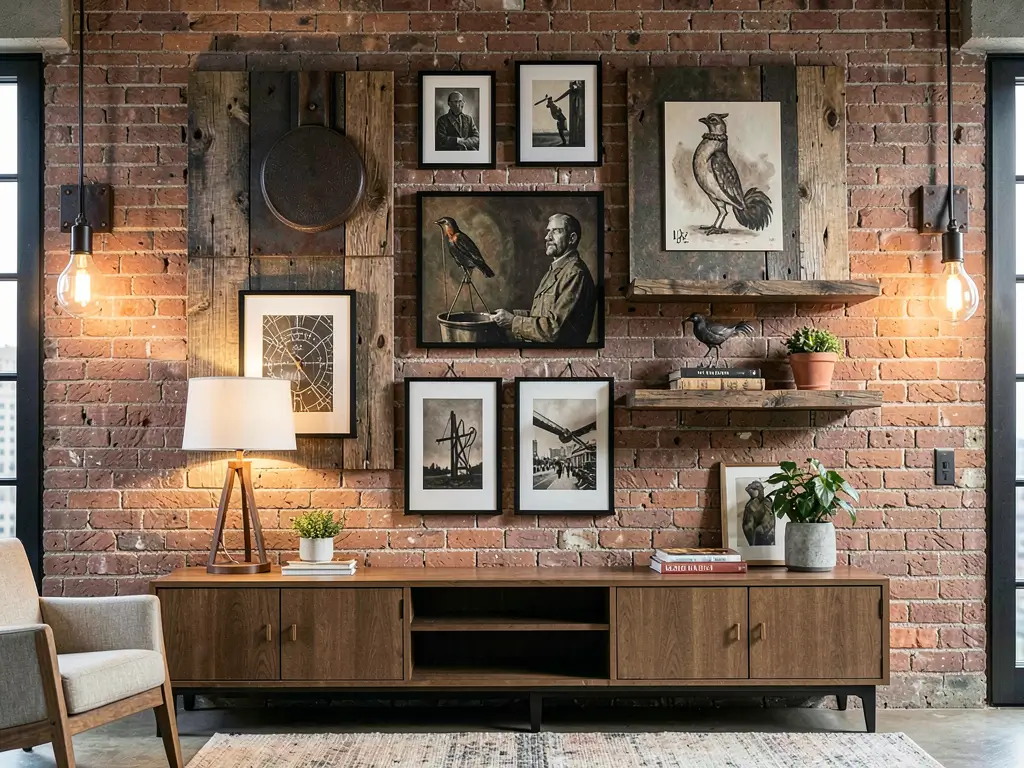
Blank walls are opportunities, not problems. Industrial spaces often have large, empty walls, and honestly, that’s part of the charm—but you need to fill them thoughtfully.
Large-scale metal artwork makes a massive impact. Think oversized metal letters, industrial gear wall art, or metal geometric sculptures. I found a huge metal compass rose at a flea market for $40, and it completely transformed my living room wall.
Ever wonder why gallery walls work so well in industrial spaces? The mix of metal frames in various sizes creates visual interest without feeling cluttered. Fill them with black and white photography, vintage blueprints, or industrial-themed artwork.
Wall decor ideas that actually work:
- Floating reclaimed wood shelves with metal brackets
- Vintage industrial signs and typography
- Large industrial clocks (the bigger, the better)
- Metal pipe shelving systems
- Exposed brick or concrete (sometimes the wall itself is the decor)
- Industrial-style mirrors in various shapes
- Vintage tools mounted as art
Here’s something different: pegboards painted in bold colors or matte black. They’re functional, customizable, and add texture to flat walls. I use mine to display everything from plants to artwork to kitchen tools, and I rearrange it constantly based on my mood.
Industrial Lighting Ideas That Transform Any Room
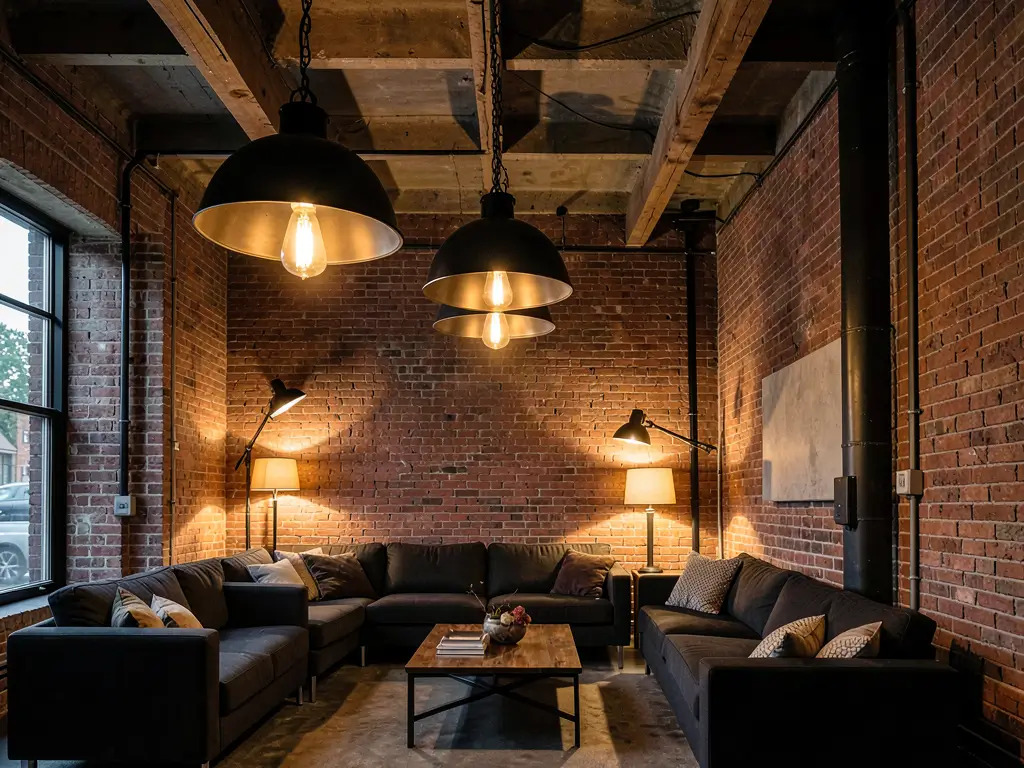
Lighting might be the single most important element in industrial design. It’s not just functional—it’s sculptural, it’s dramatic, it’s the jewelry of your space.
Pendant lights are non-negotiable. Metal cage pendants, vintage-style Edison bulb fixtures, or large warehouse-inspired pendants—pick your poison. I have three over my kitchen island, and they’re legitimately the first thing people notice when they walk in.
Layering your lighting creates depth and ambiance. You need ambient lighting (overhead fixtures), task lighting (desk lamps, reading lights), and accent lighting (highlighting specific features). Each layer should embrace industrial style.
Lighting options that seriously transform spaces:
- Exposed Edison bulbs (warm glow is essential)
- Track lighting with industrial heads
- Metal floor lamps with adjustable arms
- Wall-mounted industrial sconces
- Vintage factory pendant lights
- Statement chandeliers made from pipes or metal
- LED strips hidden in industrial shelving
The thing about industrial lighting? It needs to feel intentional and slightly over-scaled. Don’t go for tiny, delicate fixtures. You want lighting that makes a statement, that draws the eye, that serves as functional art. Bold choices work here—trust your instincts and go bigger than you think you should.
Industrial Loft Design Ideas Inspired by New York Warehouses
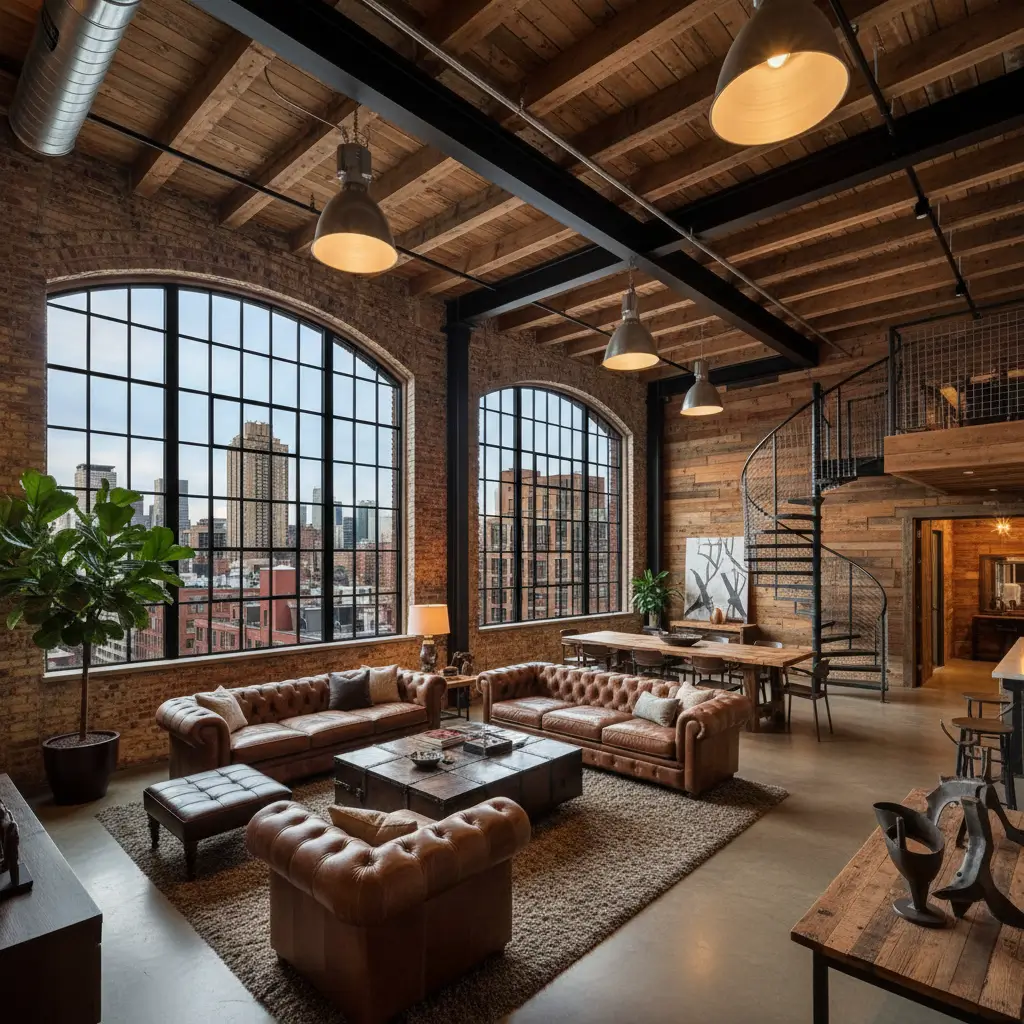
Okay, so we can’t all afford a converted warehouse in Manhattan (sadly), but we can absolutely steal the aesthetic. The loft look is quintessentially industrial, and it’s what most people picture when they think of this design style.
Open floor plans are crucial for that authentic loft feeling. If you can’t knock down walls, create visual separation with metal and glass room dividers or industrial shelving units. I used a tall metal bookshelf to divide my sleeping area from my living space, and it works perfectly while maintaining that open feel.
Height matters enormously. High ceilings with exposed beams, ductwork, and pipes create that warehouse vibe. If you’re working with standard 8-foot ceilings, draw the eye upward with vertical elements—tall shelving units, floor-to-ceiling curtains, or statement pendant lights that hang low.
Essential loft elements:
- Exposed brick walls (or brick-look alternatives)
- Polished concrete floors or concrete-look alternatives
- Industrial windows (large, metal-framed, abundant)
- Minimal walls for maximum openness
- Statement industrial staircases if you’re lucky enough to have a second level
- Mixed materials throughout (wood, metal, concrete, glass)
- Large-scale furniture that fits the generous proportions
The key to nailing loft-style industrial design? Don’t overthink it. Lofts work because they’re authentic, raw, and unpretentious. Leave things exposed, embrace imperfections, and let the architecture shine. Sometimes doing less achieves more.
Industrial Entryway Ideas for a Strong First Impression
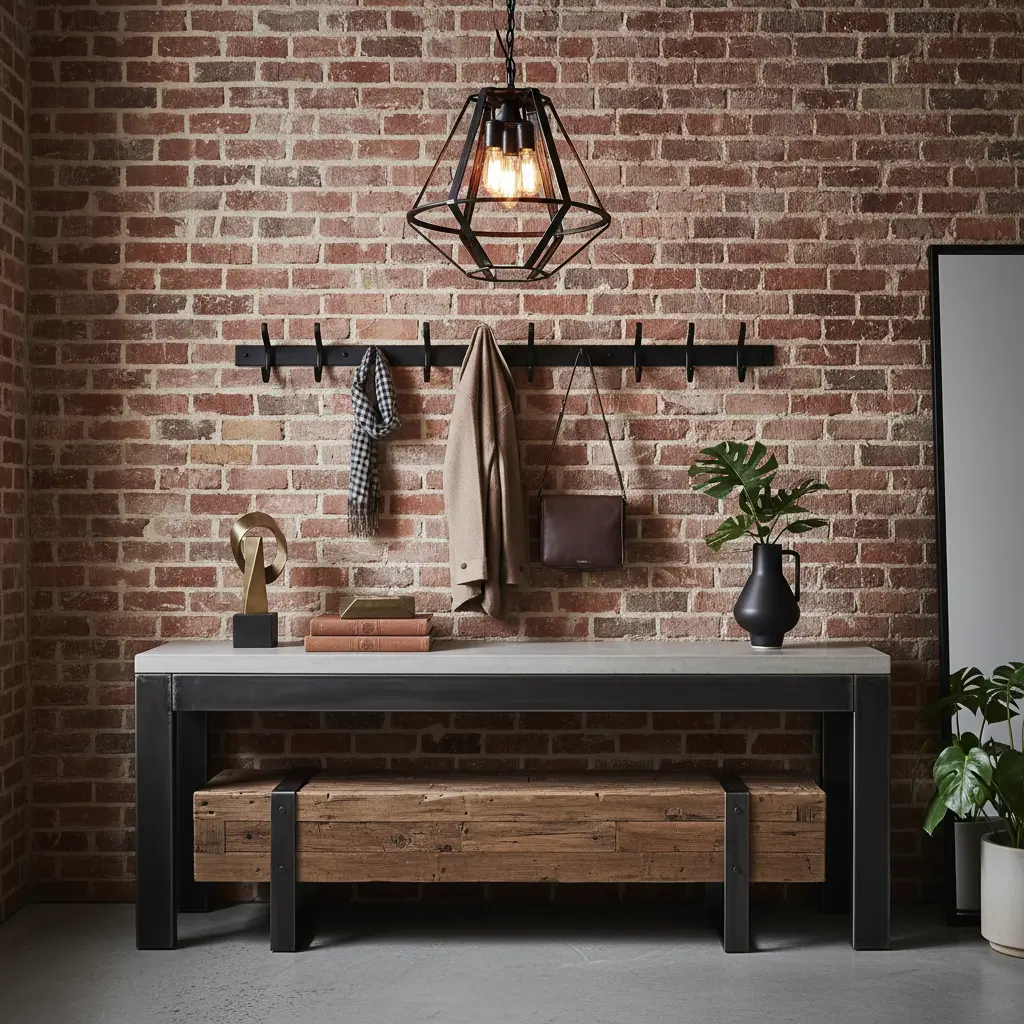
Your entryway sets the tone for your entire home, so why not make it count? Industrial entryways combine function with serious style, and they’re actually pretty easy to pull off.
A statement coat rack is your foundation. I’m talking about a floor-to-ceiling metal pipe coat rack or a vintage industrial wall-mounted version. These are functional art pieces that immediately announce your design aesthetic. Mine cost about $60 in materials to DIY, and I get compliments on it constantly.
Storage is critical in entryways, and industrial design handles this beautifully. Metal lockers, vintage industrial cabinets, or open metal shelving keep things organized while looking intentional. Add some metal bins or baskets for shoes, and you’re golden.
Entryway essentials for industrial style:
- Large industrial mirror for last-minute checks
- Metal console table with wood or stone top
- Industrial pendant light or statement sconce
- Concrete or tile flooring (practical and stylish)
- Metal hooks for bags and accessories
- Vintage industrial seating for putting on shoes
- Industrial-style umbrella stand
One more thing: don’t forget the walls. A single accent wall with exposed brick, concrete panels, or reclaimed wood makes your entryway memorable. Pair it with some black and white photography in metal frames, and boom—you’ve created a first impression that people remember. :/
Industrial Dining Room Designs for Modern Gatherings
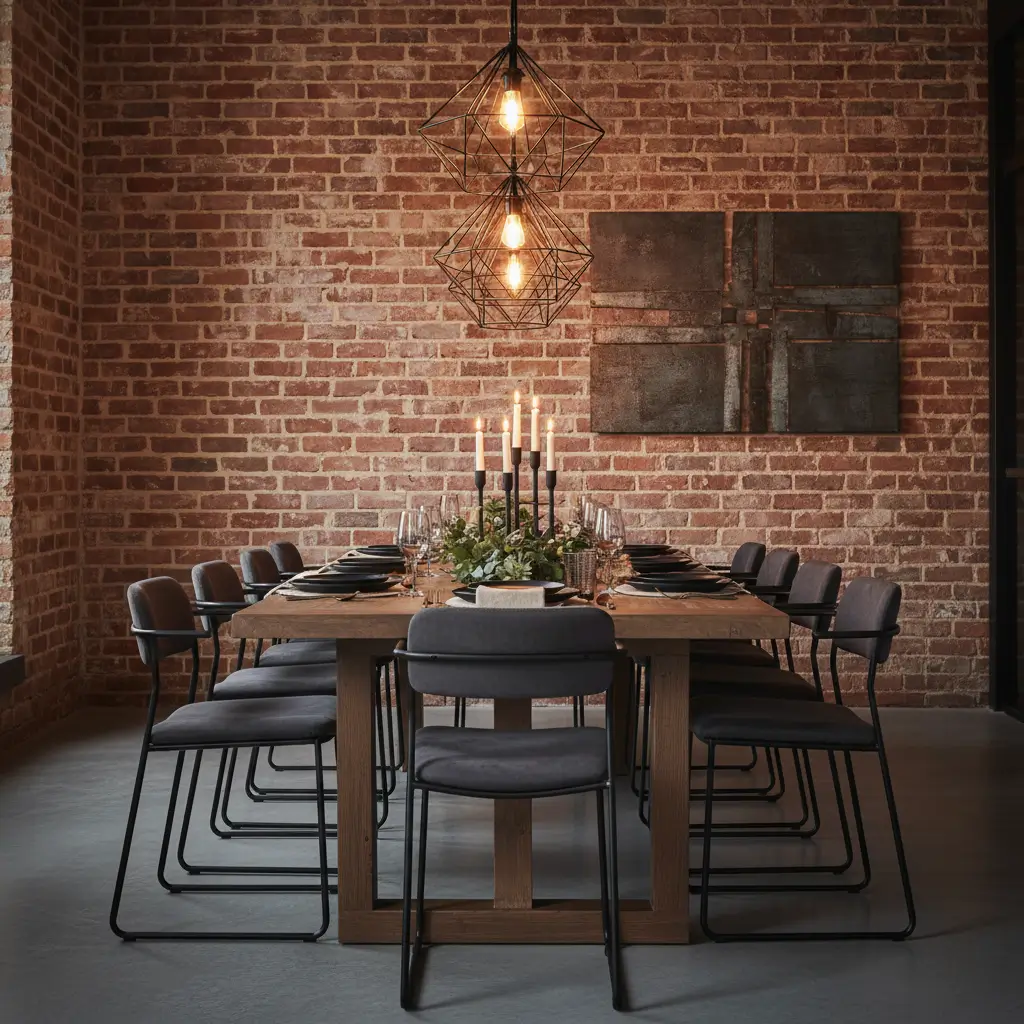
Dining rooms deserve some edge, don’t you think? Industrial dining spaces feel relaxed yet intentional—perfect for everything from casual dinners to hosting friends.
The dining table is your centerpiece, so choose wisely. A reclaimed wood table with metal legs hits that sweet spot between rustic and industrial. Go for something substantial—a chunky wood top with visible grain and character. I found mine at a furniture outlet, and it’s easily my favorite furniture piece ever.
Seating can mix and match beautifully here. Combine metal dining chairs with a wooden bench on one side for an eclectic, collected-over-time vibe. Nobody says everything needs to match perfectly, and honestly, perfectly matched sets feel a bit boring in industrial spaces.
Create the perfect industrial dining room:
- Statement industrial chandelier or pendant cluster over the table
- Industrial bar cart for drinks and serving
- Open metal shelving for dish display
- Large-scale industrial wall art or clock
- Concrete or dark wood floors
- Minimal window treatments (or industrial-style blinds)
- Metal and glass cabinet for dish storage
Lighting makes or breaks a dining room. Hang your pendant lights or chandelier low enough to create intimacy but high enough that people can see each other (generally about 30-36 inches above the table surface). Layer in some wall sconces for ambient lighting during evening gatherings, and you’ve created serious atmosphere.
Also Read: 15 Elegant Black and Copper Kitchen Ideas for Modern Homes
DIY Industrial Decor Projects Using Wood and Metal
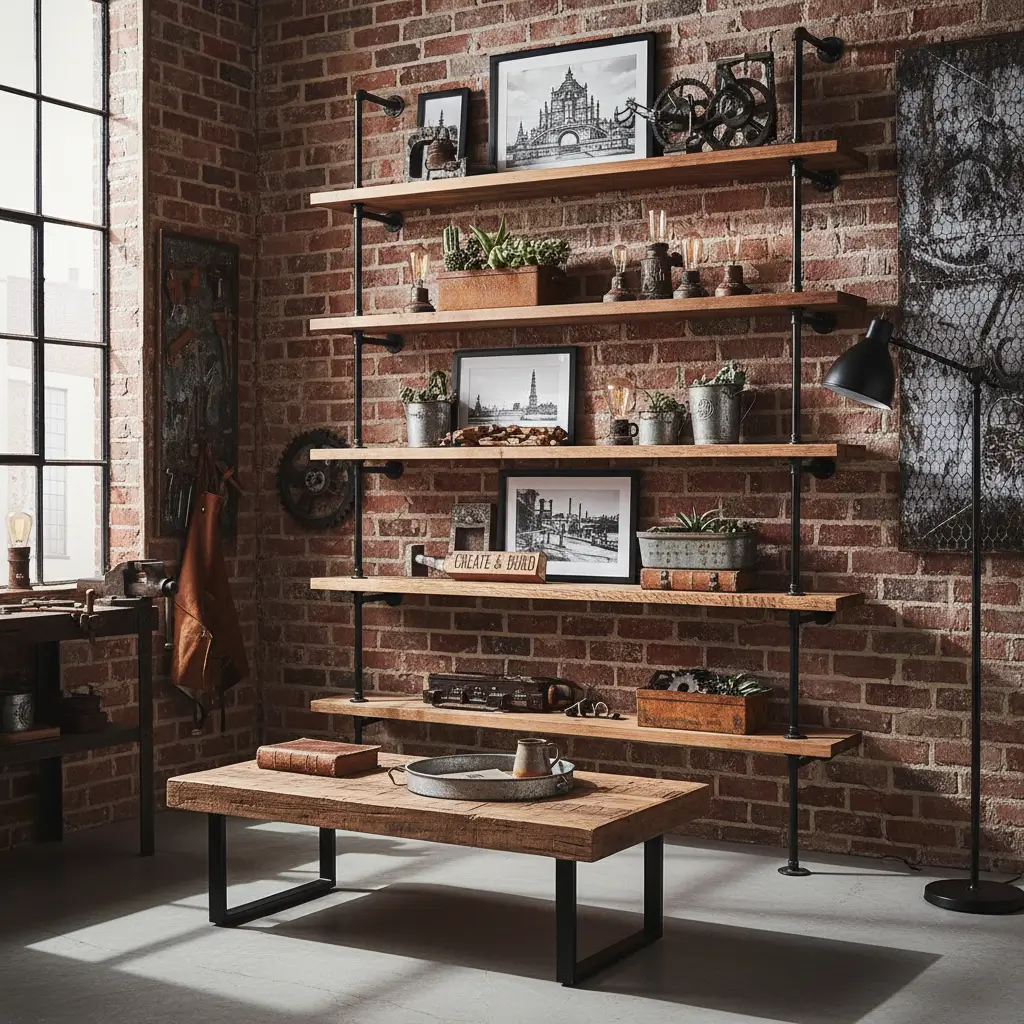
Ready to get your hands dirty? DIY industrial projects are incredibly satisfying, generally budget-friendly, and they give your space that authentic, custom look that money honestly can’t buy.
Pipe shelving is the gateway drug to DIY industrial decor, and for good reason—it’s relatively simple, looks expensive, and works literally anywhere. I’ve built pipe shelves for my bathroom, office, kitchen, and bedroom. The pattern is always the same: iron pipes for the framework, reclaimed wood (or stained pine boards) for the shelves, and black spray paint or wax to finish the pipes.
Metal and wood work together beautifully because they have opposing properties—wood is warm and organic, metal is cool and structured. When you combine them in DIY projects, you get pieces with serious visual interest.
DIY projects anyone can tackle:
- Coffee tables using metal hairpin legs and reclaimed wood
- Industrial lighting fixtures from basic pendants and Edison bulbs
- Pipe towel racks for bathrooms
- Metal and wood coat racks
- Industrial plant stands using copper or iron pipes
- Wooden crates mounted on metal frames for storage
- Concrete planters (easier than you think!)
Here’s my advice: Start small. Build a simple pipe shelf or towel rack before attempting a dining table. You’ll learn how to work with the materials, what tools you need, and how to troubleshoot problems. Plus, finishing a small project gives you confidence for bigger ones. Most of these projects need basic tools—a drill, a saw, sandpaper, and maybe a pipe wrench.
Industrial Color Palette Ideas for a Balanced Interior
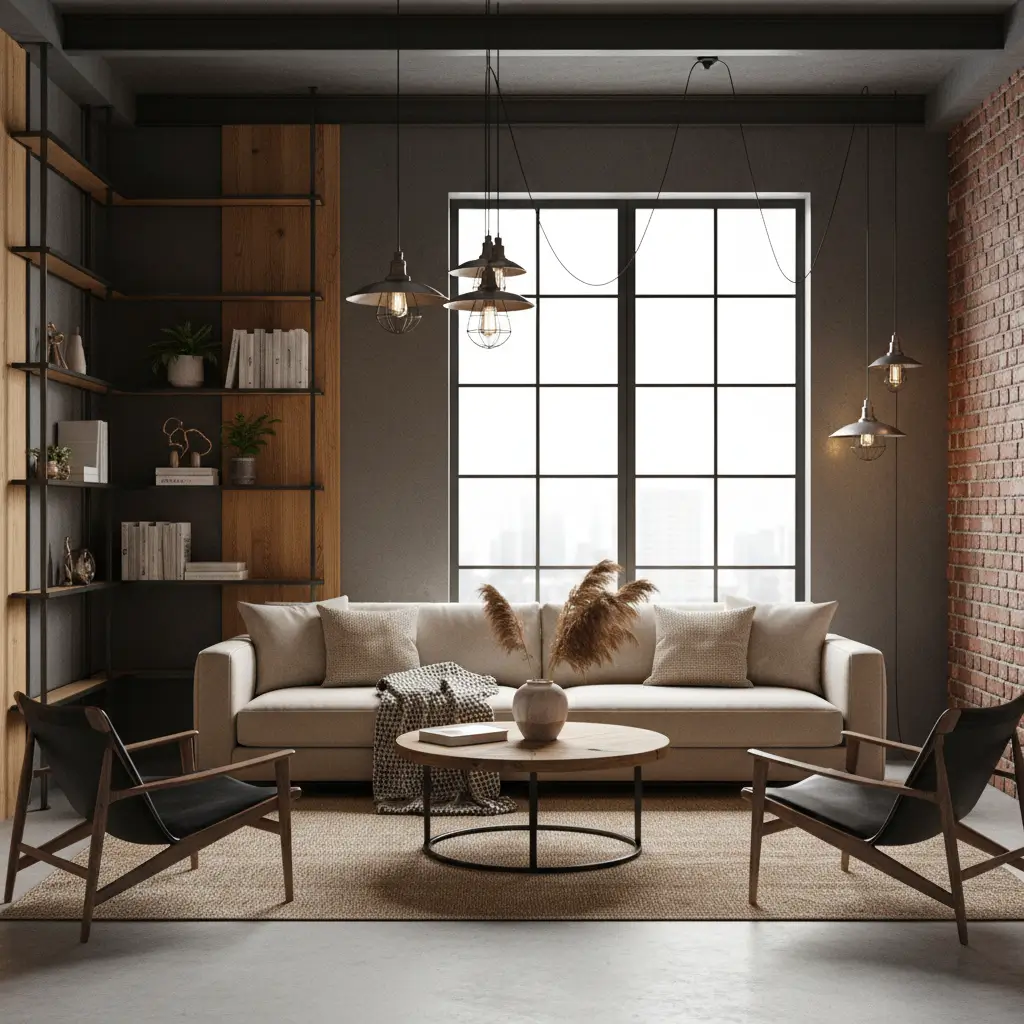
Color can make or break your industrial design. Go too colorful, and you lose that raw, authentic vibe. Go too neutral, and your space feels cold and unwelcoming. Balance is everything here.
The foundation of industrial color palettes is neutrals—but interesting neutrals. Think grays, charcoals, blacks, whites, and browns in various shades and textures. The texture part is crucial because it prevents the space from feeling flat.
I structure my color scheme like this: 60% neutrals, 30% wood tones, 10% accent colors. The neutrals create the backdrop, the wood adds warmth, and the accent colors bring personality without overwhelming the industrial aesthetic.
Industrial color palette combinations:
- Charcoal gray + raw wood + white + black metal accents
- Concrete gray + cognac leather + warm white + copper accents
- Black + reclaimed wood + cream + matte gold touches
- Slate blue + natural wood + white + black metal
- Warm gray + dark walnut + ivory + brass accents
When you do add color, keep it muted and intentional. Industrial spaces look great with deep forest greens, burnt oranges, navy blues, or burgundy—but use them sparingly in textiles, artwork, or small accent pieces. I have a rust-colored vintage rug that adds warmth without screaming for attention.
Black is your secret weapon. Black metal accents, black-framed mirrors, black hardware—these elements define and anchor your space while feeling cohesive across rooms. Don’t be afraid of using black liberally; it actually makes spaces feel more intentional rather than darker.
Industrial Interior Design Mistakes to Avoid for a Professional Look
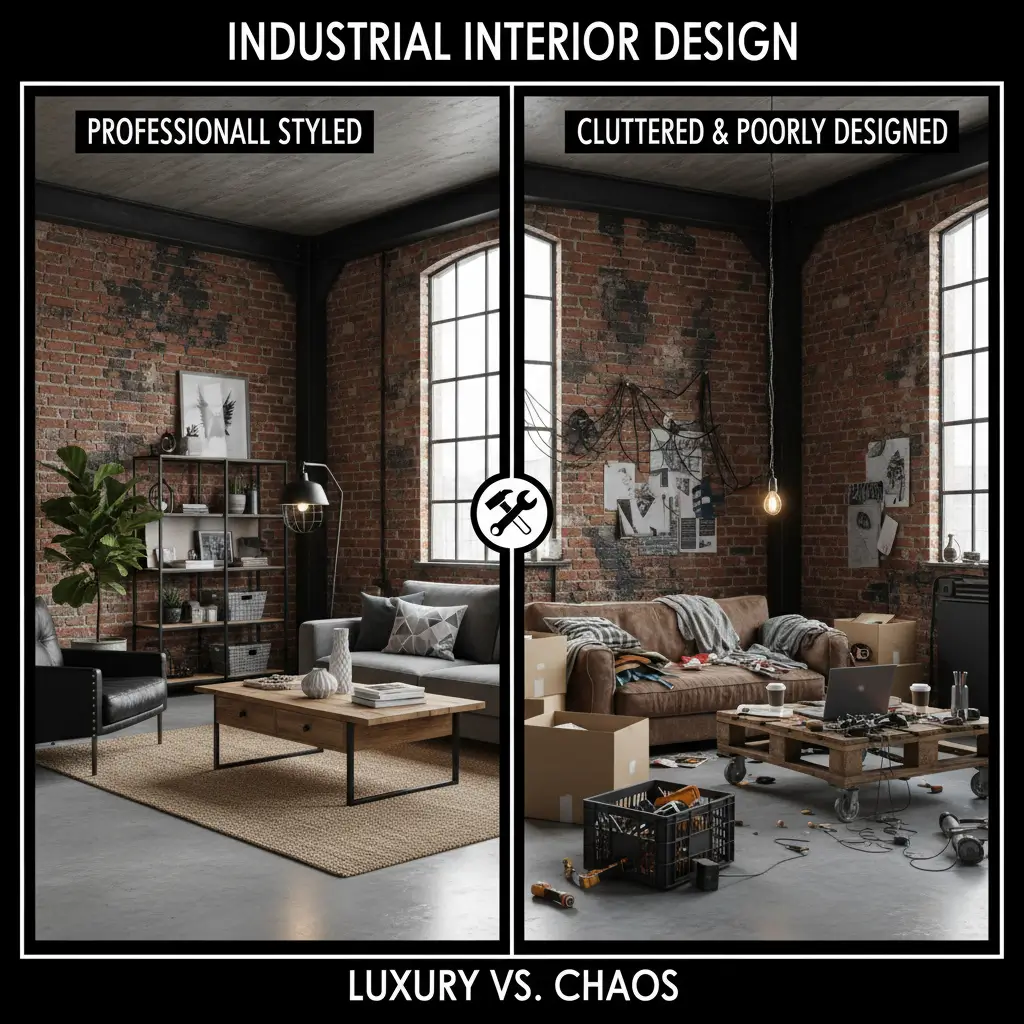
Let’s talk about what NOT to do because I’ve definitely made these mistakes myself, and I want to save you the trouble (and expense) of learning the hard way.
Mistake #1: Going too cold and sterile. The biggest rookie error is thinking industrial means harsh and uncomfortable. If your space feels like an actual factory where no warmth exists, you’ve missed the mark. Remember those soft textiles, warm wood tones, and greenery we discussed? They’re not optional—they’re essential.
Mistake #2: Cluttering the space. Industrial design thrives on negative space and clean lines. If you pack every surface and corner with stuff, you completely destroy the aesthetic. Each piece should have room to breathe and make its own statement.
Mistake #3: Ignoring scale. Industrial spaces need appropriately sized furniture and fixtures. Tiny, delicate pieces look lost and out of place. Go bigger and bolder than your instincts suggest—the scale needs to match the raw, substantial nature of industrial design.
Common mistakes that kill the vibe:
- Mixing too many styles (pick industrial and maybe one complementary style, max)
- Choosing shiny, glossy finishes instead of matte or distressed ones
- Hiding architectural features that should be exposed
- Skimping on lighting (you need multiple sources and layers)
- Using the wrong metals (stick with one or two metal finishes max)
- Forgetting plants (they’re crucial for balance)
- Over-accessorizing with industrial-themed kitsch
Mistake #4: Thinking everything needs to be perfectly distressed or worn. Forced patina looks exactly like what it is—forced. Mix genuinely vintage pieces with new industrial-style items for an authentic, collected-over-time feel. Your space should look intentional, not like you raided every thrift store in town.
Here’s the truth: Industrial design works because it’s honest, functional, and unpretentious. The moment you start overthinking it or forcing elements that don’t belong, you lose that authenticity. Trust your instincts, start with quality foundational pieces, and build from there.
Wrapping This Up
So there you have it—15 ways to bring industrial design into your modern life without turning your home into an actual warehouse (unless that’s your thing, in which case, carry on).
The beauty of industrial interior design is its flexibility. You can go full New York loft with exposed everything, or you can just sprinkle in some metal accents and reclaimed wood here and there. Both approaches work as long as you stay true to the core principles: embrace raw materials, value function alongside form, and don’t be afraid of showing the bones of your space.
My final piece of advice? Start somewhere. Pick one room or even just one corner, and commit to the aesthetic there. You’ll quickly figure out what works for your lifestyle and what doesn’t. Industrial design isn’t about following rules rigidly—it’s about creating spaces that feel authentic, comfortable, and uniquely yours.